



At a glance
Since 1995, CDC has collaborated with Georgia’s National Center for Disease Control and Public Health (NCDC) to detect, prevent, and respond to global public health threats that affect Georgia and the United States. These key efforts focus on strengthening surveillance and laboratory systems, workforce development, coordinating outbreak response, and supporting NCDC to become a true National Public Health Institute and asset for the eastern Europe and Central Asia region. In addition to the Georgian NCDC, CDC partners with the Ministry of Health, Ministry of Environment Protection and Agriculture, the healthcare system, and other local partner organizations to protect the health of Americans and support public health across the region.

Key accomplishments
- Eliminated mother-to-child transmission of hepatitis B virus (HBV), achieved the European regional HBV control goal, reduced chronic hepatitis C prevalence by 67%, and cured more than 98% of people who completed chronic hepatitis C treatment.
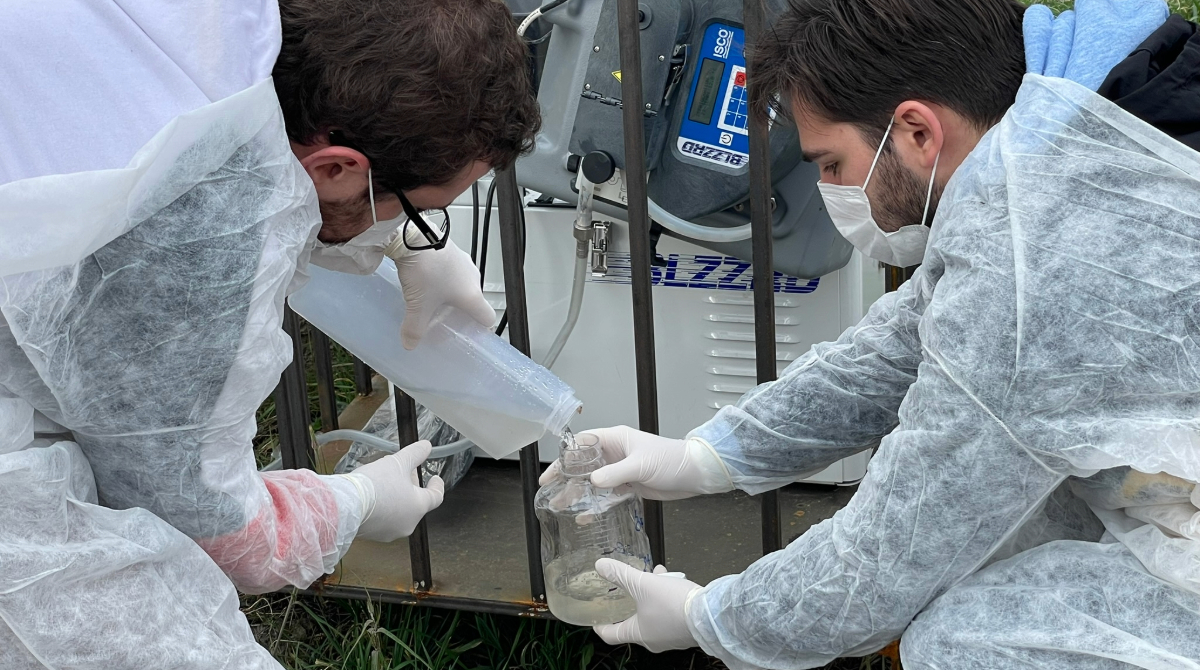
- Developed and implemented a wastewater surveillance protocol for detecting viruses and initiated regular collection of wastewater for SARS-CoV-2 detection.
- Supported the Lugar Center for Public Health Research (LCPHR) in receiving international accreditation to serve as an external quality assurance provider for antimicrobial resistance (AMR) detection in Georgia and across the region. Supported the LCPHR to serve as a regional hub for genomic surveillance and host of the Eastern Europe and Central Asia genomic surveillance community of practice – a network of laboratory experts learning and sharing approaches to improve sequencing techniques and bioinformatics analytic skills.
- Established public health and healthcare collaborative partnerships with 12 private hospitals to reduce the transmission of healthcare-associated infections and improve healthcare worker vaccination for seasonal influenza.
- Supported training for 129 public health professionals who graduated from the Advanced Field Epidemiology Training Program (FETP) and 67 professionals who graduated from intermediate FETP in Georgia, Armenia, Azerbaijan, Moldova, and Ukraine. In 2025, Georgia successfully launched its own self-financed FETP Intermediate program.
Global health security
In 2023, Georgia was designated as a U.S. Intensive Support Partner Country for Health Security by the U.S. National Security Council.
CDC's global health security work in Georgia focuses on providing support to strengthen the country's public health systems. CDC's focus areas in Georgia include:
- Antimicrobial resistance (AMR)
- Healthcare-associated infections (HAIs)
- Pandemic respiratory threats
- Viral hepatitis
- Zoonotic diseases (including Crimean-Congo hemorrhagic fever, poxviruses, and rabies), enteric diseases, and mycotic diseases
Workforce development
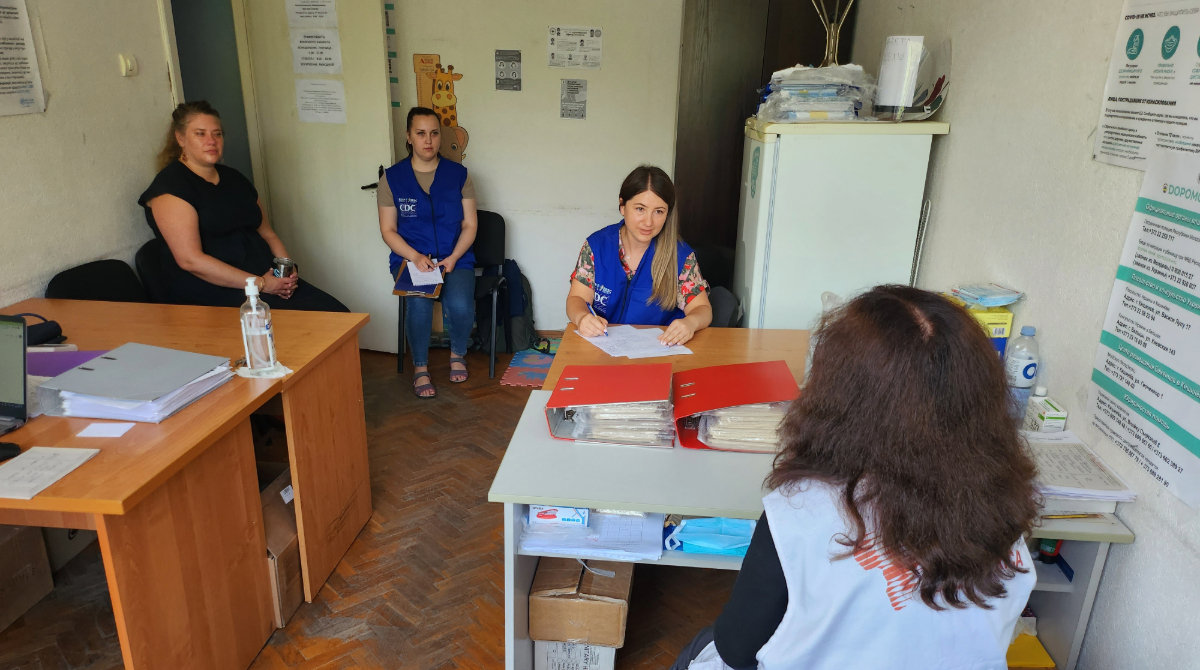
In 2022, the Georgia Ministry of Labor, Health, and Social Affairs requested CDC’s assistance to develop a public health workforce strategy and improve recruitment and retention over the next five years. CDC supports the training of public health professionals through three tiers of FETP (Advanced, Intermediate, and Frontline) to strengthen country workforce capacity, through a One Health approach, to identify and stop outbreaks before they spread.
In 2021, CDC launched the Eastern Europe and South Caucasus Intermediate FETP with participants from Georgia, Armenia, Azerbaijan, Ukraine, and Moldova. This effort has been built on the long history of regional FETP programming and use of the One Health approach, bringing together public, veterinary, and environmental health specialists.
Emergency response
Since 2020, CDC has trained responders in the Public Health Emergency Management system and in emergency management fundamentals. During the COVID-19 pandemic, CDC collaborated on key preparedness and response activities including diagnostic testing, disease surveillance, vaccine distribution, and training of public health professionals. CDC’s support for emergency response activities include:
- Supporting NCDC to host the Public Health Emergency Management Fellowship, adapted from CDC’s program to address the unique needs of the region.
- Assessing health communications organizational and functional capacity during emergency and peacetime settings through the establishment of a Joint Information Center.
- Establishing a regional-level emergency operations center in Kutaisi, West Georgia in 2021.
Laboratory systems strengthening
CDC partners with Georgia's NCDC to increase laboratory and workforce capacities in quality management systems, project management, and human and animal disease surveillance. CDC collaborates with the LCPHR and other national laboratories on:
- Proficiency testing and continuous quality improvement approaches for laboratory testing.
- Bacteria isolation methods.
- Building capacity for laboratory diagnostics, including whole-genome sequencing for routine and zoonotic disease surveillance and detection.
- Genomic surveillance and how genomic data can enhance public health investigations and response across humans and animals.
Antimicrobial resistance
CDC works to strengthen the detection and response to AMR and HAIs. Specific activities include:
- Developed a national-level surveillance protocol to improve AMR activities at both the national- and facility-level, including clinical and laboratory detection practices.
- Supported the implementation of an AMR point prevalence survey in three hospital facilities.
- Conducted infection prevention and control (IPC) assessment among four private hospitals to identify gaps in existing practices.
- Launched the first Foundational IPC training for 20 participants, including epidemiologists and healthcare practitioners.
Data modernization
CDC supports public health data system modernization. This work includes development and implementation of a national Laboratory Information Management System, wastewater, viral hepatitis, and AMR surveillance data systems.
Pandemic respiratory threats
CDC works to strengthen Georgia's capacity to prevent the spread of diseases with epidemic and pandemic potential through developing and implementing:
- Integrated surveillance for influenza-like illnesses and severe acute respiratory infections.
- Wastewater surveillance for detecting SARS-CoV-2 and other viruses.
- Expanded genomic sequencing capacity and reporting to the Global Initiative on Sharing All Influenza Data.
- Supported implementation of a combined strategy to improve healthcare worker vaccination uptake resulting in an increase of vaccination coverage from 38% in 2023-24 season to 74% in 2024-25 season.
Viral hepatitis elimination
Georgia launched the world’s first national hepatitis C elimination program in 2015. The program offers free testing and treatment to all citizens and is a global model for hepatitis elimination. CDC has supported the following activities:
- Genomic research of the hepatitis C virus.
- Development of the 2016-2020 and 2021-2025 strategic plan for hepatitis C elimination.
- Implementing nationwide nucleic acid testing on all blood donations that are part of the Blood Safety Program.
- Improving the linkage to hepatitis C care for patients screened positive in inpatient settings.
![[thumbnail] (hidden)](/global-health/media/images/2026/01/Georgia_thumbnail.jpg)
Success story spotlight
Leading the Region in Genomic Surveillance
Genomic surveillance is a cutting-edge tool for tracking infectious diseases. It involves studying the genetic makeup of viruses or bacteria to understand which variants are common in a country at a given time — or what caused a specific outbreak.
Georgia is a regional leader in genomic surveillance. This was evident during the COVID-19 pandemic, when in a short period of time Georgia was able to ramp up genomes sequenced from just a few to several hundred a month. As a result, the country was able to provide its population with timely updates on the spread of different COVID-19 variants.
This advanced capability in Georgia was developed over the years with significant support from the U.S. government, and CDC is proud to have contributed to this big effort.
Today, with CDC backing, the Lugar Center in Georgia has launched regional trainings attended by representatives of Armenia, Kyrgyzstan, Uzbekistan, and Moldova. The Lugar Center is expanding its role by sharing its expertise with neighboring countries through this regional training program — strengthening infectious disease surveillance capacity across the region.
As threats from infectious disease continue to evolve, Georgia's leadership and the Lugar Center's growing regional role represent a critical step forward — not just for the country, but for the broader network of nations working together to detect and respond to outbreaks before they spread. Learn more: