



At a glance
eNews is the monthly newsletter of the National Institute for Occupational Safety and Health (NIOSH). Each month includes an update from NIOSH Director Dr. John Howard, featured NIOSH research, new worker safety and health resources, upcoming meetings, and more!
From the Director's Desk
John Howard, M.D., Director, NIOSH
Evaluating Health Hazards Where You Work
Workers and employers often wonder about potential health hazards on the job, asking questions like "Is it too noisy in here?" or "Are these chemicals harmful?" At NIOSH, we take these questions seriously. The Health Hazard Evaluation (HHE) Program is a long-standing resource for anyone who wants help identifying and addressing workplace health hazards.
Through the HHE Program, NIOSH has responded to more than 16,000 requests from employees, employers, and unions when they suspect a workplace hazard. Our team has experience with everything from heat and noise to mold, chemicals, infectious diseases, and work-related stress. HHEs are conducted at no cost to the requestor and offer practical recommendations to improve workplace safety and health.
Depending on the situation, the HHE Program provides different tools to meet each workplace's needs:
- Letters with workplace-specific recommendations based on detailed reviews of workplace information, such as exposure data and injury reports, without requiring an on-site visit
- Referrals to other agencies or resources for additional support when needed
- Final reports that typically follow on-site evaluations and provide actionable workplace-specific recommendations to improve workplace health and safety. These comprehensive reports are available online in a searchable database.
Last year, we published reports on complex and emerging hazards across industries. Here are a few examples:
- At a police crime lab,concerns emerged about potential exposures to illicit drugs while handling evidence. We found fentanyl, cocaine, and methamphetamine in the air, on employees' hands, and on surfaces inside and outside the lab. We recommended improving ventilation, maintaining good work practices, and providing training and respirator fit testing.
- In a high school art studio, questions arose about whether teachers were being exposed to hazardous substances like crystalline silica and metals while teaching ceramics, printmaking, and photography. We found metals on every surface tested, from worktables to door handles. Our recommendations included improving housekeeping with wet-cleaning methods, improving ventilation, and practicing good hand hygiene.
- At a coffee roasting facility, we evaluated potential exposures to diacetyl, 2,3-pentanedione, and carbon monoxide (CO). We found diacetyl levels above recommended limits and CO peaks exceeding safety limits. A ventilated enclosure at the large grinder lowered exposures, but further controls were needed. We recommended local exhaust ventilation, CO monitors, and training on hazard prevention.
Other recent evaluations include a shipbuilding company, military base, foundry, pulp and paper mill, college campus, and an additive manufacturing facility.
Those are just a few of the more than 3,500 HHE reports available online. These reports benefit both the evaluated workplace and the broader occupational safety and health community, providing real-world data to help others address similar hazards. Over the past 5 years, HHE reports were viewed and downloaded more than 80,000 times.
If you have questions about potential health hazards in your workplace, we encourage you to reach out. Visit the HHE Program website to learn more or submit a request.
Research Rounds
Hazardous Exposures and Engineering Controls in the Landscaping Services Industry
Study authors: Barbara M. Alexander, Pamela S. Graydon, Mirle Pena, H. Amy Feng, NIOSH; and Bryan R. Beamer, Indian Health Service
Why is this study important?
Although landscapers usually work outdoors, they are still at risk of breathing in harmful substances from the tools they use. In fact, landscaping is one of the more dangerous professions. Landscaping tools may produce excessive noise, carbon monoxide (CO), and dust from stone and other natural materials. This dust includes respirable crystalline silica, which is harmful to breathe. To prevent these exposures, NIOSH recommends using engineering controls. These include battery-powered tools and methods to capture or wet dust generated by landscaping tools. However, few studies compare exposure levels between workers who use engineering controls and those who do not or examine long-term exposures in different workplaces.
How did you do the study?
We measured exposure to noise using devices called personal dosimeters. CO, dust, and respirable crystalline silica exposures were measured using small air-sampling devices worn on clothing. Eighty landscapers across 11 worksites wore the devices while working for 1 to 3 days. We then used statistical methods to identify exposure levels.
What did you find?
Most of the landscapers had noise exposures above the NIOSH recommended exposure limit of 85 dBA. However, all CO exposures were below the NIOSH recommended exposure limit. Fuel-powered leaf blowers, string trimmers, and chainsaws posed a greater risk of exposure to both noise and CO compared with battery-powered versions. Respirable crystalline silica exposures were above the NIOSH recommended exposure limits on hardscaping worksites where landscapers cut and grind materials, such as stone or concrete, for walkways and retaining walls.
What are the next steps?
These findings suggest that using battery- instead of fuel-powered tools could help protect landscapers from noise and CO exposure. Dust capture or wet methods can help to reduce respirable crystalline silica exposure. More studies are needed to determine how well engineering controls lower exposures.
Highlights
NIOSH Science Blog Update
The NIOSH Science blog has moved! Please update your bookmarks to our new URL: https://www.cdc.gov/niosh/blogs/index.html. If you bookmarked past blogs, you'll be redirected to the Science blog homepage. There, you can use the search function to update those links. We hope you like the new format!
Workplace Violence Against Healthcare Workers
Cammie Chaumont Menendez, PhD, a NIOSH research epidemiologist, recently participated on a panel for the KQED Public Radio (San Francisco) program Forum to discuss workplace violence against healthcare workers. The panel discussed a recent workplace violence incident in a San Francisco hospital and strategies employers can take to better protect healthcare workers.
New Report Focuses on Black Lung Deaths
NIOSH scientists recently authored a CDC Morbidity and Mortality Weekly Report on deaths associated with coal workers pneumoconiosis (or black lung). This is the first study by CDC to use data from the National Vital Statistics System to look at how coal workers' pneumoconiosis (CWP) deaths relate to jobs and industries across the country. The study found that CWP-related deaths continue in certain jobs and industries. This shows the disease is still a public health problem that needs continual monitoring and prevention.
Suicide in the Construction Industry
The New York Times recently published an article bringing awareness to the suicide crisis in the construction industry. Pointing to NIOSH research, The Times reported that construction has one of the highest rates of suicide among major industries in the United States. These workers also die at a greater rate from drug overdoses than other American workers.
CDC Reports Case of Welder's Anthrax Highlighted
NIOSH researchers coauthored a CDC Morbidity and Mortality Weekly Report about welder's anthrax. This disease is a rare pneumonia in metalworkers caused by bacteria that produce anthrax toxin. A young, previously healthy welding apprentice in Louisiana was identified with welder's anthrax. The patient was treated in accordance with current CDC treatment guidelines for inhalation anthrax and survived. Researchers found anthrax toxin genes in the soil at the patient's worksite that were genetically very similar to bacteria in the patient's blood. This suggests the infection likely came from the worksite.
Subscribe to Receive NIOSH Respiratory Protection Updates
NIOSH has updated how we deliver our respiratory protection communications. Subscribe to NIOSH Respiratory Protection Updates to receive emails from NIOSH on new respiratory protection publications, initiatives, and changes in respirator approval status. Once you've signed up, check your email inbox for a confirmation request. Click the link in the email and then follow the instructions to accept your pending subscription.
Federal Register Notices
Meeting of the Advisory Board on Radiation and Worker Health, National Institute for Occupational Safety and Health
The notice was posted January 15. Comments must be received by February 12. The meeting will be held February 19.
National Institute for Occupational Safety and Health (NIOSH) Center for Firefighter Safety, Health and Well-Being Portfolio; Request for Information
The notice was posted on February 2. Comments must be received by April 3.
NIOSH Science Blog

News From Our Partners
New Info Highlights Risks of Silicosis From Stone Countertops
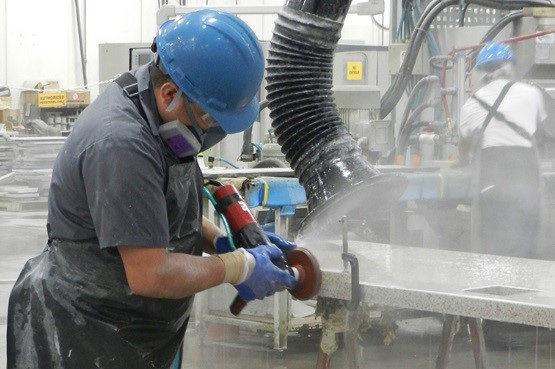
The Massachusetts Department of Public Health (DPH) confirmed the first case of silicosis in the stone countertop industry in Massachusetts. In response, DPH's Occupational Health Surveillance Program (OHSP) released information about the health risks of working with stone countertops. They also sent an alert to employers, a flyer to workers, and a notice to healthcare providers in the state. These materials are available in English, Spanish, and Portuguese.
Winter Weather Safety Resources
The Occupational Safety and Health Administration (OSHA) has winter weather safety resources, including guidance on cold stress, safe winter driving, refrigerated warehousing, and preparedness planning. Another resource is the Minnesota Department of Health's brief video, Walk Like a Penguin, offering practical tips to help prevent slips and falls. OSHA's Winter Weather webpage for additional information and resources.
Updates From State Fatality Assessment and Control Evaluation (FACE) Programs
Occupational Injuries During the First Month of Tenure Among Teen Workers in Oregon: A 10-Year Examination of Workers' Compensation Claims
An Oregon study highlights occupational injuries among teenage workers. Researchers looked at injury risks before and after the release of the Oregon Young Employee Safety Coalition online safety awareness training in 2017.