



What to know
Summary
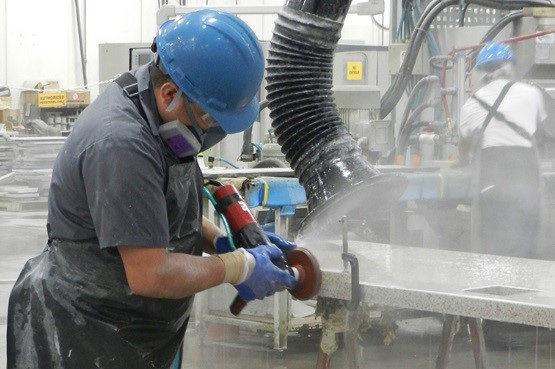
Silicosis is an irreversible occupational lung disease caused by exposure to respirable crystalline silica (RCS). Countertop fabricators working with engineered stone (also known as artificial stone, manufactured stone, or quartz) are at risk of developing silicosis due to the high RCS content of engineered stone, typically over 90%.
To address any public health problem, the population at risk must be identified. However, this is challenging for the countertop fabrication industry given the tremendous variability in terms of workplace size, materials used, and RCS control measures. The following summarizes innovative efforts from the California Department of Public Health (CDPH) and the National Institute for Occupational Safety and Health (NIOSH) to identify and locate stone countertop fabrication companies to prevent RCS exposure among countertop fabrication workers.
The hunt for stone countertop fabrication companies in California
In early 2019, CDPH identified the first two engineered stone countertop worker fatalities due to silicosis in the United States along with four other cases among California workers.1 Since then, CDPH has coordinated with other state and local agencies to identify additional California workers with silicosis and to find California countertop fabrication businesses. CDPH's research shows that 51% of inspected stone fabrication shops had at least one employee exposed to respirable crystalline silica above the permissible exposure limit of 50 µg/m3,2 making these outreach and coordination efforts imperative.
To do this, CDPH mailed a health advisory to countertop manufacturing businesses in March 2019 using a commercial database and North American Industry Classification System (NAICS) and Standard Industrial Classification (SIC) codes, which provided business addresses. Ultimately, CDPH found nine, 8-digit NAICS codes and six, 6-digit SIC codes for businesses likely to be involved in countertop fabrication or installation, they are as follows:
6-digit SIC codes:
5712-13 Countertops
5032-04 Granite Wholesale
3281-01 Granite Products Manufacture
1741-06 Marble Contractors
5032-02 Marble Natural
5211-27 Marble Natural Retail
8-digit NAICS codes:
423320-29 Marble - Natural Wholesale
327991-06 Marble Products Natural - Manufacture
423320-24 Granite Wholesale
423320-28 Marble - Cultured
327991-04 Granite Products Manufacture
238140-05 Marble Contractors
238140-16 Stone Installation Services
444180-75 Kitchen Counters
444180-45 Marble Natural - Retail
In 2022, CDPH used these codes to develop a list of 1,564 California businesses. The state then conducted internet searches to confirm each business was a fabricator of quartz countertops and was still in business; the results are shown in the table below.
Fabricators
653
480 <10 employees
291 5
Installers
Sales/Showrooms
Countertop business, but unclear if sales, installation, or fabricators
Other surfaces
Headstones, memorials
Restoration
Designers
Unrelated
Closed/Additional duplicates
1564
Using business classification codes for public health purposes is not always simple, as coding systems were developed for economic purposes.3 However, greater than 90% of the businesses CDPH identified with the 6- and 8-digit codes appeared to be related to the countertop fabrication industry. This suggests that other jurisdictions or researchers can use these codes to find countertop fabrication–related employers. Still, the codes do not capture all businesses. Additional research takes time but can be helpful; for example, CDPH's internet search identified 199 fabricators not included in the commercial database codes.
NIOSH works to develop nationwide list of stone countertop fabricators for education and outreach
Today, researchers from NIOSH's Respiratory Health Division in Morgantown, West Virginia, are building upon CDPH's experience and working with public and private partners to develop a national list of stone countertop fabrication facilities.
NIOSH is working with businesses to:
- Survey workplaces to characterize materials, workplace practices, and controls in place to understand factors that contribute to RCS exposures and
- Share education and outreach materials, including best practices, to reduce worker exposure to RCS in stone countertop fabrication facilities
Additionally, NIOSH is developing a more inclusive list of industries that may benefit from education on RCS exposure and worker silicosis risk. This list is being developed by web-scraping (or data scraping, which uses 'bots'-or automated software applications- programmed to extract useful information from the internet) the websites of relevant industry groups and manufacturers, and automated internet searches. The initial list includes 19,316 companies, and nearly half (9,410) have associated email addresses, allowing NIOSH to send the workplace survey.
Ultimately, CDPH and NIOSH's efforts will provide a clearer picture of the potential burden of worker silicosis in this country and where resources should go to reduce RCS exposure, identify factors affecting worker exposures, and improve prevention outreach to companies and workers potentially affected by silicosis.
Author information
Alyson Fortner, MPH, PhD, National Institute for Occupational Safety and Health, Respiratory Health Division.
R. Reid Harvey, DVM, MPH, National Institute for Occupational Safety and Health, Respiratory Health Division.
Justine Lew Weinberg, MSEHS, CIH, California Department of Public Health, Center for Healthy Communities, Occupational Health Branch, and Public Health Institute.
Chelsea Woolsey, BS, California Department of Public Health, Center for Healthy Communities, Occupational Health Branch, and Public Health Institute.
Fernanda Florez, BS, California Department of Public Health, Center for Healthy Communities, Occupational Health Branch, and Public Health Institute.
- Rose C, Heinzerling A, Patel K, et al. Severe Silicosis in Engineered Stone Fabrication Workers — California, Colorado, Texas, and Washington, 2017–2019. MMWR Morb Mortal Wkly Rep 2019;68:813–818. DOI: http://dx.doi.org/10.15585/mmwr.mm6838a1
- Surasi K, Ballen B, Weinberg JL, Materna BL, Harrison R, Cummings KJ, Heinzerling A. Elevated exposures to respirable crystalline silica among engineered stone fabrication workers in California, January 2019-February 2020. Am J Ind Med. 2022 Sep;65(9):701-707. doi: 10.1002/ajim.23416. Epub 2022 Jul 28. PMID: 35899403. https://pubmed.ncbi.nlm.nih.gov/35899403/
- Harber P, Miller G, Smitherman J. Work coding: beyond SIC and SOC, BOC and DOT. J Occup Med. 1991 Dec;33(12):1274-80. PMID: 1800688. https://pubmed.ncbi.nlm.nih.gov/1800688/
- Data Axle – Reference Solutions URL Data https://www.data-axle.com/
- SIC Manual https://www.osha.gov/data/sic-manual
- NAICS Manual https://www.naics.com/everything-naics/