



Key points
- Metalworkers, especially welders, are at higher risk for welder's anthrax.
- Signs and symptoms include fever or chills, cough, shortness of breath, and coughing up blood.
- Researchers are working to find out the exact causes of welder's anthrax.
- If you think you might have welder's anthrax, see a doctor immediately.
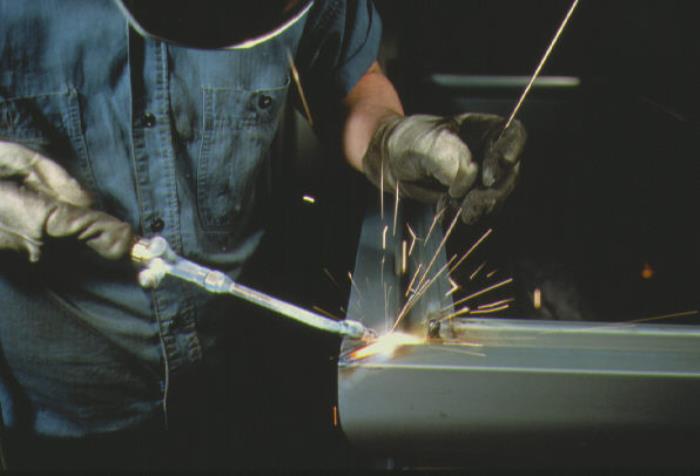
Overview
Welder's anthrax is a newly identified, rare, and often deadly disease that affects metalworkers. Metalworkers with welder's anthrax have pneumonia caused by bacteria that produces anthrax toxin, but it isn't actually anthrax. Welder's anthrax and anthrax are treated similarly, but they are caused by slightly different bacteria and affect different people.
CDC first identified welder's anthrax in 1994. From 1994-2024, 9 patients in the United States have been diagnosed with what is now called welder's anthrax. All of the patients were metalworkers, and 8 were welders. They all worked in either Texas or Louisiana. All patients were hospitalized, and those that survived past the emergency department were all admitted to the intensive care unit. Six of the 9 patients died. All patients admitted to the intensive care unit received antibiotic treatment, and 2 of the survivors also got anthrax antitoxin.
Cases of welder's anthrax may have been missed because this newly recognized disease isn't widely understood or well known. Doctors may not know what patients do for a living and therefore don't test patients for this disease.
Signs and symptoms
People diagnosed with welder's anthrax had abnormal chest x-rays and were diagnosed with pneumonia.
Signs and symptoms for welder's anthrax may be confused for a kind of anthrax called inhalation anthrax that affects the lungs. These include:
- Fever or chills
- Cough
- Shortness of breath
- Coughing up blood
If you think you may have welder's anthrax
Who is at risk
All patients diagnosed with welder's anthrax have been metalworkers, and most were welders.
Researchers think the disease may be linked to exposure to metal fumes and iron oxide breathed in during welding. Welders and other workers exposed to metal fumes and mineral dusts have an increased risk of pneumonia and death. Exposure to metal fumes might increase the chance of lung infection, even with common, relatively harmless bacteria.
We don't yet know how metal fumes cause disease. It's possible that metal fumes (or iron) help bacteria grow, help bacteria stick to lung tissues, or make it harder for your immune system to fight bacteria in the lungs. The amount of iron in the soil is much higher around welding sites than other places, but we need more research to understand how this affects the bacteria and possibly contributes to welder's anthrax.
Prevention
Welders and other metalworkers should be aware if they're potentially at risk on the job and how to protect themselves. The Occupational Safety and Health Administration's (OSHA's) Hazard Communication Standard requires employers to inform and train workers on potential work dangers and safe practices, procedures, and protective measures.
Steps for employers
Employers can take steps to help prevent welder's anthrax using the hierarchy of controls. Conduct a hazard assessment for all welders, other metalworkers, and supervisors at worksites to prevent exposure to the bacteria that cause welder's anthrax.
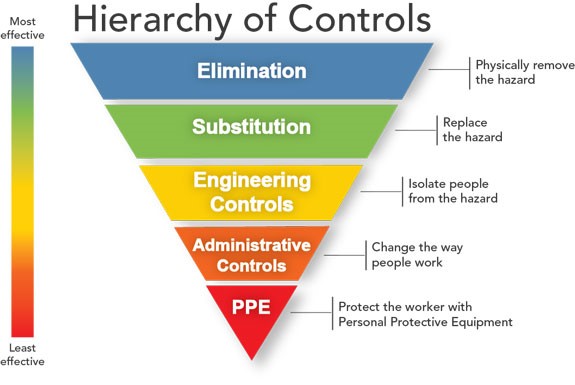
1. Elimination and substitution controls
Elimination and substitution controls to help reduce exposure to welding fumes and gases and contaminated soil by:
- Using a less toxic welding type or consumable.
- Keeping welding surfaces free of any coatings, dirt, and dust that may lead to potentially toxic exposures.
2. Engineering controls
Engineering controls can include the use of ventilation systems to remove fumes and gases.
- Do not assume that welding outdoors or in open areas provides enough ventilation, even when welders use proper positioning and natural drafts.
- Position local exhaust systems to draw fumes and gases away from workers in the area
3. Administrative controls
Administrative controls include maintaining a clean and dirt-free worksite.
- Routinely clean with a vacuum equipped with a high-efficiency particulate air (HEPA) filter or wet cleaning methods.
- Don't use compressed air or dry sweeping or brushing.
- Use dust control programs in outdoor workplaces and near workplaces open to the outdoors, and limit nearby activities that kick up dry dust.
- In busy areas, add water, hydroscopic compounds, or surfactants to roadways and surfaces to help control dirt and dust exposures. Don't apply these substances where welding occurs as this may create an electrocution hazard.
Treatment and recovery
People with welder's anthrax generally get the same treatments as people with anthrax, including antibiotics and anthrax antitoxin. The sooner they get treatment, the more likely they are to recover.
It's very important to make sure that your healthcare providers know you may be at risk for welder's anthrax so they can test you for it and get you the right treatment. Most people with welder's anthrax have died because the disease wasn't recognized and patients weren't treated quickly.
- Welder's Anthrax | Blogs | CDC
- Welder's Anthrax: A Tale of 2 Cases - PMC
- Welder's Anthrax: A Review of an Occupational Disease - PMC
- Torén, K.; Blanc, P.D.; Naidoo, R.N.; Murgia, N.; Qvarfordt, I.; Aspevall, O.; Dahlman-Hoglund, A.; Schioler, L. Occupational Exposure to Dust and to Fumes, Work as a Welder and Invasive Pneumococcal Disease Risk. Environ. Med. 2019, 77, 57–63.
- Marongiu, A.; Hasan, O.; Ali, A.; Bakhsh, S.; George, B.; Irfan, N.; Minelli, C.; Canova, C.; Schofield, S.; De Matteis, S.; et al.. Are Welders More at Risk of Respiratory Infections? Findings from a Cross-sectional Survey and Analysis of Medical Records in Shipyard Workers: The WELSHIP Project. Thorax 2016, 71, 601–606.
- Torén, K.; Qvarfordt, I.; Bergdahl, I.A.; Järvholm, B. Increased Mortality from Infectious Pneumonia after Occupational Exposure to Inorganic Dust, Metal Fumes and Chemicals. Thorax 2011, 66, 992–996.
- Wong, A.; Marrie, T.J.; Garg, S.; Kellner, J.D.; Tyrrell, G.J.; SPAT Group. Welders Are at Increased Risk for Invasive Pneumococcal Disease. J. Infect. Dis. 2010, 14, e796–e799.
- Coggon, D.; Inskip, H.; Winter, P.; Pannett, B. Lobar Pneumonia: An Occupational disease in Welders. Lancet 1994, 344, 41–43.