



At a glance
We looked at how restaurants and whether food workers took steps to stop cross contamination when preparing chicken. We also looked at whether managers knew the right cooking temperature for raw chicken, whether food workers used thermometers for cooked chicken, and whether food workers checked thermometers for accuracy. Learn what restaurant management and food safety programs can do to improve chicken preparation and cooking.
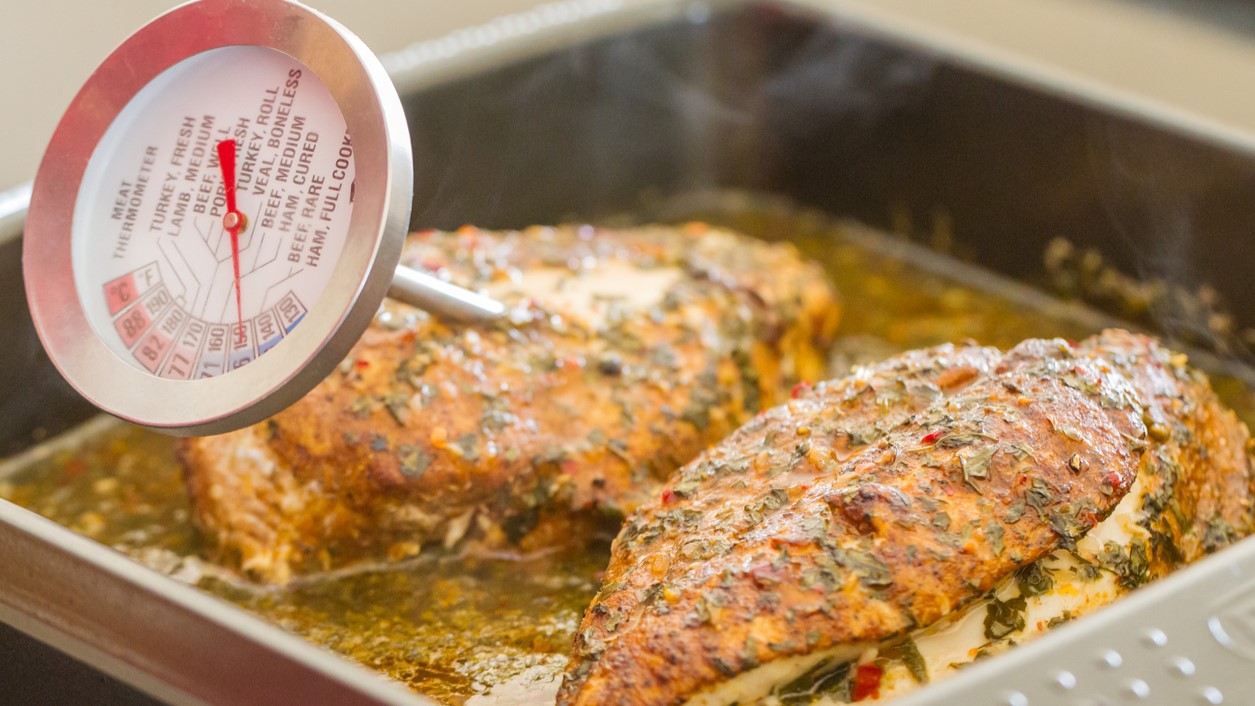
Key takeaways
Our research found that many restaurants do not follow the Food and Drug Administration's (FDA's) advice for preparing and cooking chicken. Restaurant management and food safety programs can work to improve how restaurants cook and prepare chicken to help reduce foodborne illness outbreaks. Our research supports creating restaurant training and prevention programs that focus on:
- Lessening the chances for raw chicken to contaminate other food or equipment
- Cooking chicken to the temperature recommended by FDA (165°F)
Why this is important
Chicken is commonly linked with foodborne illness, with most of these illnesses coming from Salmonella and CampylobacterA germs. Illness linked to chicken can come from cross contamination.B
Cross contamination occurs when raw, contaminated chicken touches other foods or kitchen equipment. Steps to stop cross contamination include:
- Washing, rinsing, and sanitizingC equipment and surfaces used with raw chicken
- Wearing disposableD gloves
- Using separate cutting boards for raw chicken and other foods
Illness can also come from cooked chicken not reaching a high enough temperature (165°F) to kill any germs that might be inside it.
What we learned
We found that many restaurants do not follow FDA's advice for preparing and cooking chicken.
Preparation
Four in 10 managers said that they do not always have cutting boards assigned for use only with raw meat.
One in four managers said that their workers do not always use gloves while working with raw chicken.
Most managers said their restaurants had a cleaning policy about equipment and surfaces used when preparing raw chicken:
- Most of these policies included the three steps recommended by FDA: washing, rinsing, and sanitizing
- About one in 10 managers said they wash and rinse equipment but do not sanitize it
- About one in three managers said they wipe equipment with sanitizer but do not wash or rinse it first
Cooking
Less than half of the kitchen managers we talked to:
- Knew the temperature to which chicken should be cooked (165°F)
- Said that their food workers use a thermometer to tell when chicken is fully cooked
In restaurants that use thermometers, about one in three managers said that their thermometers are checked for accuracy less than once a month.
More information
- Journal article this plain language summary is based on
- More key findings on restaurant practices and from investigation data
This page was last updated on this date. Updates may include minor edits, image changes, or other modifications to page content.
The information on this page was last reviewed by subject matter experts to ensure accuracy.
- Salmonella and Campylobacter: Germs that cause foodborne illness.
- Cross contamination: Spread of germs from one surface or food to another by contact.
- Sanitize: Process to reduce germs to levels public health codes or regulations consider safe. Sanitizing is done with weaker bleach solutions, sanitizing sprays, or heat. Clean surfaces before you sanitize them.
- Disposable: Designed to be used once and then thrown away.