



At a glance
eNews is the monthly newsletter of the National Institute for Occupational Safety and Health (NIOSH). Each month includes an update from NIOSH Director Dr. John Howard, featured NIOSH research, new worker safety and health resources, upcoming meeting, and more!
From the Director's Desk
John Howard, M.D., Director, NIOSH
Beat the Heat: Simple Steps to Keep Workers Safe
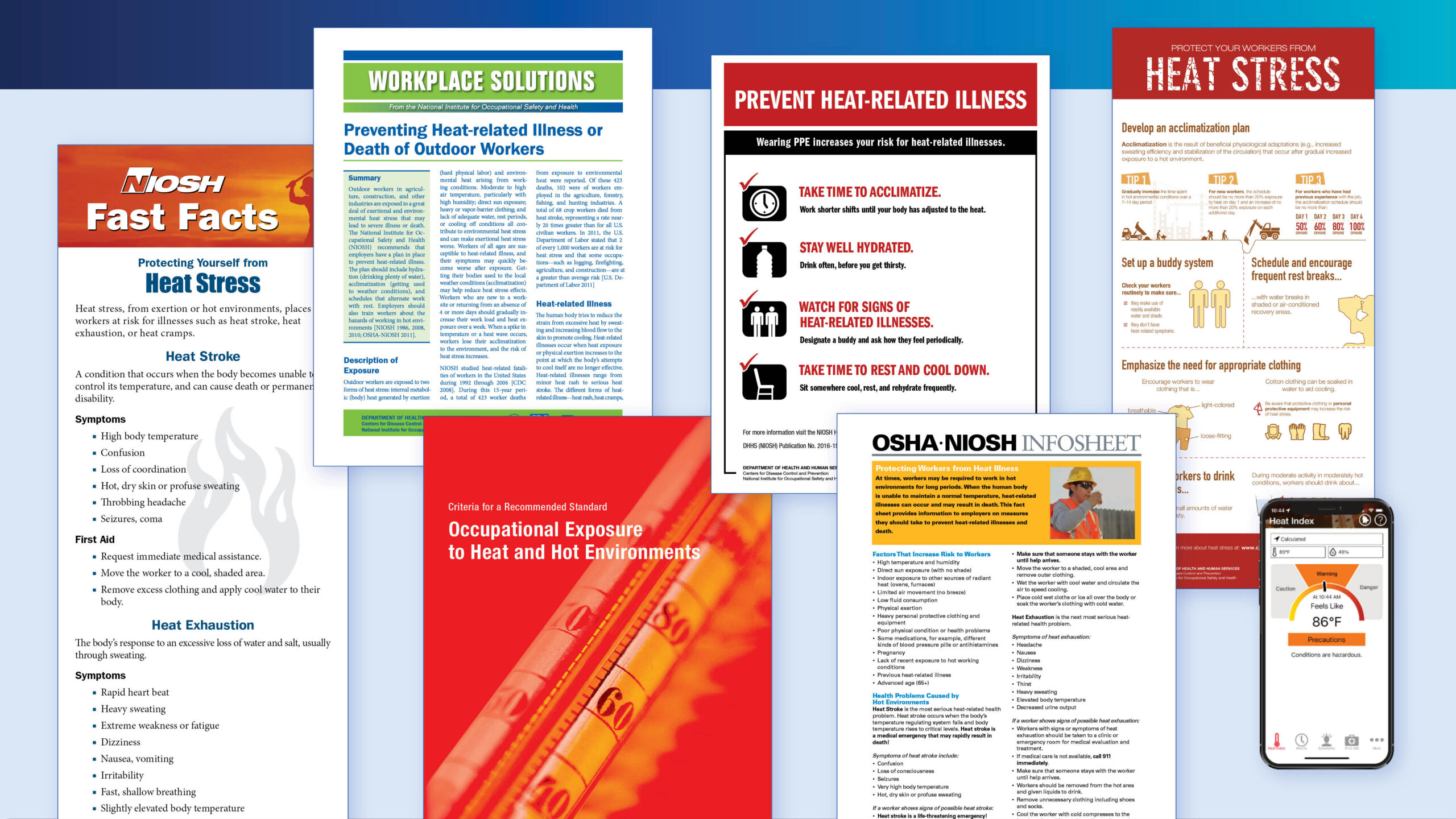
As we approach Heat Safety Week, May 18–22, we are reminded that rising temperatures increase risks for workers in many industries. Each year, heat exposures contribute to work-related illnesses, injuries, and deaths. At NIOSH, we focus on preventing heat stress and reducing its impact on workers.
Heat stress can affect anyone working in hot environments, both indoors and out. Factors such as high temperatures, humidity, heavy workloads, wearing personal protective equipment (PPE), and lack of acclimatization can quickly place workers at increased risk. Even conditions that may not seem extreme can lead to serious outcomes, especially when appropriate protections are not in place.
Preventing heat-related illness requires planning, awareness, and action. Employers and workers can take simple, effective steps, such as providing regular breaks in a cool or shaded area and ensuring access to water. Workers can also gradually build tolerance to heat through acclimatization and learn to recognize the symptoms of heat-related illness.
NIOSH offers a range of resources to support workplace heat safety efforts. Our communication resources are based on recommendations in our technical guidance document, the Criteria for a Recommended Standard: Occupational Exposure to Heat and Hot Environments.
These resources include a fast facts card, OSHA-NIOSH infosheet, poster, infographic, and workplace solutions. They provide practical guidance for preventing heat-related illness. These materials can help safety professionals, employers, and workers understand how heat affects workplaces and how to plan and take appropriate action.
In addition, the OSHA-NIOSH Heat Safety Tool App is useful for planning outdoor work activities based on how hot it feels throughout the day. It has a real-time heat index and hourly forecasts for your location. It also provides occupational safety and health recommendations from OSHA and NIOSH.
Heat Safety Week is an opportunity to raise awareness and reinforce the importance of heat safety across workplaces. Take time to explore NIOSH resources, incorporate heat safety into your workplace programs, and protect workers throughout the warmer months.
Research Rounds
Detecting PPE Concerns in OSHA Complaints Using Machine Learning to Support Infectious Disease Outbreak Response
By: Nora Payne and Emily Haas, NIOSH
Why is this study important?
When workers have concerns or complaints about personal protective equipment (PPE), they often report them to the Occupational Safety and Health Administration (OSHA). Using machine learning to monitor these concerns and track how they evolve over time, this study's researchers suggest a cost-effective method to efficiently learn about the challenges workers face when getting, using, or taking care of their PPE. Our approach could give public health agencies timely and useful data. This information can help them decide how to distribute PPE and what guidance or interventions to offer, especially during outbreaks.
How did you do the study?
To create a dataset for machine learning, we manually reviewed about 3,000 pandemic-related PPE complaints filed from January 2020 through July 2022. We divided the dataset into two parts. We used one part to train the model and the other part to check how well it detected each concern. When concerns were accurately detected, we could use the model to find similar concerns in the remaining complaints. Then, we analyzed how frequently each concern was reported over time, nationally and within specific industries.
What did you find?
Nearly 40% of pandemic-related OSHA complaints included at least one PPE-related issue. Workers reported a wide variety of PPE concerns, such as physiological or physical discomfort, poor fit, and lack of training. The model accurately detected three key issues: PPE not being available, employers not enforcing PPE use, and workers not wearing PPE. These detections revealed important patterns. For example, in the summer of 2020, as restaurants and bars reopened, PPE concerns in the Accommodations and Food Services sector changed. Workers became more concerned about enforcing PPE rules than about having enough PPE.
What are the next steps?
We are looking for ways to improve the approach. Our long-term goal is to develop a system that tracks PPE-related concerns in worker safety complaints as they happen in real time.
Highlights
NIOSH Announces New Black Lung Screening Dates
The NIOSH Coal Workers' Health Surveillance Program announced it will offer black lung screenings May 4–14 in Ohio and Illinois. Participation provides coal miners with a free health exam and a confidential report on their lung health. Visit the Coal Workers' Health Surveillance Program webpage to learn more about locations, specific days, and times.
Stand-Down to Prevent Falls in Construction
This week, construction workers across the nation will pause work to take part in the 13th National Safety Stand-Down to Prevent Falls in Construction. This annual event is a combined effort by NIOSH, OSHA, and CPWR—The Center for Construction Research and Training. Read the NIOSH Update to learn more.
Over 17,000 Requests and Counting: Explore the New HHE Program Dashboard
Use this new HHE Program Dashboard to see how the NIOSH Health Hazard Evaluation (HHE) Program has responded to over 17,000 requests for workplace hazard assessments over the last five decades. This interactive display shows request counts, industry breakdowns, published reports, and more, all filterable by state and year. It will be regularly updated to reflect the program's ongoing work to reduce health hazards and prevent work-related illness and injury across the country.
Reminder: Nominations for Prevention through Design Award Due June 1
NIOSH continues to call for nominations for the 2026 Prevention through Design (PtD) Award. Participants are encouraged to submit new or prior nominations for projects that improve workers' health and safety. Nominations are due June 1.
Federal Register Notices
For Public Comment
Request for Public Comment on the Draft Immediately Dangerous to Life or Health (IDLH) Value Document for Lewisite
The notice was posted March 18. Comments must be received by May 18.
Meeting of the Advisory Board on Radiation and Worker Health, Subcommittee for Procedure Reviews, National Institute for Occupational Safety and Health
The notice was posted on March 30. Comments must be received by May 29. The meeting will be held on June 5.
Other Notices
NIOSH Science Bulletin

News From Our Partners
Georgia Mental Health Alliance Safety Stand Down
The Georgia Mental Health Alliance, in partnership with the Georgia Struck-by Alliance, invites employers across all industries to join in the "Score Goals at Work by Cooling Down Your Mind and Body!" Safety Stand Down during April–July. Employers can use these tools for stand-down activities to help prevent mental health emergencies, heat illness, and struck-by hazards in the workplace.
New Dashboard for Worker Health in Nebraska
The Nebraska Department of Health and Human Services recently published a Worker Health Dashboard. The dashboard presents health indicators among Nebraska workers by industry and occupation groups using data from the Behavioral Risk Factor Surveillance System. It displays prevalence estimates for health outcomes and risk behaviors and allows comparisons between specific industries and occupations and all workers across Nebraska.
Updated National Emphasis Program—Outdoor and Indoor Heat-related Hazards
The Occupational Safety and Health Administration (OSHA) has updated its National Emphasis Program on heat-related hazards. It expands protections to both indoor and outdoor workers and targets high-risk industries. It emphasizes outreach and offers free consultation services to help employers prevent heat-related illnesses. For more information, visit the Heat Illness Prevention webpage and read the press release.
Annual Report of Severe Injuries and Illness Reported to OSHA
OSHA recently published 2024 Annual Report of Severe Injuries and Illnesses Reported From Employers Covered by Federal OSHA. The report summarizes the most common severe injuries and illnesses reported to OSHA in 2024. Spotlight pages report eye losses, a 10-year analysis of falls and forklift-related injuries, and the Severe Injury Dashboard. The annual reports, dataset, and dashboard include all severe injury and illness reports subject to federal enforcement authority.
Falls Prevention Stand-Down Certificate Now Available
The Certificate of Participation for the National Stand-Down to Prevent Falls in Construction is now available from OSHA. This certificate helps measure participation and overall campaign reach. We encourage all partners to promote it widely to ensure everyone who took part is recognized and counted. The certificate is available in both English and Spanish.