



Key points
- Although it is rare, men can get breast cancer.
- Several factors can increase a man’s chance of getting breast cancer.
Facts
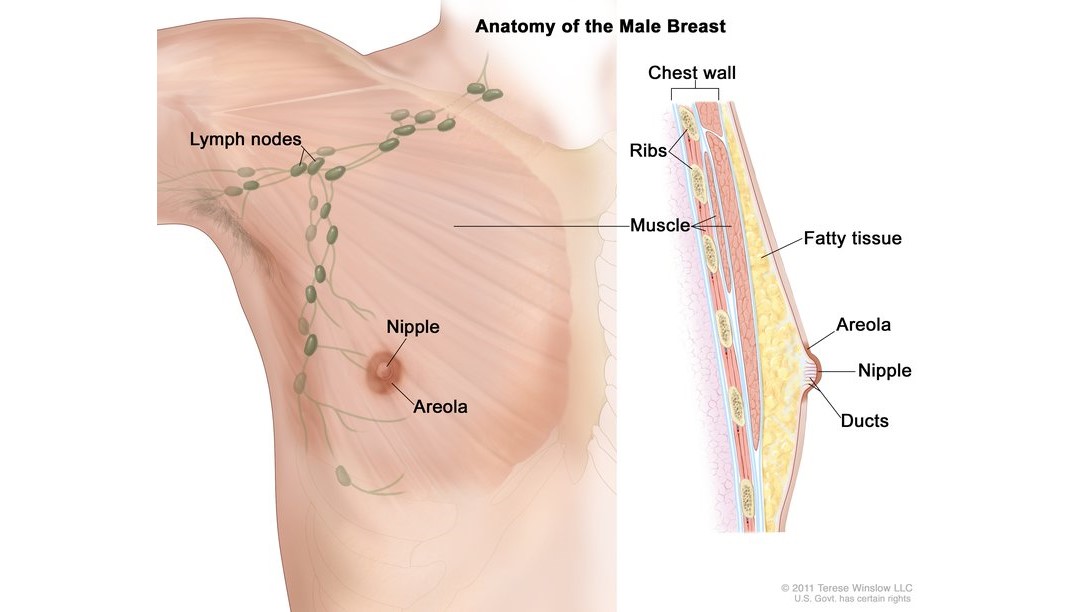
© 2011 Terese Winslow LLC. US government has certain rights. Used with permission. Contact artist at www.teresewinslow.com for licensing.
Breast cancer is most often found in women, but men can get breast cancer too. About 1 out of every 100 breast cancers diagnosed in the United States is found in a man.
The most common kinds of breast cancer in men are:
- Invasive ductal carcinoma. The cancer cells begin in the ducts and then grow outside the ducts into other parts of the breast tissue. Invasive cancer cells can also spread, or metastasize, to other parts of the body.
- Ductal carcinoma in situ (DCIS) is a breast disease that may lead to invasive breast cancer. The cancer cells are only in the lining of the ducts, and have not spread to other tissues in the breast.
Symptoms
The most common symptoms of breast cancer in men are:
- A lump or swelling in the breast.
- Redness or flaky skin in the breast.
- Irritation or dimpling of breast skin.
- Nipple discharge.
- Pulling in of the nipple or pain in the nipple area.
These symptoms can happen with other conditions that are not cancer. If you have any symptoms or changes, see your doctor right away.
Risk factors
Several factors can increase a man's chance of getting breast cancer.
- Older age. The risk for breast cancer increases with age. Most breast cancers are found after age 50.
- Genetic mutations. Inherited changes (mutations) in certain genes, such as BRCA1 and BRCA2, increase breast cancer risk.
- Family history of breast cancer. A man's risk for breast cancer is higher if a close family member has had breast cancer.
- Radiation therapy treatment. Men who had radiation therapy to the chest have a higher risk of getting breast cancer.
- Hormone therapy treatment. Drugs containing estrogen (a hormone that helps develop and maintain female sex characteristics), which were used to treat prostate cancer in the past, may increase men's breast cancer risk.
- Klinefelter syndrome. Klinefelter syndrome is a rare genetic condition in which a male has an extra X chromosome. This can lead to the body making higher levels of estrogen and lower levels of androgens (hormones that help develop and maintain male sex characteristics).
- Certain conditions that affect the testicles have been associated with increased breast cancer risk.
- Liver disease. Cirrhosis (scarring) of the liver can lower androgen levels and raise estrogen levels in men, increasing the risk of breast cancer.
- Overweight and obesity. Older men who are overweight or have obesity have a higher risk of getting breast cancer than men at a healthy weight.
How to reduce your risk
Talk to your doctor about your family history of cancer. If several members of your family have had breast or ovarian cancer, or one of your family members has a known BRCA1 or BRCA2 mutation, share this information with your doctor. Your doctor may refer you for genetic counseling. In men, mutations in the BRCA1 and BRCA2 genes can increase the risk of breast cancer, high-grade prostate cancer, and pancreatic cancer.
If genetic testing shows that you have a BRCA1 or BRCA2 gene mutation, your doctor will explain what you should do to find cancer early, if you get it.
Treatment
As in women, treatment for breast cancer in men depends on the type of cancer and how far it has spread. Treatment may include surgery, chemotherapy, radiation therapy, hormone therapy, and targeted therapy. For more information, see the National Cancer Institute's Male Breast Cancer Treatment.
Personal stories
Finding Strength Through Connection
At 34 years old, Kenneth discovered he had breast cancer. It took an emotional toll on him, but he found strength by connecting with others.
Facing Breast Cancer Together
While most fathers and daughters bond over things like dancing or fishing or basketball, Vanessa and her father Arnaldo grew closer when they faced breast cancer treatment together.
Taking Responsibility
After discovering his family history of breast cancer, Don took responsibility for his own health by getting tested and later having an elective mastectomy.
More information
- BRCA Mutations: Cancer Risk and Genetic Testing (National Cancer Institute)
- Male Breast Cancer Treatment (PDQ®)–Health Professional Version (National Cancer Institute)
This page was last updated on this date. Updates may include minor edits, image changes, or other modifications to page content.
The information on this page was last reviewed by subject matter experts to ensure accuracy.