
What to know
- CDC works with partners to test and monitor wastewater for viruses.
- Wastewater monitoring data helps communities act quickly to prevent the spread of infections.
- Data from wastewater can be used with other data to provide a more complete picture of disease spread within a community.
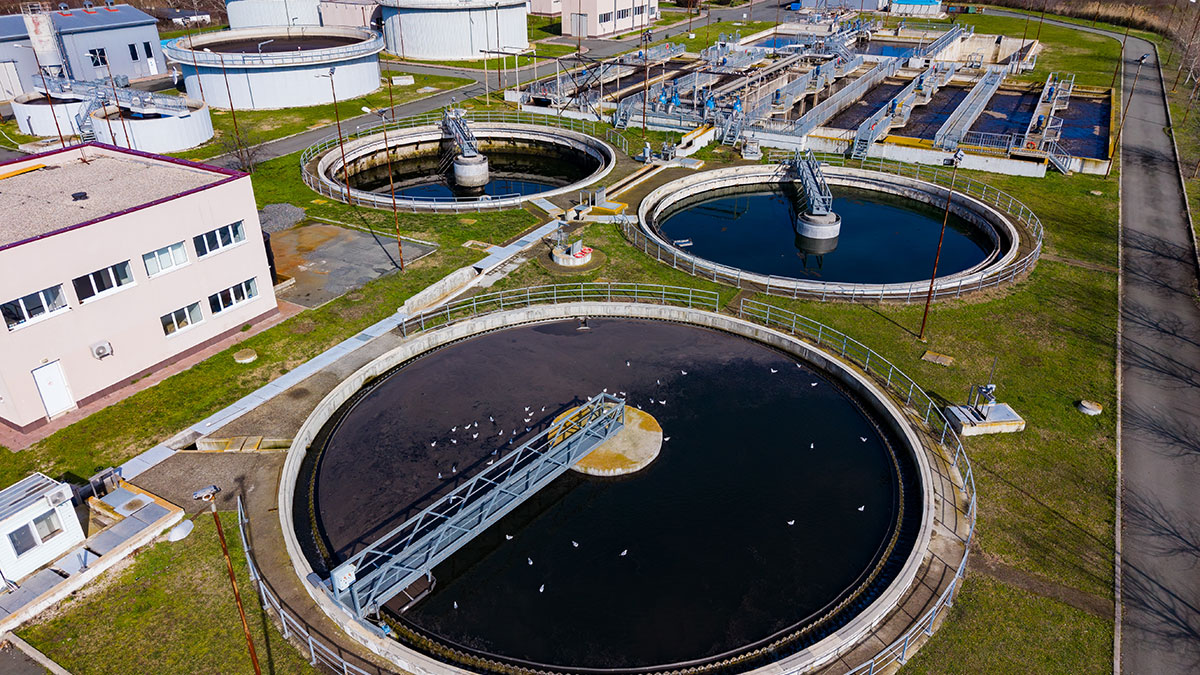
- CDC shares wastewater data for flu A, COVID-19, RSV, measles, A(H5), and monkeypox.

Overview
Wastewater monitoring data can provide:
- A community-level perspective on what diseases are circulating locally
- An early warning that infectious diseases may be spreading in a community
- An efficient approach that can detect infection in a community, regardless of whether people have symptoms or seek medical care
- Data for communities where patients aren't always able to get tested for infectious diseases.
Available data
CDC's wastewater monitoring program collects, analyzes, and shares data for multiple viruses in wastewater, including the following:
- Influenza A (one subtype of influenza viruses that cause flu illness)
- SARS-CoV-2 (the virus that causes COVID-19)
- Respiratory syncytial virus (RSV)
- Measles
- Avian influenza A(H5) (the virus that causes A(H5) bird flu)
- Monkeypox
How data are used
Wastewater monitoring data are most useful when used with other data, such as hospital visits or clinical testing data. Wastewater data are primarily used in a few key ways.
Earlier detection
Wastewater monitoring can detect viruses spreading from one person to another within a community earlier than clinical testing and before they go to their doctor or hospital. It can also detect infections regardless of whether they cause severe illness, mild illness, or no symptoms at all.
By acting as an early warning system, wastewater monitoring can detect small changes early and inform quick action to prevent further infections.
Tracking infection trends
Wastewater data can be used to track infection trends at the community, state, region, and national levels. More data over time can give health departments better, more reliable insights into trends that are happening in a community, state, region, and the nation.
Informing public health action
Public health officials watch for detections and trends of viruses in wastewater and use these data to inform public health decisions. State and local health officials track a variety of data and put this information together to understand the local situation and decide how to best respond.
State and local health officials track a variety of data and put this information together. These data help them understand the local situation and decide how to best respond to prevent disease spread. Public health officials watch for detections or sustained increasing levels of specific viruses in wastewater and use these data to alert clinicians, hospitals, and the community so that they can quickly take appropriate action to safeguard people's health.
Monitoring variants
Data from wastewater can be used to monitor strains or variants of a virus that are causing infections in a community.
When data are updated
CDC updates the data on public wastewater data dashboards every Friday with the previous week's data. This timeframe allows CDC to review data for accuracy.
CDC provides additional wastewater data for download or API connection on data.cdc.gov (search "wastewater").
How CDC protects privacy
Wastewater samples contain a mix of DNA and RNA from bacteria, viruses, animals, humans, and other living things. CDC's wastewater program monitors infectious diseases and does not track or assess human genomic data.
CDC takes multiple steps to protect the privacy of individuals.
CDC does not collect data from individuals
Wastewater is collected from a combined, community-level sample, not from an individual person or household. Sampling covers a large enough population that wastewater testing results for infectious diseases won't be associated with an individual person.
CDC has public data display policies
CDC will not publicly display any wastewater detections that could be used in combination with clinical diagnostic testing data to identify an individual. Locations for wastewater treatment plants are approximated. Locations may be also adjusted to allow sites within close proximity to be more easily distinguished on a map. CDC does not display data from wastewater monitoring sites with known data quality issues.
In addition, CDC does not publicly display data that meet any of the following criteria, unless approved by the local jurisdiction:
- Data from sewersheds that serve fewer than 3,000 people
- Data from facility or institution-specific sampling locations
- Data from tribal communities
CDC uses data privacy technology
CDC uses the publicly available NCBI Human Read Removal Tool to ensure that any potential remaining human DNA is removed. CDC receives most sequencing data via NCBI, which removes any human DNA sequences before the data is sent to CDC.
Scientific limitations protect privacy
Multiple factors protect the privacy of individuals when wastewater is used for public health.
Wastewater contains fragments of genetic material from thousands of people, making it unlikely that any single individual could be identified.
Every person has their own unique genome, or DNA "fingerprint." To identify an individual, one would need to match the DNA fragments from wastewater to their DNA fingerprint. Although there is a small, theoretical chance this could happen, it is highly unlikely. CDC does not have individuals' DNA fingerprints and therefore cannot match DNA fragments found in wastewater with individuals.
CDC is preparing for the future
CDC will continue to preserve individual privacy and prioritize data stewardship as technology evolves, including changing policies if technologies emerge that enable individual identification using wastewater data.
CDC will adhere to ethical standards in wastewater science to ensure individual privacy is protected and public health is enhanced. CDC will work with participating communities to understand ongoing priorities and concerns.
Limitations
Data collected in CDC's wastewater monitoring program may over-represent certain populations within a state or territory. For example, most jurisdictions report data from municipal sewer system samples and may have limited inclusion of populations that rely on other non-sewered sanitation systems (e.g. septic tanks). Data may also over-represent urban and suburban populations because of wastewater utility locations and the associated sewershed. As a result, these data may not accurately depict the full picture of viral activity for the entire state or territory.
The data presented are preliminary and may change as more data are received. Differences in the data presented by CDC and state health departments likely represent differing levels of data reporting. Data presented by the state are likely the more complete ones. Additionally, there may be differences in data visualization approaches that impact how data are displayed.
Specific wastewater data limitations for each pathogen will be available in the data footnotes or About the Data sections:
Why wastewater monitoring is valuable
Wastewater monitoring:
- Provides early detectionWastewater monitoring data can show changes in disease trends before trends are seen in clinical cases. This information can be used to prepare healthcare providers and hospital systems for upcoming increases in visits and hospitalizations. These data can also inform other public health prevention efforts.
- Is independent from medical systemsWastewater monitoring can detect infections in a community whether or not people have symptoms. Unlike other types of public health reporting, wastewater monitoring does not depend on people having access to healthcare, visiting a doctor when sick, or availability of testing for an infection.
- Is fast and efficientFrom toilet flush to results only takes about 5 to 7 days. Wastewater monitoring from a single treatment plant can provide information on community-level disease trends for hundreds, thousands, and even millions of people.
- Has national coverageCDC receives wastewater monitoring data representing all 50 states, 7 territories, and some tribal communities. Wastewater monitoring can be implemented in any community that is served by municipal wastewater collection systems.
- Can be used to track emerging health threatsWastewater monitoring can meet changing public health needs because it can be rapidly adapted to track emerging health threats. CDC is working to better understand how wastewater monitoring can also be used to detect and respond to other infectious disease threats.
- Can be used to track changes in health threatsBy studying the genetic material of viruses, pathogen genomics can identify when there are important changes to these viruses, where these changes are found, and how common they are.
- Complements other public health surveillance dataWastewater data are most useful when used with other surveillance data. When reviewed together, wastewater and other surveillance data can provide a more complete picture of disease spread within a community.

