



At a glance
We looked at how restaurant traits (for example, number of meals served), policies, and practices were linked to foodborne illness outbreaks and to sick food workers as the cause of outbreaks. Explore our findings on restaurants with kitchen managers certified in food safety.

Key takeaways
Our research showed that restaurants with kitchen managers certified in food safety were less likely to have outbreaks of foodborne illness. Restaurant managers can reduce their risk of outbreaks by requiring kitchen managers to pass a food safety certification exam.
More research is needed to find out how to reduce outbreaks caused by sick food workers. In the meantime, restaurants should stress the importance of managing illness of food workers.
Why this is important
Each year, the United States reports approximately 800 outbreaks of foodborne illness. We need to know the causes of foodborne illness outbreaks so we can prevent future ones. This study focused on restaurants because they are the most common place for outbreaks to occur.
What we learned
Our study found that restaurants with kitchen managers certified in food safety were less likely to have foodborne illness outbreaks.
Restaurant traits linked to outbreaks
Outbreak and nonoutbreak restaurants were similar on these traits:
- Ownership (chain vs. independent)
- Number of meals served
- Food safety training
- Language barriers
- Sick leave pay
- Policies to keep sick workers from working
Outbreak restaurants were less likely to have:
- A certified kitchen manager (CKM)A on staff
- Food safety certification training provided by a state or local agency
- Food safety certification training provided by a restaurant corporation
Outbreak restaurants were more likely to be:
- Sit-down restaurants
- Classified as ethnic restaurants
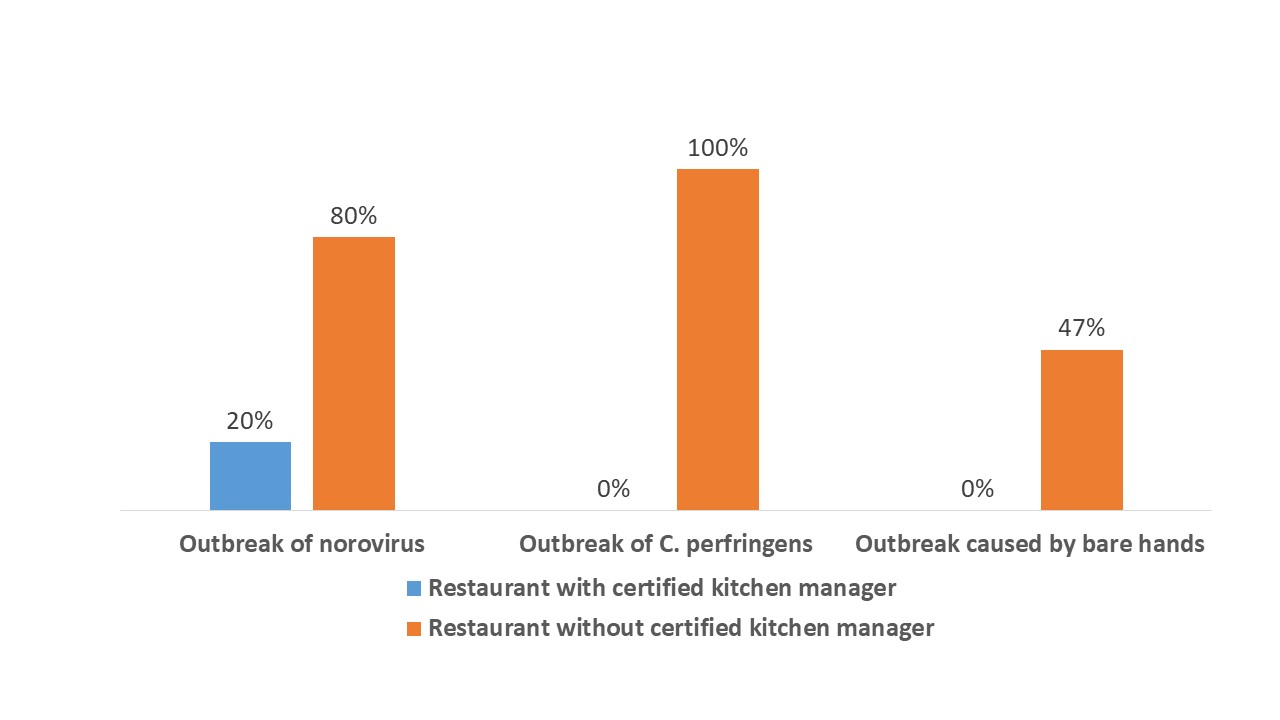
Outbreak restaurants with CKMs were less likely than outbreak restaurants without CKMs to have had outbreaks:
- Of norovirus and Clostridium perfringens
- Caused by workers touching food with their bare hands
Within outbreak restaurants, CKMs were more likely than other managers to be familiar with the Hazard Analysis Critical Control Point (HACCP)B system. All CKMs were familiar with the HACCP food safety system recommended by the U.S. Food and Drug Administration. Twenty percent of other managers were familiar with HACCP.
Restaurant traits linked to sick food workers
Kitchen manager certification, sick leave pay, and policies to keep sick workers from working did not lower rates of sick workers as a cause of outbreaks.
More information
- Journal article this plain language summary is based on
- Other summaries related to certification: certification and critical violations, food safety certification and knowledge, and ground beef preparation
- More key findings on restaurant practices and from investigation data
This page was last updated on this date. Updates may include minor edits, image changes, or other modifications to page content.
The information on this page was last reviewed by subject matter experts to ensure accuracy.
- Certified kitchen manager: Manager who passed a test to show knowledge of food safety.
- HACCP: A seven-step approach to identify and manage food-safety hazards.