



What to know
- COVID-19, flu, and [[tooltip:RSV|A common respiratory virus that usually causes mild, cold-like symptoms.]] are key indicators of overall [[tooltip:respiratory illness activity|Respiratory illness activity shows how much illness is spreading in an area based on recent data. Higher levels mean more illness is being reported.]]
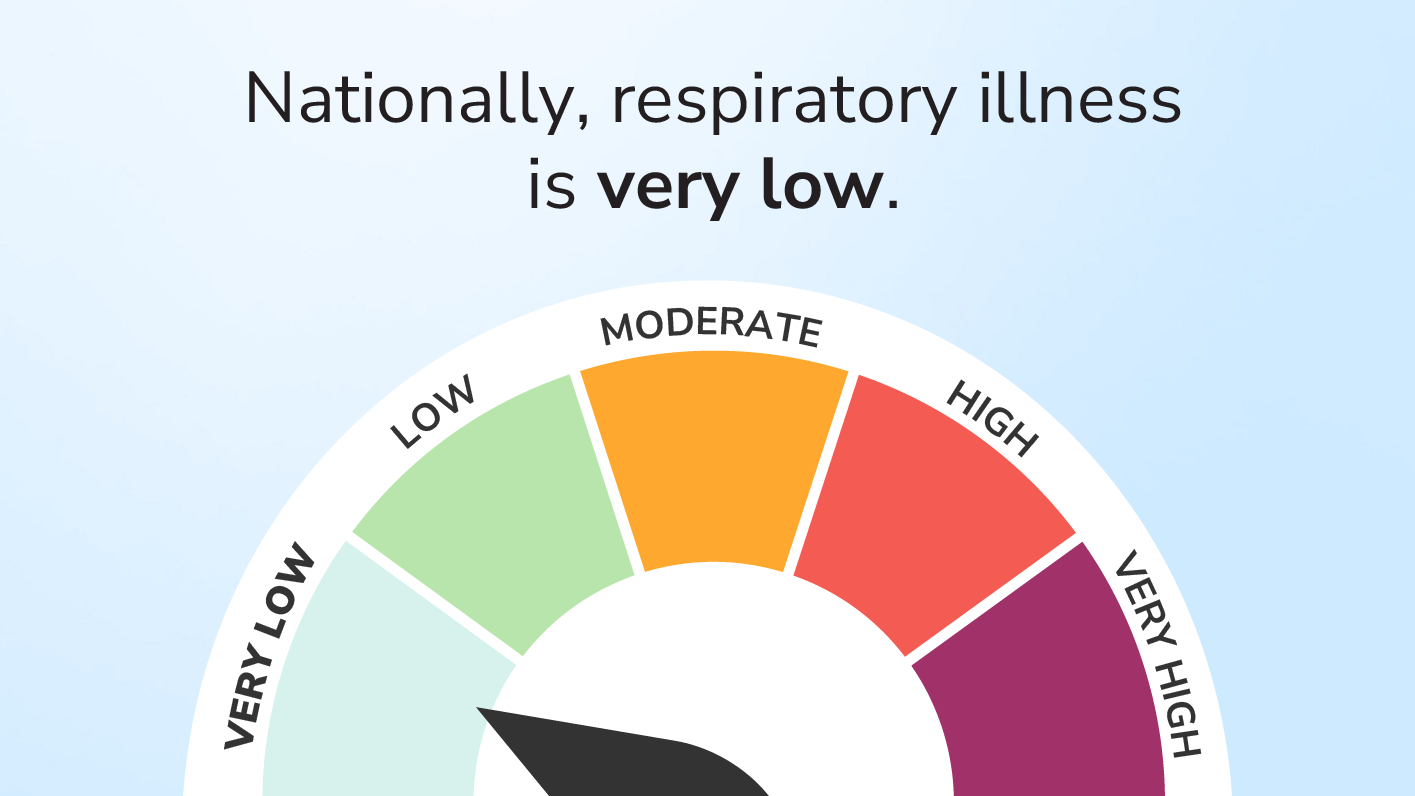
- The amount of acute respiratory illness causing people to seek health care is very low.
- RSV activity is very low in most areas of the country.
- COVID-19 activity remains elevated in some regions but is declining nationally.
- Seasonal flu activity is increasing in many parts of the country but remains low.
- Rhinovirus/Enterovirus (RV/EV) is elevated nationally.

Season outlook
CDC expects the 2026-2027 respiratory illness season to be much like last season. COVID-19, flu, and RSV are projected to cause about the same number of peak hospitalizations this fall and winter. CDC will update this outlook if there are changes.
Read more: 2026-2027 Respiratory Disease Season Outlook | CFA: Qualitative Assessments | CDC
Care and prevention
Respiratory illness can affect anyone, but young children, older adults, and people with chronic conditions or weakened immune systems face the highest risk. If you have symptoms like fever, cough, or shortness of breath, rest, stay hydrated and seek medical care for severe symptoms like difficulty breathing.
Explore trends, severity, and risk



This page was last updated on this date. Updates may include minor edits, image changes, or other modifications to page content.
The information on this page was last reviewed by subject matter experts to ensure accuracy.