



Key points
- The Congenital Heart Survey To Recognize Outcomes, Needs, and well-beinG of KIDS (CHSTRONG KIDS) helps us better understand the health and healthcare experiences of children living with heart defects.
- About 1 in 5 children in CHSTRONG KIDS were not up to date on recommended specialty care for their heart defect.

What is CHSTRONG KIDS?
CHSTRONG KIDS (Congenital Heart Survey To Recognize Outcomes, Needs, and well-beinG of KIDS) is one of the first large, population-based U.S. surveys to gather information from families about their child's healthcare use, education, social experiences, and quality of life.
Many studies include only children who receive care at specialty heart clinics. That means they may miss children who are no longer seeing a cardiologist. CHSTRONG KIDS helps fill that gap by identifying children through birth defects surveillance systems and collecting information directly from their caregivers.
CHSTRONG KIDS is organized by the National Center on Birth Defects and Developmental Disabilities at the Centers for Disease Control and Prevention (CDC), in collaboration with the following:
- Minnesota Department of Health
- Massachusetts Department of Public Health
- Boston University School of Public Health
What did we learn?
Researchers identified more than 7,200 children born with heart defects through birth defects surveillance systems. Caregivers from 1,841 families completed surveys about their child's health, healthcare, education, daily life, and family experiences. Thank you to everyone who participated in CHSTRONG KIDS!
One important finding was that about 1 in 5 children were not up to date on recommended specialty care for their heart defect. This means some children may not be included in studies that focus on patients receiving specialty care for their heart defect.
Because CHSTRONG KIDS includes children whether or not they currently receive specialty care for their heart defect, it provides a more complete picture of children living with heart defects.
Why is CHSTRONG KIDS important?
People born with heart defects are living longer because of advances in medical care and surgery. However, little is known about the long-term health and well-being of children born with heart defects or the needs of their caregivers.
CHSTRONG KIDS helps public health programs, healthcare professionals, and researchers better understand the needs of children living with heart defects and their families. The findings can be used to improve public health programs and identify opportunities to improve continuity of care.
About the CHSTRONG KIDS study
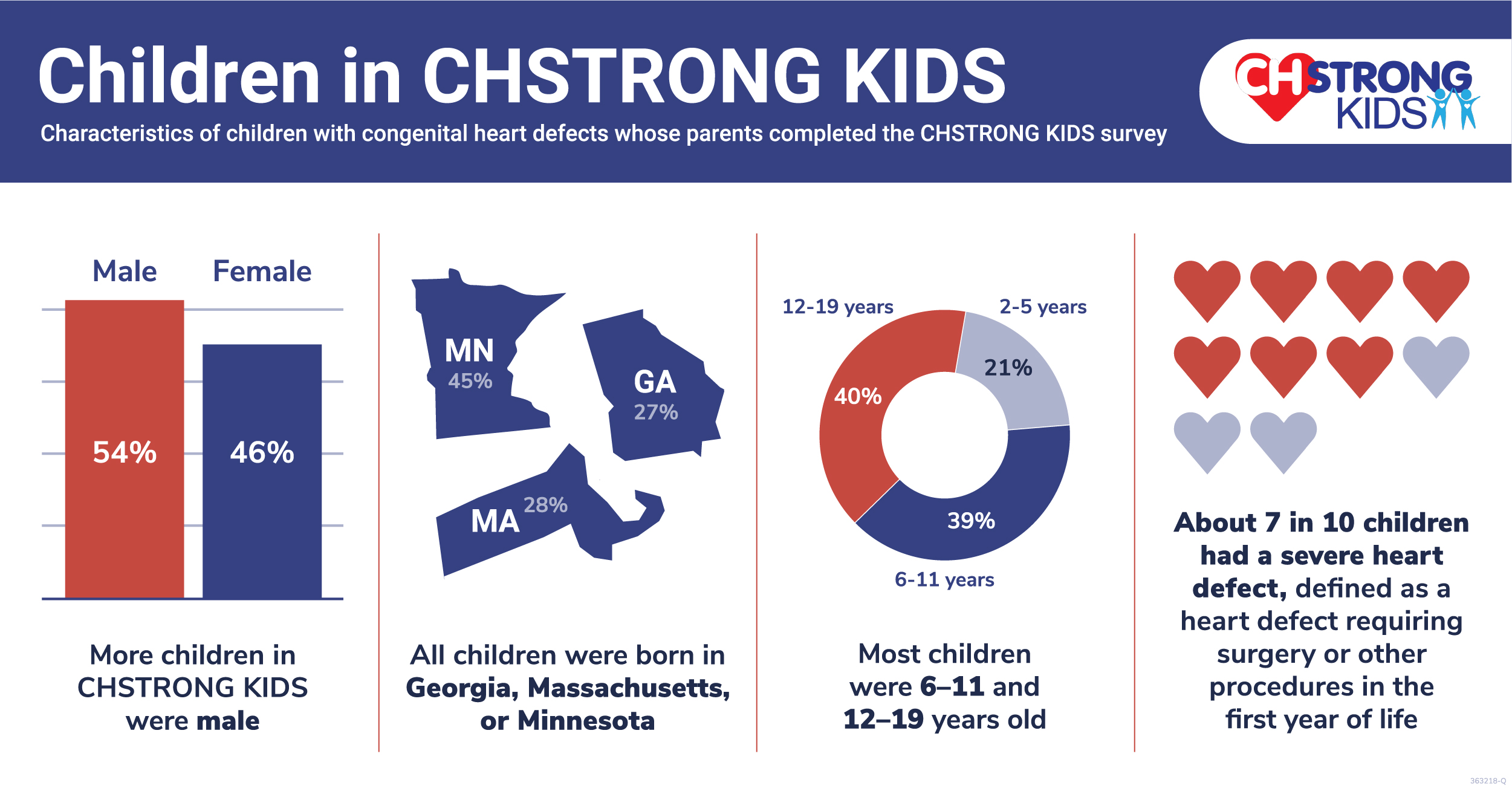
The study included children born between 2006 and 2021 who were identified through birth defects surveillance systems in:
- Metropolitan Atlanta, Georgia
- Massachusetts
- Minnesota
Caregivers completed surveys in 2024 and 2025. The survey asked about:
- Health and healthcare
- Visits to heart specialists
- School and daily activities
- Quality of life
- Preparing for adult healthcare
- Caregiver experiences
CDC received 1,841 completed surveys.
- More than half of the surveys were completed on paper, about 40% were completed online, and a few surveys were completed over the phone.
- At the time of the survey, CHSTRONG KIDS participants were aged 2 through 19 years.
- About 7 in 10 CHSTRONG KIDS participants had a heart defect considered severe, defined as a heart defect requiring surgery or other procedures during the first year of life.
This page was last updated on this date. Updates may include minor edits, image changes, or other modifications to page content.
The information on this page was last reviewed by subject matter experts to ensure accuracy.