



Key points
- Andes virus is a type of hantavirus that can cause a severe respiratory disease in people, called Hantavirus Pulmonary Syndrome (HPS).
- The virus can spread through contact with rodents, by touching an object with the virus on it, or, rarely, through contact with a sick person who has the virus.
- Early symptoms can look like flu.
- If you think you had contact with a person with Andes virus and are experiencing symptoms, contact a medical professional immediately.
Overview
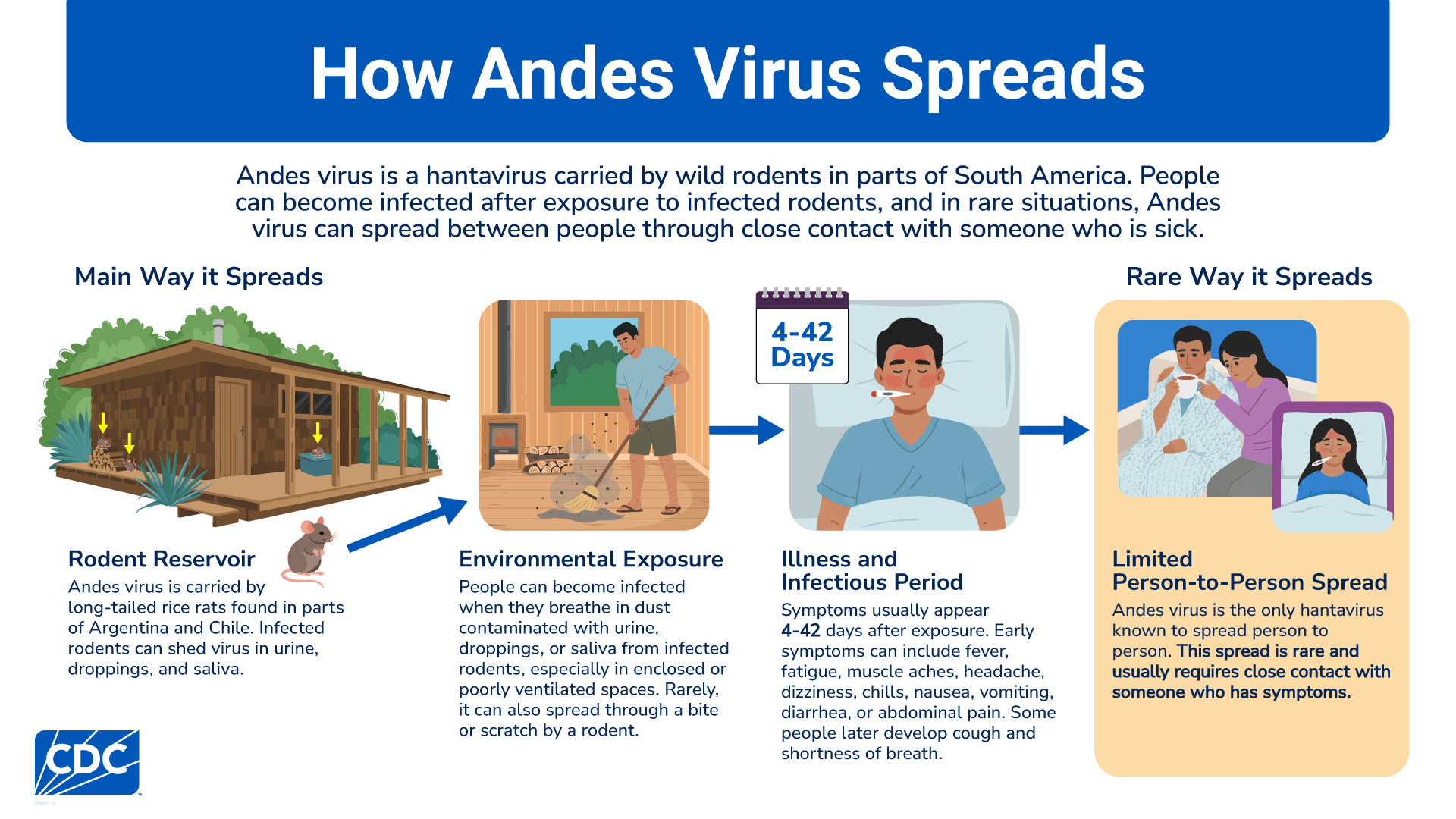
Andes virus is a type of hantavirus spread by rodents in South America and, less commonly, by other infected people. The rodents that carry Andes virus have not been found in the United States. It can cause a severe respiratory disease in people, called Hantavirus Pulmonary Syndrome (HPS). Andes virus is the only type of hantavirus that is known to spread person-to-person. This spread is usually limited to people who have close contact with a sick person. This includes direct physical contact, prolonged time spent in close or enclosed spaces, and exposure to the sick person's body fluids.
Signs and symptoms
Timing
Early symptoms of HPS due to Andes virus can include:
- Fatigue
- Fever
- Muscle aches, especially in the large muscle groups like the thighs, hips, back, and sometimes shoulders
About half of all patients with HPS also experience:
- Headaches
- Dizziness
- Chills
- Abdominal problems, like nausea, vomiting, diarrhea, and abdominal pain
Typically, people are only infectious while they have symptoms.
How it spreads
Andes virus can spread:
- Through contact with infected rodents or their urine, saliva, or feces
- By touching an object or surface with the virus on it, then touching your mouth, nose or eyes
- Through close contact with a person who is sick with Andes virus
Reducing risk
Avoid areas infested with rodents while visiting countries in South America.
Avoid spread between people by:
- Washing hands frequently
- Avoiding kissing and sexual contact with someone who may have Andes virus
- Avoid sharing drinks, cigarettes, hookah, and vapes with someone who may have Andes virus
- Avoid sharing eating utensils or eating food from the same plate or bowl as someone who may have Andes virus
- Maintaining distance from someone who may have Andes virus
Treatment
When immediate care is needed
There is no specific antiviral treatment or vaccine for Andes virus currently available. Symptoms may develop rapidly. Early medical care is critical with care centered on managing symptoms.