



Key points
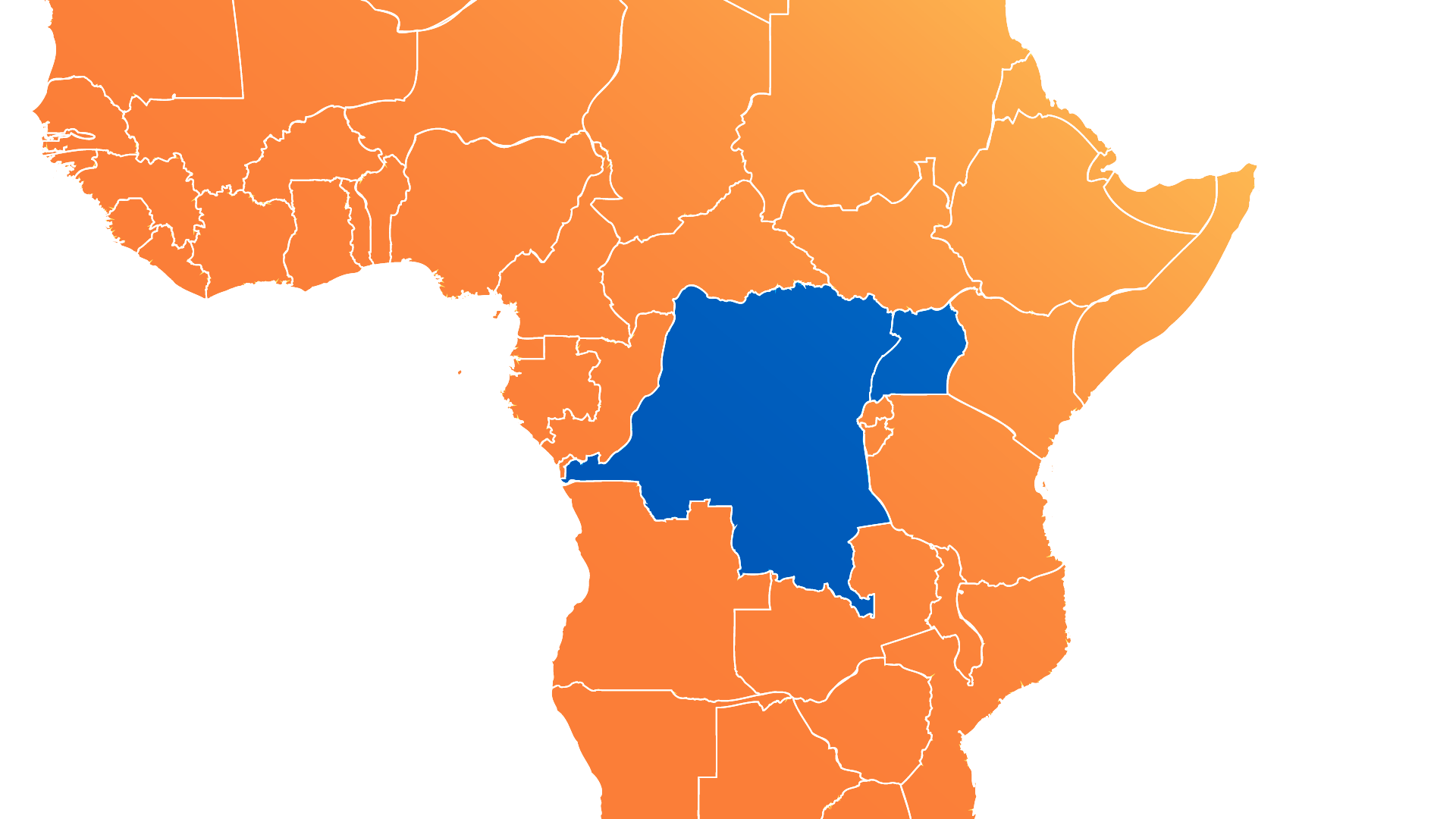
- CDC is responding to an outbreak of Ebola disease caused by Bundibugyo virus in remote areas of the Democratic Republic of the Congo (DRC).
- To date, no cases of Ebola disease have been confirmed in the United States because of this outbreak.
- The overall risk to the American public and travelers remains low.
Outbreak overview
- CDC is responding to an outbreak of Ebola in the Democratic Republic of the Congo (DRC).
- This outbreak is spreading substantially faster than previous Ebola outbreaks and is now the second-largest Ebola outbreak on record.
- The outbreak is caused by Bundibugyo virus, a type of Ebola virus.
- In DRC, cases have been confirmed in Haut-Uele, Ituri, Nord-Kivu (North Kivu), Sud-Kivu (South Kivu), Sud-Ubangi (South Ubangi), and Tshopo provinces.
- This is the 17th outbreak of Ebola in DRC.
- This Ebola outbreak surpassed 1,000 confirmed cases within 40 days of response activation. In comparison, the 2018 Ebola outbreak in DRC took approximately 235 days to reach more than 1,000 cases.
- South Kivu has reported no confirmed cases since May 29.
- Uganda also reported cases of Ebola at the same time DRC declared an outbreak.
- Uganda reported 21 confirmed and probable cases and 3 deaths. The last reported case there was confirmed June 21.
Response challenges
- The response to this outbreak is challenging due to a number of complex circumstances in the region.
- Limited health infrastructure, including limited access to healthcare, diagnostic and laboratory services, infection prevention and control supplies, and other basic services make stopping this outbreak more difficult.
- Ongoing conflict in the area where the outbreak is occurring creates security issues and complicates contact tracing and infection prevention and control.
- Violence against healthcare workers and shortages of personal protective equipment are leading to healthcare workers becoming infected while treating patients.
- Frequent population movement and cross-border travel increase the risk of spread to Uganda, South Sudan, Rwanda, and to other areas.
- Lack of trust in the government and misinformation make communicating about Ebola more difficult.
- To reduce the risk of Ebola importation into the United States, U.S. entry for travelers who were recently in the Democratic Republic of Congo (DRC) is temporarily restricted. Travelers, including Americans, who have been in DRC within 21 days of their flight will not be allowed to board commercial flights with U.S. destinations.
- All U.S. citizens and U.S. nationals who have been in DRC should plan to remain outside DRC for 21 days before entering the United States. This includes all passengers with an intermediate stop in DRC or on multi-stop itineraries via DRC regardless of whether they disembark or stay on the airplane.
- U.S. citizens and U.S. nationals who have been present in Uganda or South Sudan (and not present in DRC) within 21 days of arrival in the United States must only enter through designated airports for enhanced screening.
- This process is in addition to CDC's Order, under 42 CFR 71.40, that continued the temporary entry restrictions to the United States for certain categories of travelers after they were in DRC, Uganda, or South Sudan.
- CDC recommends avoiding all travel to Ituri and Nord-Kivu (North Kivu) provinces and avoiding nonessential travel to Haut-Uele and Tshopo provinces in DRC. Travelers to other parts of DRC or Uganda should take enhanced precautions to avoid Ebola exposure and monitor for symptoms while traveling and for 21 days after leaving.
Latest data
Reported cases
This is a rapidly evolving situation, and case counts are subject to change.
The DRC, Uganda, and France ministries of health (MOH) report the following:
Map of affected areas
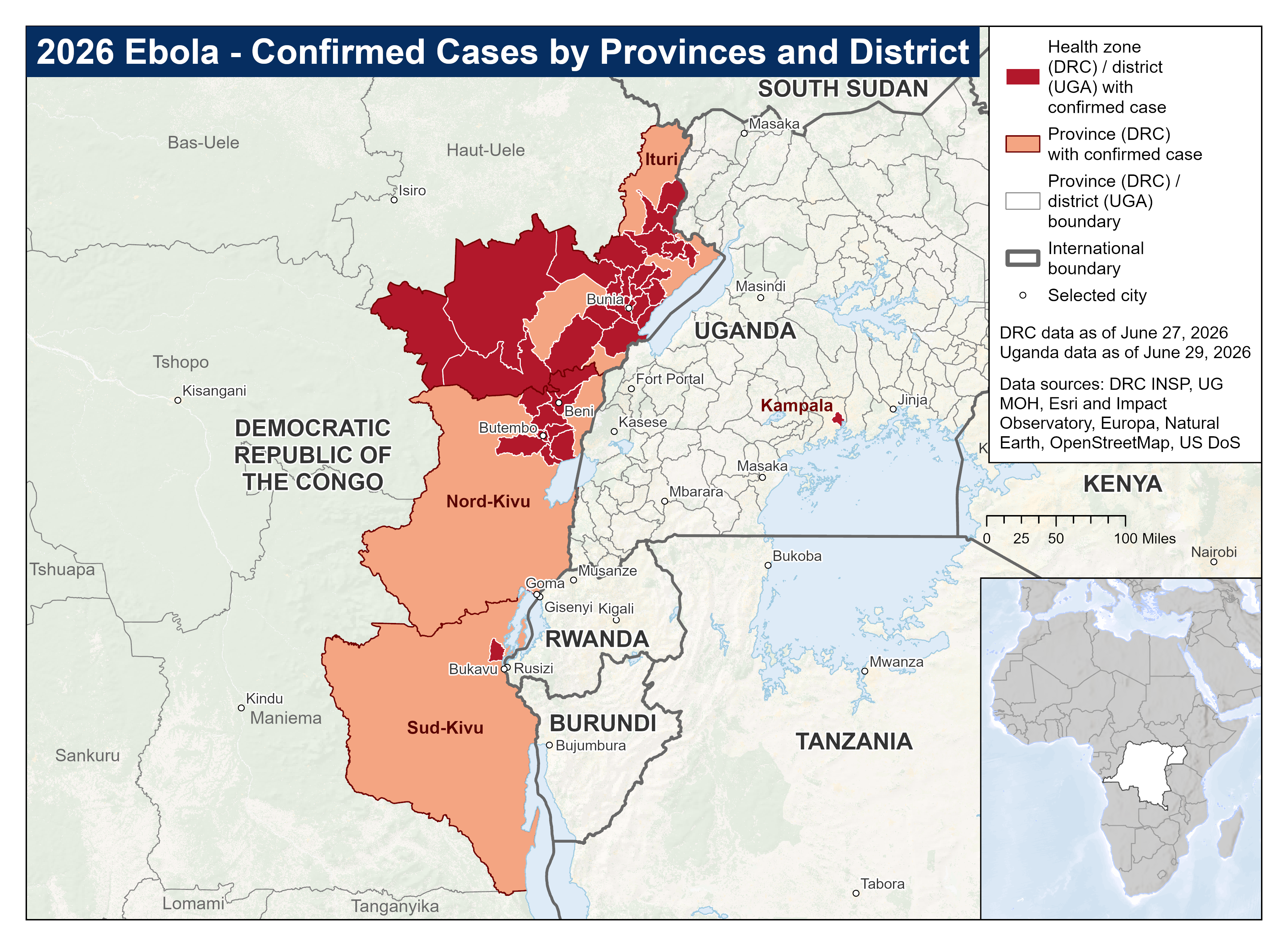
To date, the Ebola disease outbreak in DRC has been confirmed in Haut-Uele, Ituri, Nord-Kivu (North Kivu), Sud-Kivu (South Kivu), Sud-Ubangi (South Ubangi), and Tshopo provinces. Cases related to the DRC outbreak also have been reported in Uganda's capital of Kampala.
CDC response
CDC is working internationally and domestically to respond to this outbreak and prevent Ebola from entering the United States. About 500 people at CDC are involved in responding to the outbreak, including more than 120 people deployed to the affected countries.
Information for returning travelers
CDC has guidance for people who recently have been in areas affected by this Ebola outbreak, including what to do if you feel sick after travel.
Resources
For everyone
Travel information
- Information for Travelers Returning from Ebola-Affected Areas
- Destination: Democratic Republic of the Congo
- Destination: Uganda
- Destination: South Sudan
- Ebola Bundibugyo Virus Disease in Ituri and Nord-Kivu Provinces of the Democratic Republic of the Congo - Level 4 - Avoid All Travel
- Ebola Bundibugyo Virus Disease in Haut-Uélé and Tshopo Provinces of the Democratic Republic of the Congo - Level 3 - Reconsider Nonessential Travel
- Ebola Bundibugyo Virus Disease in the Democratic Republic of the Congo and Uganda - Level 2 - Practice Enhanced Precautions
For healthcare providers
- Clinical Guidance for Ebola Disease
- Clinical Screening and Diagnosis for Viral Hemorrhagic Fevers
- Infection Prevention and Control Recommendations for Patients in U.S. Hospitals who are Suspected or Confirmed to have Selected Viral Hemorrhagic Fevers
For public health professionals
This page was last updated on this date. Updates may include minor edits, image changes, or other modifications to page content.
The information on this page was last reviewed by subject matter experts to ensure accuracy.