



Key points
- A mammogram shows how dense your breasts are.
- When you get the results of your mammogram, you will be told if your breasts have low or high density.
- Women with dense breasts have a higher risk of getting breast cancer.
Parts of the breast
Dr. Temeika Fairley explains why breast density is important in this video.
A woman's breast has three kinds of tissue:
- Fibrous tissue holds the breast tissue in place.
- Glandular tissue is the part of the breast that makes milk, called the lobes. The tubes that carry milk to the nipple are called ducts. Together, fibrous and glandular tissue are called fibroglandular tissue.
- Fatty tissue fills the space between the fibrous tissue, lobes, and ducts. It gives the breasts their size and shape.
What breast density is
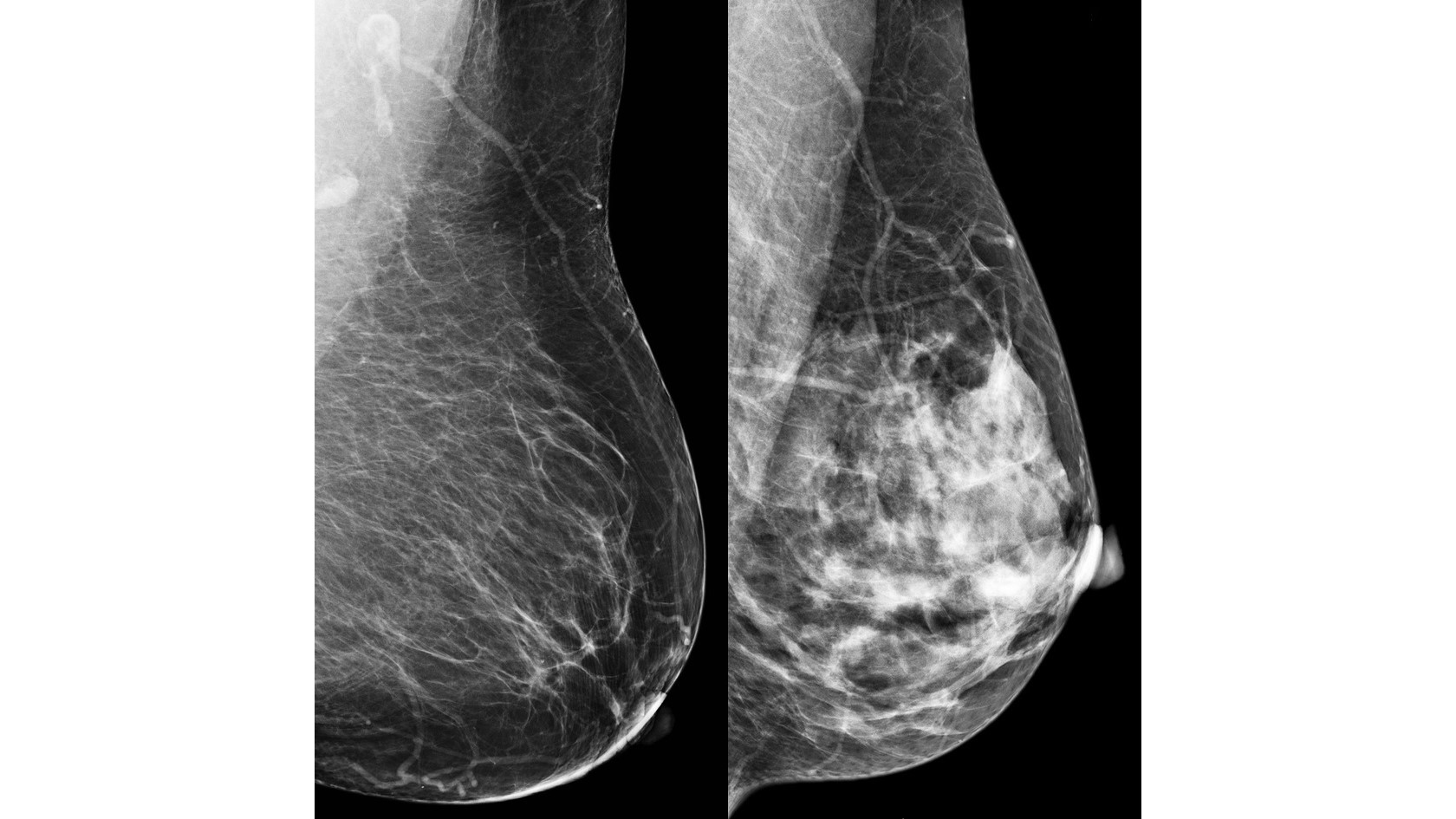
Breast density doesn't refer to how breasts feel or look on the outside; it's a measure of what's inside, as seen on a mammogram. Breast density reflects the amount of fibrous and glandular tissue in a woman's breasts compared with the amount of fatty tissue in the breasts, as seen on a mammogram.
Low-density (non-dense, or "fatty") breasts
- The breasts are almost entirely fatty (about 10% of women).
- A few areas of dense tissue are scattered through the breasts (about 40% of women).
High-density ("dense") breasts
- The breasts have many areas of dense tissue (about 40% of women). This may be called "heterogeneously dense" on the mammography report.
- The breasts are extremely dense (about 10% of women).
About half of women who are 40 or older have dense breasts.
Why breast density is important
- Breast cancer risk: Women with dense breasts have a higher chance of getting breast cancer. The more dense your breasts are, the higher your risk. Scientists don't know for sure why this is true. Breast cancer patients who have dense breasts are not more likely to die from breast cancer than patients with non-dense (fatty) breasts.
- Mammograms: Dense tissue can hide cancers. Fibrous and glandular tissue looks white on a mammogram. So does a possible tumor. Because it's hard to tell the difference between a tumor and dense breast tissue on a mammogram, a small tumor may be missed.
Women who are more likely to have dense breasts
The density of your breasts can change over time. Generally, you're more likely to have dense breasts if you:
- Are younger.
- Are pregnant or breastfeeding.
- Are taking hormone replacement therapy.
- Have a lower body weight.
What to do if you have dense breasts
Talk to your doctor about your personal risk of getting breast cancer. Dense breasts are just one of several risk factors for breast cancer. Your doctor will also think about other factors, like your age and family history of cancer.
Different tests may be able to find some cancers that are missed on a mammogram. But these tests can lead to false positive results (the test is reported as abnormal, but you really don't have cancer). False positive test results can lead to unnecessary tests, like a biopsy. Also, you may have to pay for these tests.
Your doctor may suggest one of these tests:
- Breast ultrasound. A machine that uses sound waves to make pictures, called sonograms, of areas inside the breast.
- Breast magnetic resonance imaging (MRI). A kind of body scan that uses a magnet linked to a computer. The MRI scan makes detailed pictures of areas inside the breast.
Talk with your doctor about how often you should be screened for breast cancer and which tests your doctor recommends.
More information
- Dense Breasts: Answers to Commonly Asked Questions (National Cancer Institute)
- Dense Breast Tissue: What It Means to Have Dense Breasts (Mayo Clinic)
This page was last updated on this date. Updates may include minor edits, image changes, or other modifications to page content.
The information on this page was last reviewed by subject matter experts to ensure accuracy.