



Key points
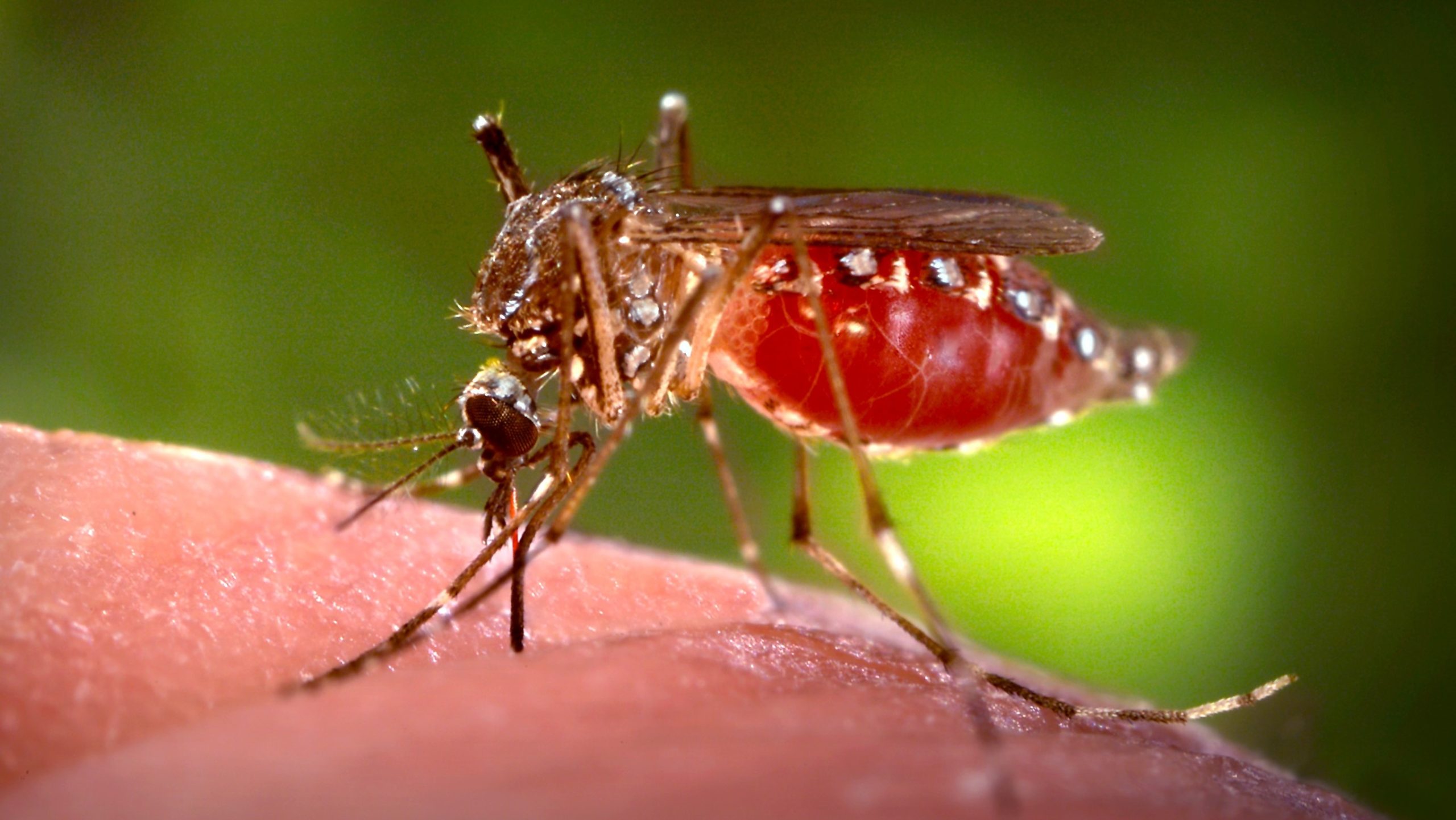
- Zika virus is spread mostly by the bite of an infected Aedes species mosquito.
- Zika virus can spread from a pregnant woman to her fetus. Infection during pregnancy can cause certain birth defects.
- Zika virus can spread through sex. Condoms can reduce the chance of getting Zika virus from sex.
Primary cause
Zika is caused by a virus found in many parts of the world.
About the virus
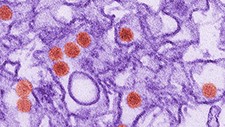
Zika virus is a single-stranded RNA virus of the Flaviviridae family, genus Orthoflavivirus. Virus particles are 40nm in diameter, with an outer envelope, and an inner dense core.
Zika virus is related to dengue, yellow fever, Japanese encephalitis, and West Nile viruses.
How it spreads
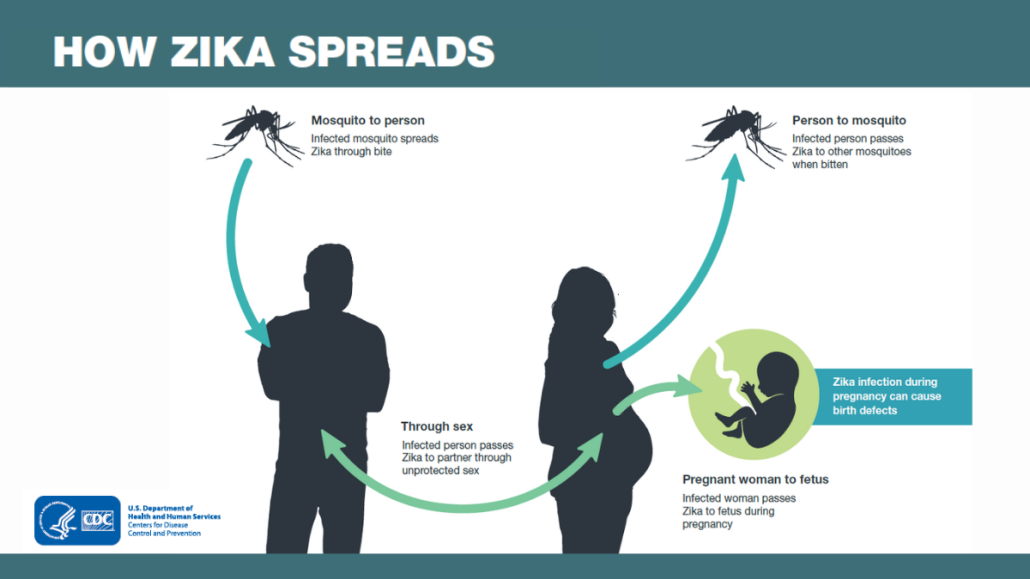
Zika virus can spread through mosquito bites, from a pregnant woman to her fetus, and through sex. More rarely, Zika virus can spread through infected blood or tissues and in the laboratory. Zika virus can spread from a person before their symptoms start, while they have symptoms, and after their symptoms end.
Through mosquito bites
Zika virus primarily spreads to people through the bites infected Aedes species mosquitoes (Aedes aegypti and Aedes albopictus).
A mosquito gets infected with Zika virus when it bites an infected person during the period of time when the virus can be found in the person's blood, typically only through the first week of infection. Infected mosquitoes can then spread the virus to other people through bites.
Through sex
Zika virus can spread through sex from a person who has Zika to their partner(s), even if the infected person does not have symptoms at the time. This includes vaginal, anal, and oral sex and the sharing of sex toys.
- Zika virus can spread from a person with Zika before their symptoms start, while they have symptoms, and after their symptoms end.
- The virus can also be spread by a person who carries the virus but never develops symptoms.
The timeframes that men and women can pass Zika virus through sex are different because Zika virus can stay in semen longer than in other body fluids.
From a pregnant woman to her fetus
A woman who is pregnant and infected with Zika virus can spread the virus to her fetus during pregnancy (in utero transmission) or around the time of birth (perinatal transmission) even if they do not have symptoms.
- Perinatal transmission can occur when a pregnant woman is infected with Zika virus within approximately 2 weeks of delivery.
- Zika infection during pregnancy can cause serious birth defects and is associated with other pregnancy problems.
Among people with confirmed or possible Zika infection during pregnancy in U.S. states and territories, Zika-associated birth defects occurred in about 5% of babies.
Breastfeeding
Zika virus has been found in breast milk. Possible Zika virus infections have been identified in breastfeeding babies, but spread of the virus through breast milk has not been confirmed.
Through infected blood, tissue, or laboratory exposures
To date, there have not been any confirmed blood transfusion transmission cases in the United States. However, Brazil has reported transmission through platelet transfusions.
Certain human cell and tissue-based products, such as umbilical cord blood, gestational tissues, and reproductive tissues, can harbor Zika virus even months after the initial infection. A person may need to delay blood and tissue donations following Zika.
There are a few reports of laboratory-acquired Zika virus infections, although the route of transmission was not clearly established in all cases.
To date, no cases of Zika virus transmission in healthcare settings have been identified in the United States.
Transmission cycle
Zika virus is maintained in an enzootic cycle (also called a sylvatic cycle). In an enzootic cycle, forest-dwelling Aedes species mosquitoes become infected when they feed on infected non-human primates. Infected mosquitoes can then transmit the virus to other primates (non-human and human).
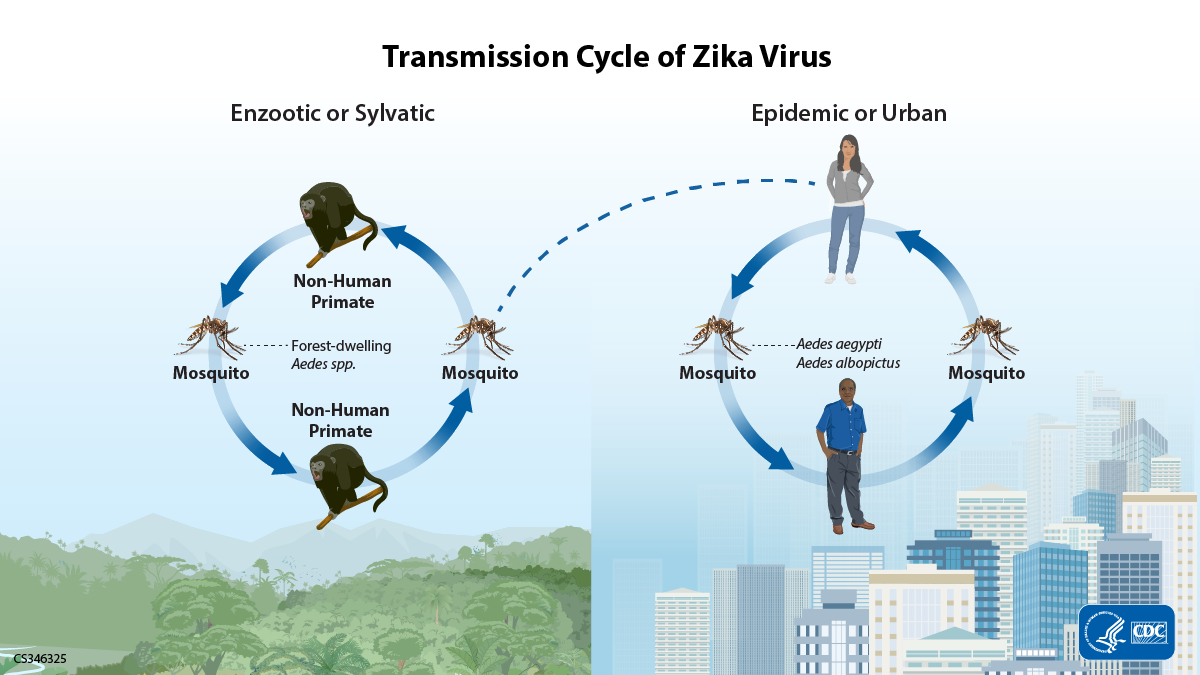
When Zika virus is introduced into human populations that lack immunologic protection against Zika virus, transmission can occur in an urban cycle. In an urban cycle, urban-dwelling Aedes species mosquitoes (Ae. aegypti and Ae. albopictus) bite infected people and then transmit the virus to uninfected people. These mosquitoes typically breed in domestic water-holding containers; they bite during the day and night and feed both indoors and outdoors near dwellings. Ae. hensilli may also contribute to transmission in the Pacific Islands.
Person-to-person transmission via in utero, perinatal, and sexual routes has been documented. Probable transmission via blood transfusion has also been documented. It is possible the virus might also be transmitted via breastmilk.
This page was last updated on this date. Updates may include minor edits, image changes, or other modifications to page content.
The information on this page was last reviewed by subject matter experts to ensure accuracy.