



At a glance
A mass, satellite, temporary, or off-site vaccination clinic can allow providers to quickly and efficiently administer vaccines in communities. Each type of clinic has its unique purpose and characteristics that require planning and preparation.

Clinic Planning Activities

When setting up a clinic you will need to identify:
- which vaccine(s) will be offered
- which age group(s) or populations should receive those vaccines
- what patient health insurance requirements will need to be met
When selecting the type of clinic to offer (e.g. indoor clinic, curbside, drive-through, outdoor walk-through, or mobile clinic), consider:
- Populations to be served
- Environmental conditions
- Individual site capability, and
- Ability to comply with federal, state, and local guidelines
Supplies and Materials
Secure sufficient supplies to meet the needs of staff and the highest anticipated number of patients.
- Quantity of supplies needed will vary significantly between smaller, one-day clinics held in schools, churches, or pharmacies and large-scale clinics held in arenas or held over multiple days.
- Use the checklist of recommended supplies below as a starting point.
Clinic Site Planning

Consider how much space is needed
The amount of space needed to run a clinic can be based on:
- Clinic activities, including:
- Registration
- Screening for contraindications and precautions
- Vaccine storage, preparation, and administration
- Post- vaccination observation
- Estimated number of patients
- Planned physical distancing, if appropriate
- Necessary infection control supplies (including biohazard containers, cleaning supplies, and hand sanitizer)
- Accommodations for people with a disability
- Safety considerations for patients, caregivers, and health care personnel
- Traffic and weather conditions if planning a curbside or drive-through vaccination clinic
Establish logistics and clinic flow, including:
- Safety guidelines (for example, having passengers remain in their vehicles, restraining children properly in vehicles, not allowing pets other than service animals).
- A plan for medical management of an adverse event
- Layout and equipment (e.g., traffic cones, barricades, signs) to maintain clinic flow from entrance to exit. For curbside or drive-through clinics, all vehicles (including those transporting people with disabilities) should be able to enter and exit in separate areas.
- Sufficient seating or parking, including accessible parking for curbside or drive-through clinics, to observe patients for 15-30 minutes after vaccination
- Observation is a critical patient safety step to prevent potential syncope (fainting) while driving, or to allow staff to immediately respond if anaphylaxis occurs.
- Practices to maintain physical distancing, if appropriate
Vaccination clinic layout
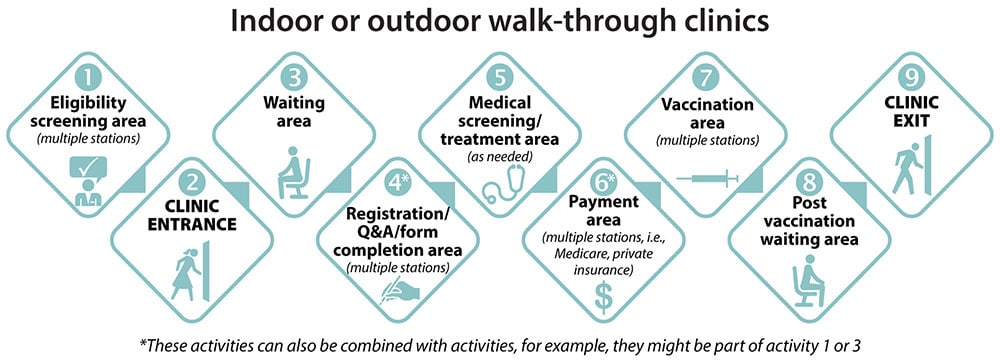
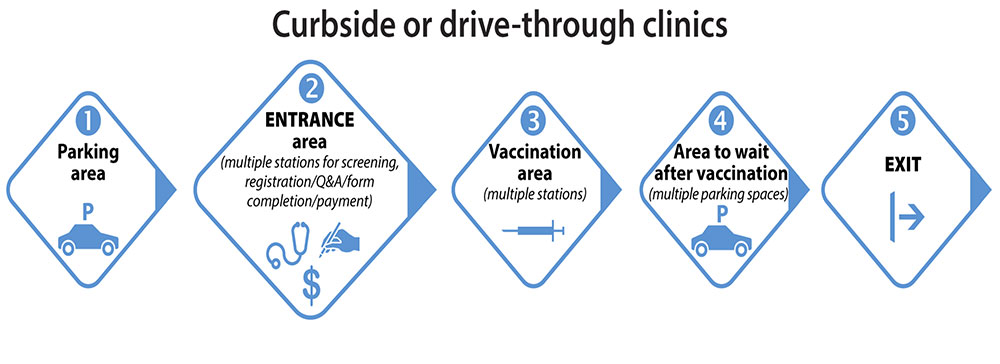
Considerations for vaccination clinic layout include:
- Design the clinic flow so it moves in one direction and avoids crowding. This usually includes having separate entrance and exit areas. Use rope or cones, tape, and signs (in multiple languages if needed) outside the clinic entrance area and inside the clinic to show routes for patients to follow.
- Designate areas for people with disabilities or limited mobility, including places to sit while waiting.
- Provide adequate seating for patients in waiting and observation areas.
- Designate an area for vaccine preparation. Vaccines should not be prepared at individual vaccination stations.
- To help prevent errors, personnel should only administer vaccines they have personally prepared. In addition, if more than one vaccine is offered, prepare and administer different vaccines at different stations.
- Designate areas for post-vaccination observation and private area where patient who experience acute adverse events after vaccination or who have medical problems can be evaluated and treated.
- Provide a protected area for staff to leave personal items and take breaks.
- Provide a separate administrative work area for on-site documentation of vaccination in the IIS or electronic health record (EHR), if applicable. If not done on site, plans must be in place for how vaccinations will be documented after the clinic.
- For walk-through clinics
- Provide a table and seating for both the patient and vaccinator at each vaccination station
- Provide dividers between stations and at least one privacy screen in case patients need to remove clothing to bare their arms for vaccination.
Vaccination Clinic Requirements

Ensure that the clinic will be able to accommodate staffing and equipment needs.
- Staffing: Establish a staffing plan and identify functional roles and responsibilities for each clinic. Staffing plans should be scalable to the expected number of people who will be vaccinated. In some instances, such as small clinics, a staff member may be able to perform multiple tasks.
- Vaccine Storage and Handling: Ensure plans are in place for transporting and maintaining vaccine at appropriate temperatures while it is stored and throughout the clinic day. See vaccine storage and handling guidance. A contingency plan should also be in place, in case vaccines are delayed or compromised and need to be replaced.
- Technology Access and Operability: Internet access may be needed for information retrieval and entry in an immunization information system (IIS) or electronic medical record. Test connections and operability of computers, tablets, printers, and barcode readers.
Clinic promotion and communication
To promote your clinic:
- Be clear about who the clinic is for—those who have an appointment, those who have been prescreened, healthcare workers, high-risk populations, etc. Use signage at the clinic to provide this information, including where to get vaccinated if someone doesn't meet the clinic criteria.
- Provide instructions on how to set up appointments if prescheduling will be used.
- Scale your promotion to the amount of vaccine that will be available.
- Use multilingual and multimedia channels to widely post clinic purpose, dates, locations, times, and population that will be served.
Be prepared to:
- Communicate other options if scheduling is unable to meet demands (e.g., direct patients to other facilities, if possible).
- Use electronic communication, as appropriate, to share clinic information such as asking patients to download screening forms or review the VIS(s) or EUA fact sheets before coming to the clinic.