



Key points
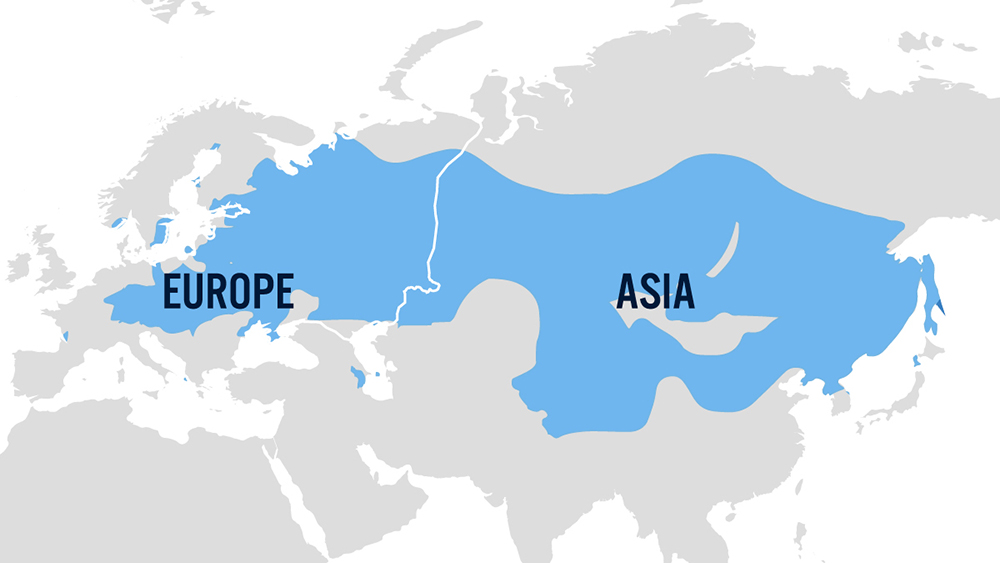
- Tick-borne encephalitis can be found in parts of the region stretching from western and northern Europe to northern and eastern Asia.
- People who travel to these areas might be at risk for infection.
- Tick-borne encephalitis is not found in the United States.
Country-specific risk information
The information below should be interpreted cautiously because tick-borne encephalitis (TBE) virus transmission can be highly variable within risk areas and from year to year. Additional information is available on websites or publications from national authorities in some TBE-endemic countries.
Highly endemic regions include Carinthia, Styria, Upper Austria, Salzburg, Tyrol, and Vorarlberg Provinces, but focal areas of transmission (areas that can vary in size from relatively large to as small as one mile wide) occur throughout the country.
Almost all of the country is considered endemic. No TBE virus has been detected in some small geographically dispersed areas.
Only a small number of cases have been reported from geographically dispersed areas.
Note: Belgium health authorities do not have recommendations for vaccination of the local population.
Bosnia and Herzegovina
Situation is unclear because limited information is available. Human cases are rarely reported. TBE virus was previously isolated from ticks.
Situation is unclear because limited information is available. Cases are only reported sporadically and risk is likely low, but the extent of underdiagnosis is unknown.
About 90% of cases reported from northeastern China, with highest endemicity in Inner Mongolia Autonomous Region (Daxing’an Mountains), Heilongjiang Province (Xiaoxing’an Mountains), and Jilin Province (Changbai Mountains). Other areas with reported transmission include Xinjiang Autonomous Region (Tianshan and Altai Mountains) in northwestern China and Yunnan and Tibet provinces in southwestern China. One U.S. traveler was previously infected in Tianjin Province.
Highest risk has been reported in the northern area of the country. Highest number of cases have been reported from Osijek-Baranja, Zagreb, Varaždin, and Medimurje counties. Some risk in the central mountainous area of the Gorski Kotar region.
Czech Republic (Czechia)
Highly endemic and regularly among countries with highest reported incidence in Europe. Focal areas of transmission occur throughout the country, with greatest risk reported from the Southern Bohemian Region.
Endemic only on Bornholm, an island in the Baltic Sea. Very rare sporadic cases reported from other focal areas in North Zealand.
Highly endemic and regularly among countries with highest reported incidence in Europe. Endemic areas are found throughout the country, with greatest risk in the western part of the country.
Focally endemic and found particularly in some archipelago and coastal areas mostly in the southern part of the country. Risk is generally highest in the coastal municipalities of Kustavi and Pargas, and in the province of Åland.
Based on local vaccination recommendations, the greatest risk is for persons resident during transmission season in the Åland Islands, Pargas, Simo, Kemi (Takajarvi-Haukkari, Pikku Berliini-Hepola, Veitsiluoto, Ajos, Peurasaari), Kotka Archipelago, Espoo (Suvisaaristo archipelago, Kurttila, Vanttila), Lappeenranta (Sammonlahti, Kuusimaki-Lavola), Preiskari Island near Raahe, Kustavi, Sipoo archipelago, Karhusaari Island in Helsinki, North Karelia (Tohmajarvi), Lohja (Ojamo, Lylyinen/Hormajarvi, Vohloinen/Virkkala, Kirkniemi), Kirkkonummi (Luoma, Masala, Porkkala, Upinniemi), Raseborg (Bromarv), Hailuoto, and Uusikaupunki (Pyhamaa). Information as of January 2025.
Main endemic area is Alsace in the northeast and the Auvergne-Rhône-Alpes region. Mostly sporadic cases occur in a small number of additional locations.
Note: French health authorities do not have recommendations for vaccination of the local population.
Highest risk is in the southern part of Germany, with 80% to 90% cases reported from Baden-Wurttemberg and Bavaria. Other key risk areas include southern Hesse, southeastern Thuringia, southeastern Brandenburg, Saxony, and eastern Saxony-Anhalt. Additional localized areas of risk include central Hesse, Saarland, Rhineland-Palatinate, Lower Saxony, North Rhine-Westphalia, Nordsachsen district, and Halle district in Saxony-Anhalt.
Highest risk is in the western (Transdanubian) and northern parts of the country, with much lower or no risk in most other areas.
Risk is primarily in pre-alpine and alpine areas in the northeast, including the Veneto (mainly Belluno alps), Friuli-Venezia Giulia, and Trentino-South Tyrol (also referred to as Trentino-Alto Adige) regions.
Fewer than 10 confirmed cases diagnosed during the past 30 years, all in Hokkaido prefecture (an island in northern Japan). No clear evidence of transmission in other areas of Japan.
Note: Japanese health authorities do not have recommendations for vaccination of local population.
Kazakhstan
Main risk areas are in parts of East Kazakhstan, Almaty, Akmola, Northern Kazakhstan, Kostanai, and Karaganda.
Kyrgyzstan
Situation is unclear because limited information is available. Infected ticks and a possible human case were reported from Ala-Archa National Nature Park in Tian Shan mountains (Chüy Region).
Highly endemic and regularly among countries with highest reported incidence in Europe. Endemic areas are present throughout the country, with highest risk in the Kurzeme region in the west and the Vidzeme and Riga regions in central Latvia.
Infected ticks have previously been detected. Risk exists in the entire country.
Highly endemic and regularly among countries with highest reported incidence in Europe. Endemic areas are present throughout the country, with the highest risk in Utena County.
Situation is unclear because limited information is available. At least 2 TBE patients were infected in the north-west and east parts of the country (Falesti and Tiraspol).
Main risk areas are in Selenge and Bulgan provinces in the north. Infected ticks have been found in a location in Tuv province approximately 80km from Ulaanbaatar.
Focal areas of transmission occur in Utrechtse Heuvelrug and Sallandse Heuvelrug National Parks. Sporadic cases have been reported from additional locations.
Coastal areas in southern Norway, specifically Agder, Vestfold, and Telemark Counties, are considered endemic.
Highest risk is in Podlaski and Warmian-Masurian provinces in the northeast. Relatively high risk in the Mazowieckie (east-central) and Lublin (east) provinces. Focal areas of transmission occur throughout most of remainder of the country.
Situation is unclear because limited information is available. Rare cases have been reported from the northwest part of the country.
Endemic areas are widespread across the southern part of the non-tropical forest belt. Variable risk is present in different locations. Overall, 48 regions are considered endemic. High transmission has been reported from western Russia, southern parts of Western and Eastern Siberia, and the Southern Urals.
Low number of reported cases, but diagnostic testing is not routinely conducted. Cases have been reported from various locations, including rural areas in the vicinity of Belgrade.
Slovakia
Focal areas of transmission occur throughout the country with higher risk areas in the north and center, particularly Banská Bystrica, Žilina, and Trenčín regions.
Highly endemic and regularly among the countries with highest reported incidence in Europe. Most of the country is considered endemic except for the coastal area near Adriatic Sea. Highest risk is in north and central regions extending to the southwest of the country.
No human cases have been reported. TBE virus has been detected in ticks and rodents only.
Note: South Korean health authorities do not have recommendations for vaccination of the local population.
Highly endemic in regions around Stockholm in the eastern part of south-central Sweden (Stockholm Archipelago, Malaren Lake, Uppsala and Sodermanland counties), with other main risk areas around lakes (i.e., Vanern, Vattern) in the south. Focal areas of transmission also occur in the southern and central parts of country.
Switzerland
Risk is present throughout the entire country, except for Ticino canton. Higher risk is in the north-eastern, central, and midwestern regions of the country, with Thurgau canton considered highly endemic.
TBE virus was detected in one pool of ticks from northwestern Tunisia but establishment of the virus has not been confirmed.
Majority of infections have been reported from the Volyn region and Crimea. Other focal areas of transmission have been detected throughout the country, including in the Rivne, Zhytomyr, Kyiv, Chernihiv and Carpathian regions.
United Kingdom
Focally endemic in a small number of areas. Small number of cases have been reported from England and Scotland since 2019. Infected ticks have been identified in Thetford Forest, Hampshire/Dorset border, New Forest, and New Yorkshire Moors.
Note: United Kingdom health authorities do not have recommendations for vaccination of the local population.