Key points
- Tick-borne encephalitis virus is most commonly spread through the bite of an infected tick.
- Tick-borne encephalitis occurs in or near forests in parts of Europe and Asia.
- The best way to prevent tick-borne encephalitis is to prevent tick bites and get vaccinated before traveling, if vaccination is recommended for you.

Prevention tips
Tick-borne encephalitis virus is most commonly spread to people through the bite of an infected tick. Ticks that spread tick-borne encephalitis virus live in or near forests in parts of Europe and Asia.
The best way to prevent tick-borne encephalitis is to protect yourself from tick bites and get vaccinated before traveling, if vaccination is recommended for you.
- Use insect repellent
- Wear long-sleeved shirts and pants
- Treat clothing and gear with 0.5% permethrin
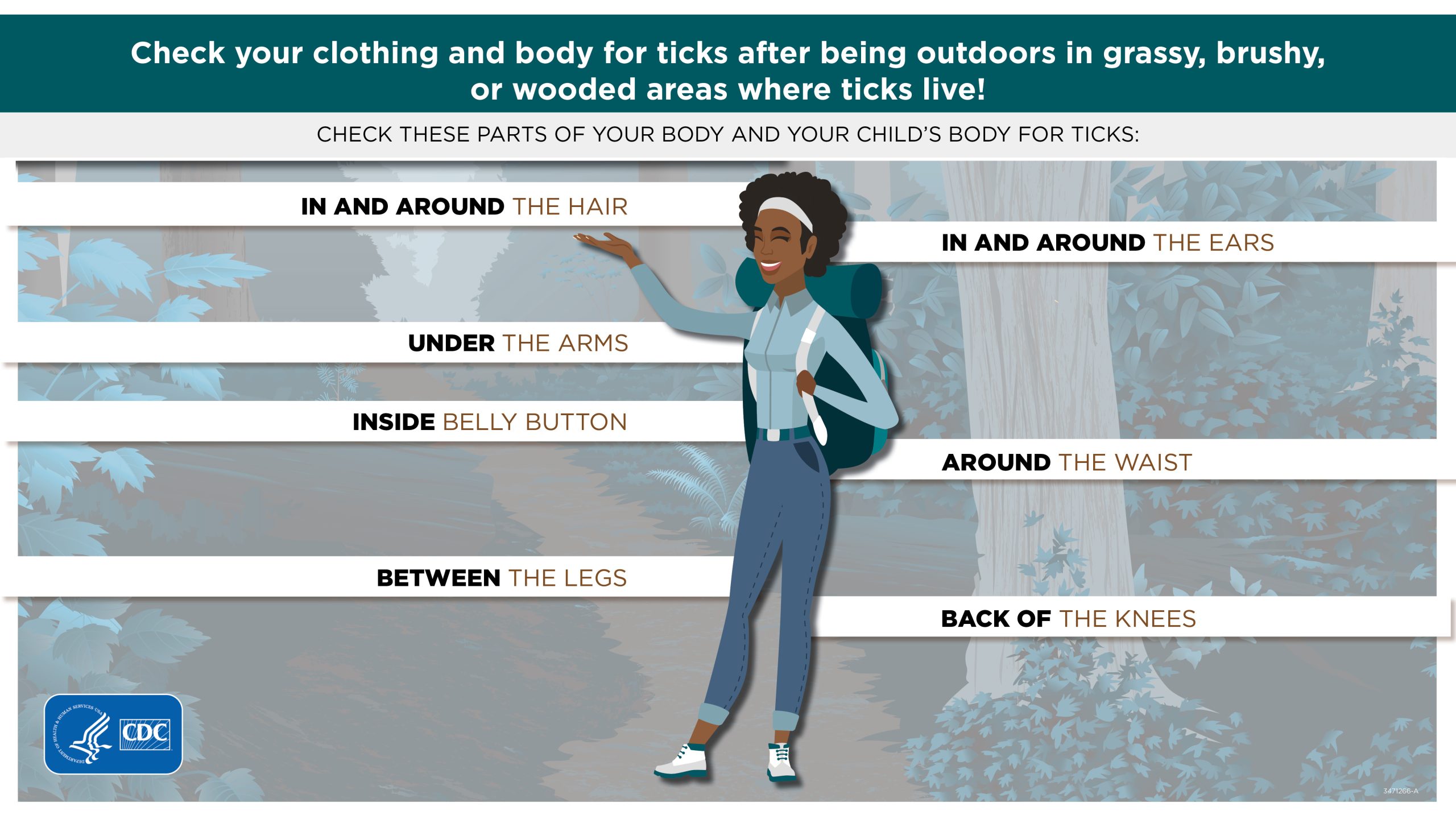
- Perform thorough tick checks after spending time outdoors
Additional information about protecting yourself from tick bites is available on the CDC Ticks website.
To avoid getting tick-borne encephalitis from infected dairy products, avoid eating or drinking unpasteurized (raw) milk and cheese from goats, sheep, or cows in affected areas.