



Key points
- Powassan virus disease (Powassan) is caused by a virus primarily spread to people through the bite of infected ticks.
- Powassan is maintained in the environment between ticks and animals.
- People do not spread the infection except in rare cases through blood transfusions.
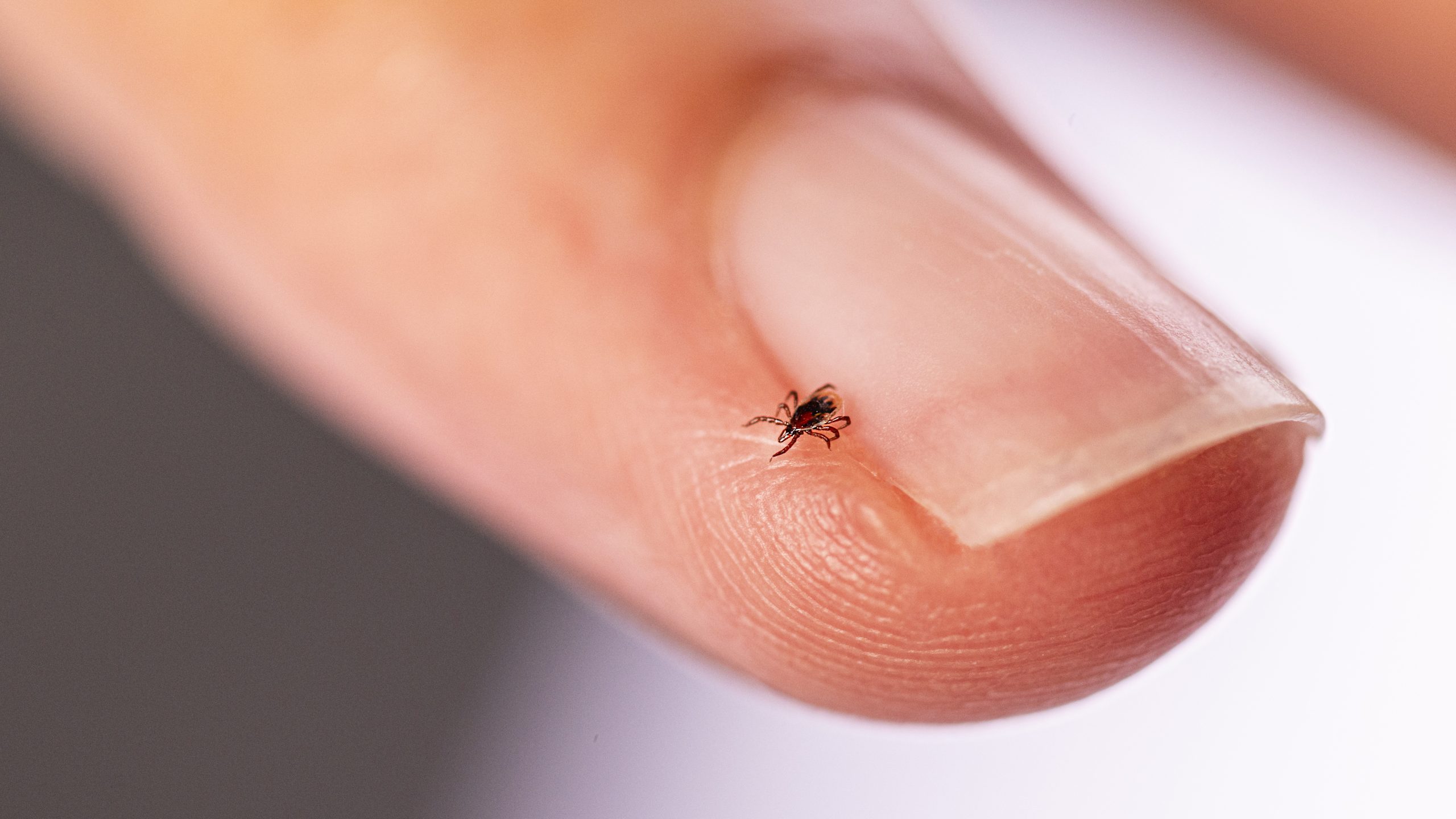
Primary cause
Powassan is caused by a virus that is found in the United States and parts of Russia.
About the virus
Powassan virus is a tickborne flavivirus (genus Flavivirus, family Flaviviridae). There are two lineages of Powassan virus, specifically Lineage 1 - Powassan virus and Lineage 2 - deer tick virus. The two virus lineages are very similar but are spread to people by different types of ticks.
Powassan virus is related to tick-borne encephalitis virus, which is found in Europe and Asia.
How it spreads
Powassan virus spreads to people primarily through the bite of an infected Ixodes species tick.
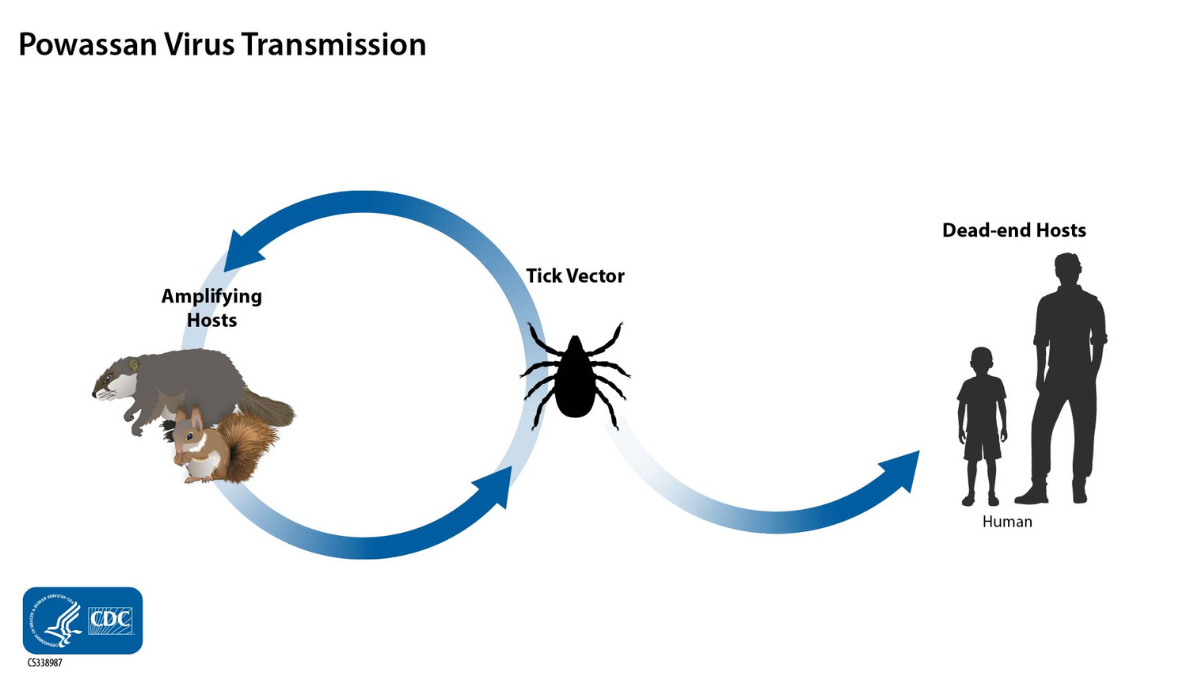
People are considered "dead-end" hosts, meaning they do not spread the virus to uninfected ticks that bite them.
The virus does not spread from person to person, except rarely by blood transfusion. People who were recently diagnosed with Powassan virus infection should not donate blood or bone marrow for 120 days following infection.

Transmission cycle
Ticks become infected with Powassan virus when they feed on groundhogs, squirrels, mice, or other rodents that have the virus in their blood. Infected ticks can then spread the virus to people and animals by biting them. Although people are dead-end hosts, person-to-person transmission via blood transfusion has been documented in rare cases.
Three types of ticks spread Powassan virus and are primarily found in the eastern half of the United States.
Ixodes cookei (groundhog tick)
Rarely bites people
Ixodes marxi (squirrel tick)
Rarely bites people
Ixodes scapularis (blacklegged or deer tick)
Often bites people and can spread several types of diseases (including Lyme disease)