



At a glance
We interviewed and observed food workers to collect data on their food-handling practices, including handwashing. We looked at when they washed their hands, what makes it easier or harder to wash their hands, and links with restaurant traits such as whether the restaurant provided food safety training. Learn what restaurants can do to improve handwashing practices in food workers.
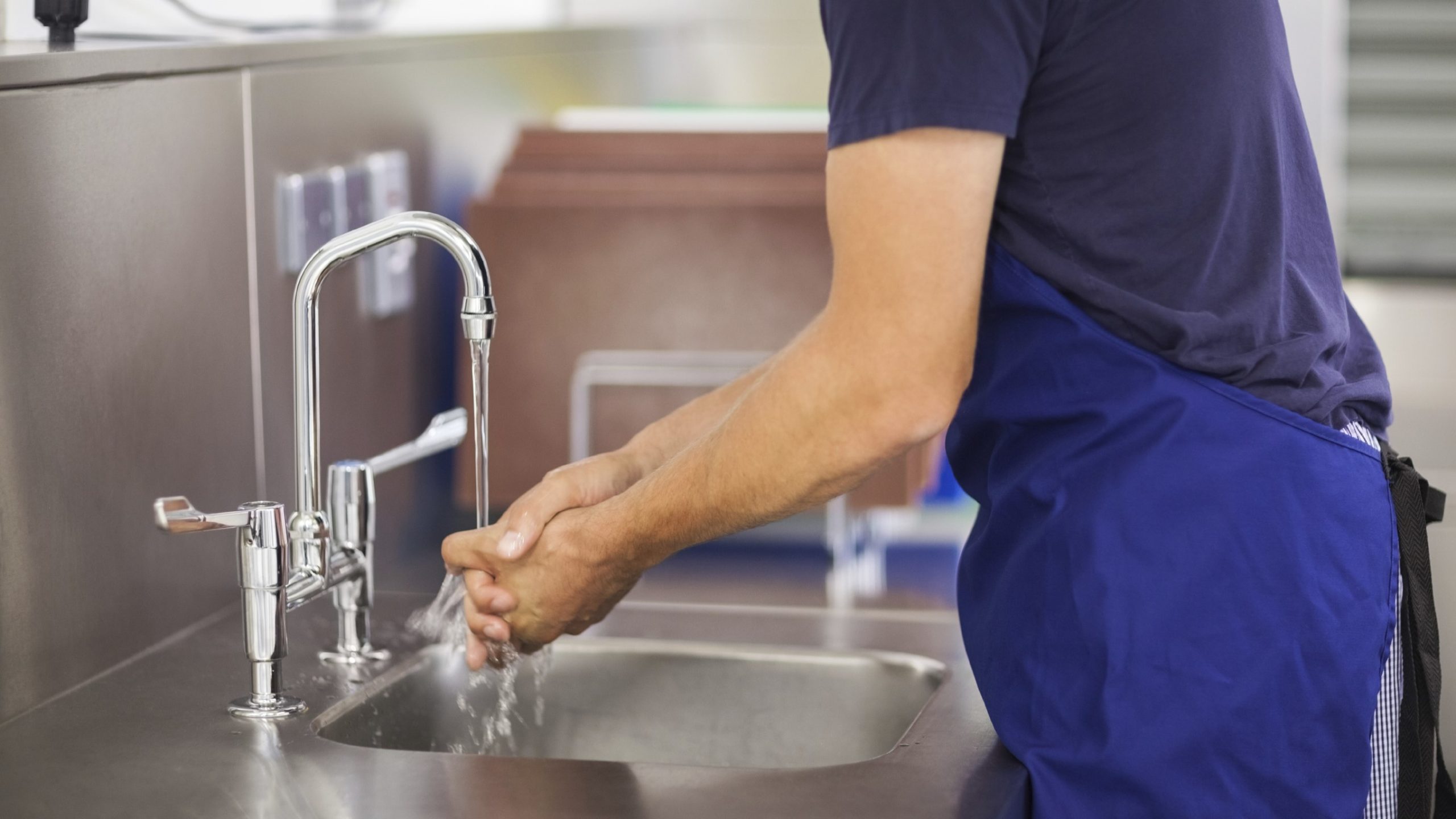
Key takeaways from four scientific studies
The spread of germs from the hands of food workers to food is a common cause of foodborne illness outbreaks in restaurants. It accounts for nine of ten outbreaks in which food was contaminated by food workers. Federal guidelines recommend how and when food workers should wash their hands, but not all workers follow them.
We found that workers wash their hands when they should about one in three times. Our research suggests that the following actions by food safety programs and restaurant managers could help improve food worker handwashing:
- Provide training on proper handwashing, particularly to younger workers
- Address barriers to worker handwashing, including sink inaccessibility, time pressure, and lack of training
- Revise food preparation steps to lower the number of needed handwashings
Why this is important
Improving food worker handwashing practices is critical to preventing outbreaks of diseases like norovirus, Campylobacter, Salmonella, and E. coli.
What we learned
When we observed workers, we found:
- Workers were more likely to wash their hands
- When they were not busy
- In restaurants that provided food safety training
- In restaurants with more than one hand sink and with a hand sink where the worker can see it
- Workers did about nine activities an hour where they should have washed their hands, but they only washed their hands about 2-3 times an hour.
- Only 1 in 4 workers washed their hands after preparing raw animal products or handling dirty equipment, and only 1 in 10 workers washed their hands after touching their face or body.
When we interviewed workers, we found:
- Older workers and managers said they washed their hands more often than younger workers and non-managers
- Workers identified several factors that affected their ability to wash hands appropriately, including:
- Time pressure from high volume of business or inadequate staff
- Sink accessibility
- Management emphasis on handwashing
- Consequences for failure to wash hands
More information
- Journal articles this plain language summary is based on: Hand hygiene practices, observation study, food preparation practices, and self-reported preparation practices
- More key findings on restaurant practices and from investigation data
This page was last updated on this date. Updates may include minor edits, image changes, or other modifications to page content.
The information on this page was last reviewed by subject matter experts to ensure accuracy.