



What to know

Trainings on Infectious Disease Modeling
The science behind infectious disease modeling is relatively new and quickly evolving. While modeling can be a critical tool to address public health threats, many practitioners and decision-makers lack the capability or skills to develop or interpret modeling insights.
Insight Net members create trainings to introduce public health practitioners and learners at all levels to disease outbreak modeling and forecasting. The trainings provide practice tools for learners to apply to real-world issues in their own communities.
- Led by: University of Texas, Austin
- Website: www.epiengage.org/
EpiENGAGE's 1-hour online How to Think Like a Modeler training is a free course, designed for all learning levels, to help public health professionals better understand and use infectious disease modeling. It introduces the topic of mathematical modeling by defining the types of models that exist, describing how models are produced, and highlighting the public health impact they can have through a case study.

- Center for Infectious Disease Modeling and Analytics & Training Hub (CIDMATH)
- Led by: Emory University
- Website: www.cidmath.org/
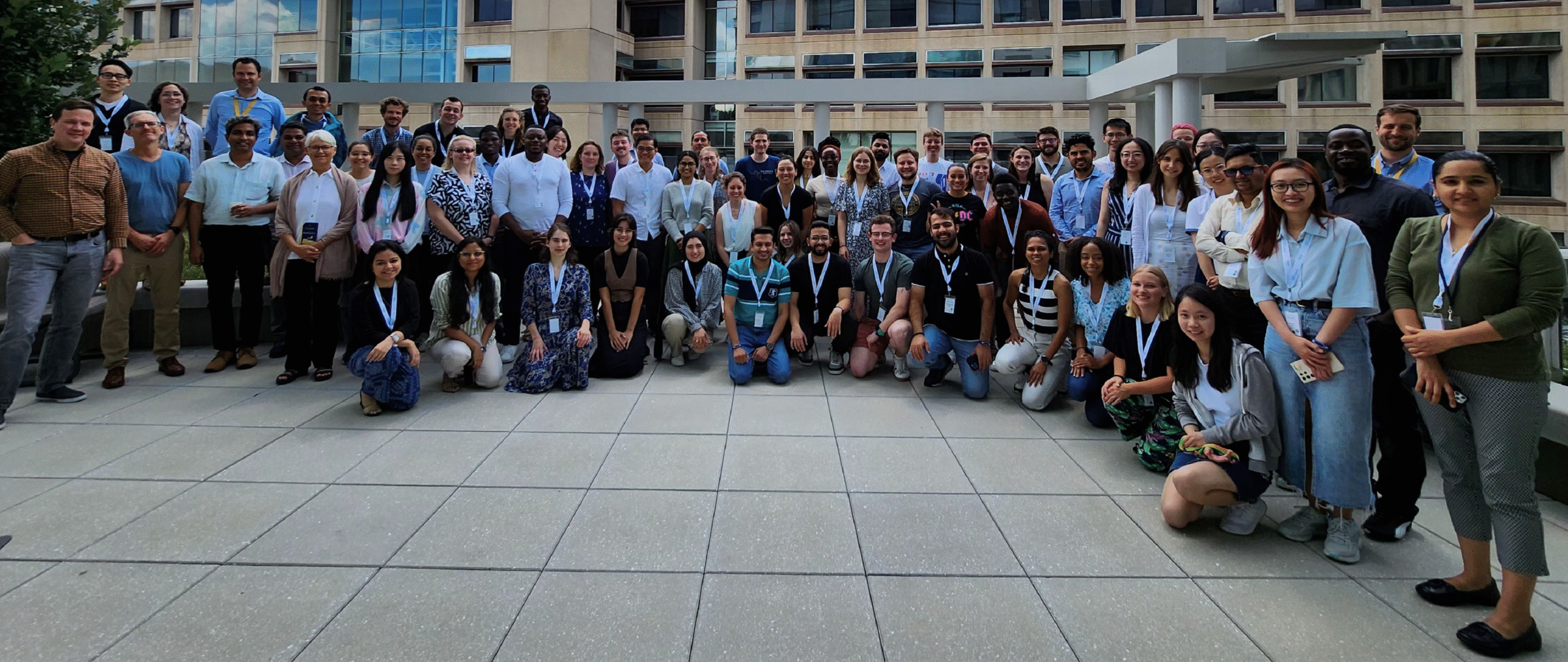
CIDMATH hosts the Summer Institute in Statistics and Modeling in Infectious Diseases (SISMID). This multi-week series is designed to introduce infectious disease researchers and public health professionals to modern methods of statistical analysis and mathematical modeling. The goal is for participants to practice using tools they can apply to real-world issues in their communities. In 2024, over 250 people attended the institute, covering topics like network modeling for epidemics and using genomic data to model disease transmission.
In-Person Workshops on Disease Modeling
Insight Net partners have created new disease forecasting and modeling tools meant for state and local public health partners to use with local data to create tailored outputs. However, using these new resources can be daunting for response teams and decision-makers not trained in outbreak modeling techniques.
Partners lead workshops that provide hands-on support while teaching public health teams how to use disease modeling and forecasting to answer real-world questions during outbreak response. This includes tech transfer workshops, which focus on Insight Net developed tools and train workshop attendees how to access and use them effectively.
- Atlantic Coast Center for Infectious Disease Dynamics and Analytics (ACCIDDA)
- Led by: University of North Carolina, Chapel Hill
- Website: www.accidda.org/
ACCIDDA organized the Applied Modeling for Public Health (AMPH) workshop series to build disease modeling capabilities within public health organizations. The in-person trainings provide hands-on support, helping participating teams use their own data to develop simple infectious disease models that answer real-world questions around outbreak planning and preparedness. The 2025 workshop focused on ACCIDDA's Forecasting Suite, a set of models and tools to help public health partners forecast respiratory virus trends in their communities.
- Led by: Carnegie Mellon University
- Website: www.delphi.cmu.edu/
Delphi led the first Insight Net Tech Transfer workshop to share open-source disease modeling tools available on Github and provide training for public health professionals. The workshop introduced participants to Delphi's epidatr, epiprocess, and epipredict tools, which help users access and prepare data, account for reporting delays and other data quality challenges, and build basic forecasts and predictive models.
- Epistorm: Center for Advanced Epidemic Analytics and Predictive Modeling Technology
- Led by: Northeastern University
- Website: www.epistorm.org/
Epistorm led the next Tech Transfer workshop on Epydemix, an open-source modeling engine that empowers public health departments build, run, and adjust their own disease models. It is built to be accessible and easy to use, without needing advanced coding or math expertise. By combining a massive, privacy-protected dataset and a continuous time horizon, Epydemix allows users to monitor long-term trends and detect emerging threats in real time. Compared to traditional biosurveillance, it offers faster, more geographically precise outbreak indicator signals that can guide targeted interventions.

This page was last updated on this date. Updates may include minor edits, image changes, or other modifications to page content.
The information on this page was last reviewed by subject matter experts to ensure accuracy.