At a glance
Global health work strengthens US health security by reducing the likelihood that emerging health threats reach US communities. CDC works with international partners and other countries to prevent, control, and eliminate viral hepatitis as a global public health threat. CDC supports guideline development and validation assessments, national surveillance data efforts, preparedness guidance, and laboratory training to strengthen partner-country laboratory and surveillance capacity. These program priorities accelerate detection and response for infectious disease threats.

CDC efforts to eliminate viral hepatitis globally
CDC provides external programmatic support, technical assistance, and strategic leadership to countries and organizations working toward global viral hepatitis elimination.
Vision: CDC's overall vision is to eliminate viral hepatitis as a global public health threat.
Strategic directions: CDC has identified four key activities that will build toward our vision.
- Provide technical assistance and leadership for global viral hepatitis elimination initiatives.
- Create sustainable partnerships with collaborative approaches to eliminate viral hepatitis.
- Foster and disseminate innovations to achieve viral hepatitis elimination.
- Prioritize approaches for populations disproportionately burdened by viral hepatitis.
Guiding principles: CDC is guided by the following principles.
- Expertise
- Collaboration
- Innovation
CDC's focus areas in global viral hepatitis are both global and country-specific.
Global guidance
CDC is a key partner in the development and review of international guidance on viral hepatitis prevention, control, and elimination; CDC contributed to the development of the following:
- Guidance for country validation of viral hepatitis elimination and path to elimination.
- Global guidance on criteria and processes for validation: elimination of mother-to-child transmission of HIV, syphilis, and hepatitis B virus (HBV).
- Updated recommendations on treatment of adolescents and children with chronic hepatitis C virus (HCV) infection, and hepatitis C simplified service delivery and HCV diagnostics.
- Guidelines for the care and treatment of people diagnosed with chronic HCV infection.
- Guidelines on person-centered viral hepatitis strategic information using data to support country scale-up of hepatitis prevention, diagnosis, and treatment services.
- Updated guidelines for the prevention, diagnosis, care and treatment for people with chronic hepatitis B.
- Operational guide for planning person-centered hepatitis B and hepatitis C testing services.
Country-specific guidance
CDC also supports other countries as they:
- Review and evaluate their existing viral hepatitis activities and programs.
- Develop their national viral hepatitis strategic plans and viral hepatitis-related guidance.
Burden estimates
CDC works with international partners to estimate the burden of viral hepatitis in other countries. This information is critical to inform national policies and to set valid elimination goals.
CDC also supports countries as they work to:
- Design and implement nationally representative serosurveys to estimate disease burden, assess progress and identify gaps in progress toward viral hepatitis elimination.
- Assess viral hepatitis disease burden in key populations to inform prevention, care, and treatment needs.
- Implement economic assessments to prioritize activities with largest impact.
- Evaluate the impact of current investments in preventing disease and death.
Prevention, diagnosis, and treatment
CDC supports countries working to scale up prevention, diagnosis, and treatment. Specific goals are to:
- Implement innovative funding approaches and interventions to increase testing and treatment in low- and middle-income countries.
- Implement and evaluate innovative diagnostic tests to scale up diagnosis and treatment among key and general populations (e.g. HCV self-testing and HCV RNA point of care testing).
- Implement interventions to improve hepatitis B and hepatitis C prevention, testing, and treatment among the general population and people at risk of infection.
- Strengthen laboratory capacity to improve diagnostics for viral hepatitis in countries CDC supports.
International collaboration is important
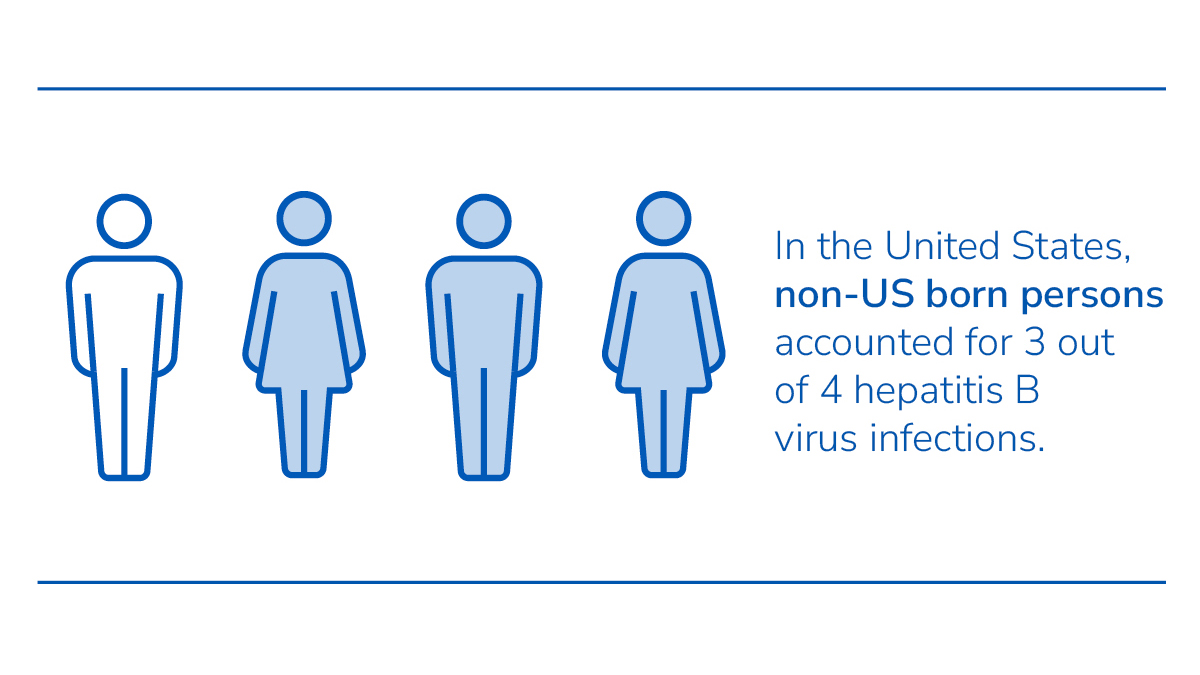
These collaborations:
- Help the host country reduce disease and death from viral hepatitis.
- Reduce the likelihood that people coming to the United States are infected with viral hepatitis.
- Help reduce the risk of viral hepatitis among United States travelers abroad.
Successes
Generated real world data on the burden of viral hepatitis to drive action
CDC supported the design and implementation of serosurveys which generated the first national estimates of the burden and awareness of hepatitis B, hepatitis C and hepatitis D in Georgia, the Kyrgyz Republic, Uzbekistan, Malawi, and Botswana. Survey results were instrumental for countries to develop their National Strategic Plans for viral hepatitis and identify key strategies to address their viral hepatitis burden and achieve elimination. Data generated from serosurveys are used by the United States to assess international infectious disease risks and help protect Americans from health threats anywhere. Knowing where viral hepatitis transmission remains elevated helps shape United States travel guidance to better protect American travelers, particularly in settings where tourism is expanding. Serosurveys were also used to strengthen laboratory capacity for viral hepatitis testing. Laboratory experts from the Division of Viral Hepatitis traveled to Georgia, the Kyrgyz Republic, Uzbekistan and Botswana to train local laboratory staff.
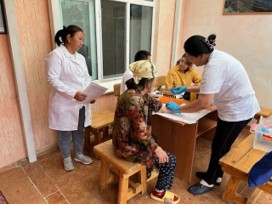
Implemented innovative interventions to prevent, detect, treat and cure viral hepatitis
CDC supports hepatitis elimination globally by scaling up prevention, screening, and treatment. Global prevention efforts — including vaccination, improved infection control, blood safety, and expanded testing and treatment reduce transmission at its source and can affect domestic viral hepatitis efforts because a substantial proportion of hepatitis B cases in the United States occur among people who are non-US-born.
In Georgia, CDC's investments have led to significant decreases in hepatitis C burden among blood donors, the general population, and identified and linked people with hepatitis C who were lost to follow-up to care and treatment. Those investments facilitated detection of more than 80% of persons with hepatitis C and successful linkage of the majority of these people to care and cure, leading to a 67% decrease in the prevalence of hepatitis C (from 5.4% in 2015 to 1.8% in 2021).
In Uzbekistan, CDC supported training of over 500 health care professionals and laboratorians across the 11 regions to scale up prevention, screening, and treatment for hepatitis B and hepatitis C. With CDC support, Uzbekistan developed guidance on the prevention and management of hepatitis B and hepatitis C in hemodialysis, and hematology-oncology settings that were in line with global guidance ensuring that hepatitis B and hepatitis C are prevented and controlled in high-risk settings. With CDC support, Uzbekistan implemented an electronic system to track and manage viral hepatitis prevention, testing and treatment.
In the Kyrgyz Republic, CDC strengthened clinical capacity in the management of hepatitis B, hepatitis C, and hepatitis D by training over 150 primary health care professionals across the country, scaling up screening and treatment for hepatitis B and hepatitis C in the population.