



At a glance
The U.S. CDC has collaborated with the Philippines Department of Health since 1962 and established an office in the Philippines in 2022. CDC supports the Philippines Department of Health (DOH) as well as partner organizations to build effective public health systems to detect, prevent, and respond to health threats. CDC Philippines focuses on increasing global health security capacity in Asia, addressing the rapidly growing HIV epidemic, controlling vaccine-preventable diseases, and strengthening public health emergency preparedness and response for emerging health threats. CDC’s work aims to protect the health of Americans and support public health around the world.

Key accomplishments
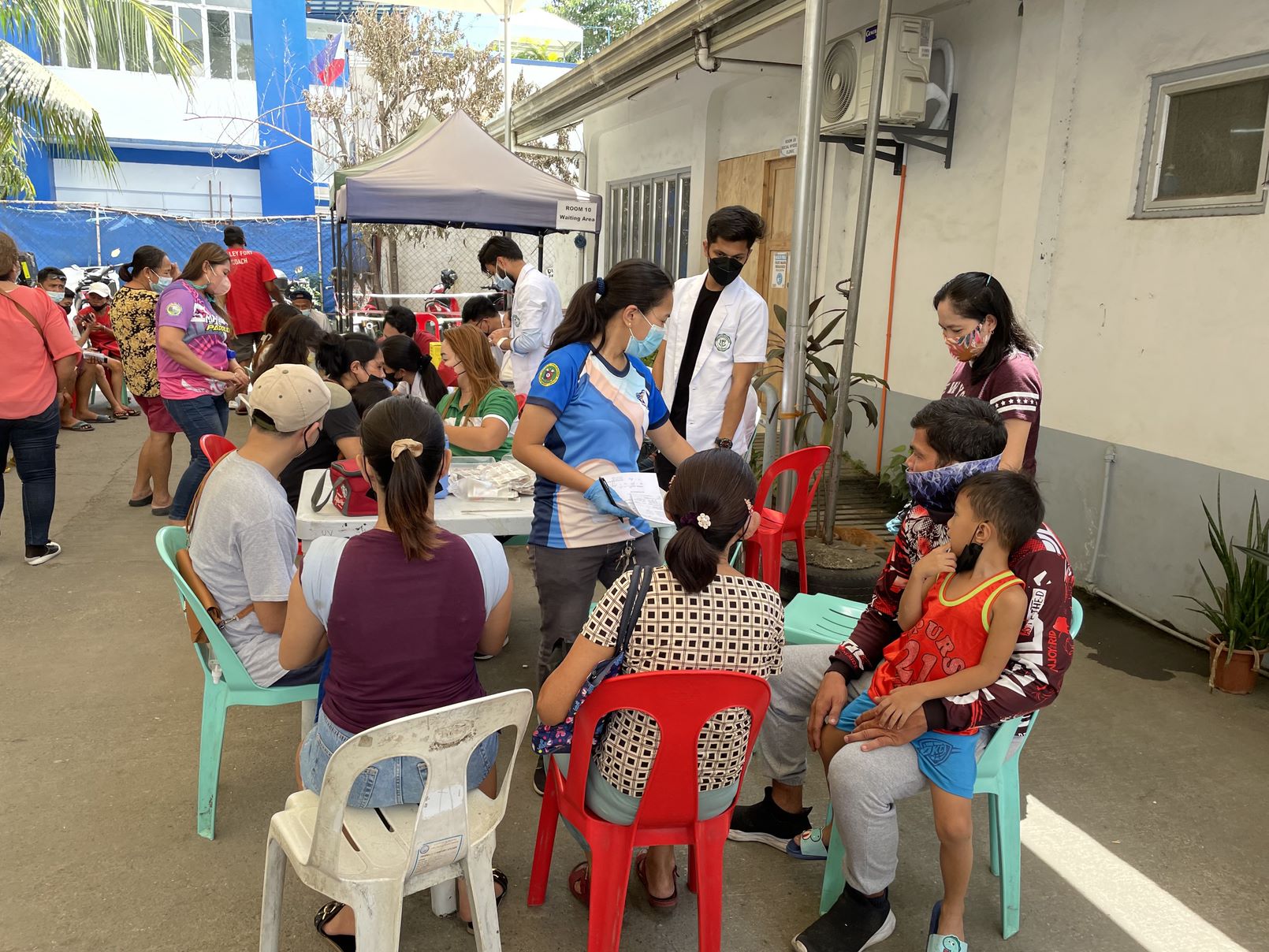
- Graduated over 130 epidemiologists as part of the Field Epidemiology Training Program (FETP) since its inception, with new programs launched in 2022 to expand training.
- Trained over 1,300 laboratory workers on rapid HIV detection and introduced innovative HIV surveillance techniques to address the rapidly growing HIV outbreak.
- Launched the Gabay Bakuna Initiative to provide strategic and targeted support to prevent, detect, and respond to VPD outbreaks, maintain polio-free status, and accelerate progress towards measles and rubella elimination in the Philippines.
- Adopted and rolled out timely metrics and analysis following the “7-1-7” framework, which is designed to provide a standardized benchmark for evaluating the effectiveness of outbreak detection and response systems, at the national, regional, and local levels.
- Provided direct technical assistance and capacity-building for outbreak response of emerging diseases including Q fever, monkeypox, melioidosis, and post-typhoon infectious diseases.
Global health security
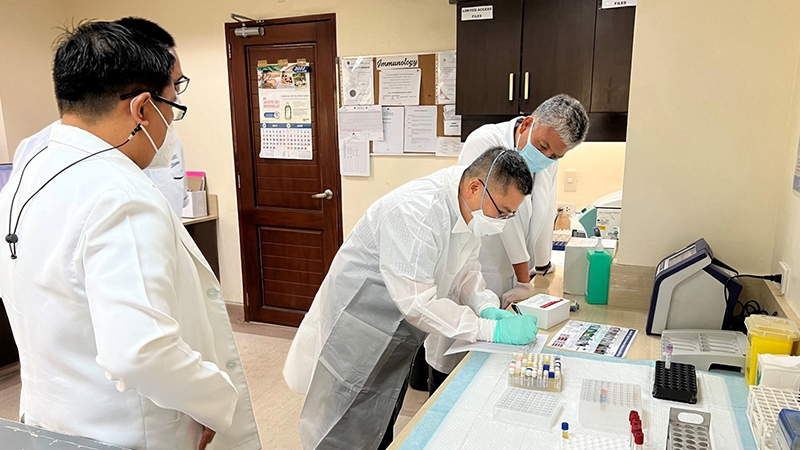
CDC’s global health security activities, aligned with DOH priorities, strengthen the Philippines’ capacity to detect and respond to emerging infectious diseases.
Disease surveillance and response
CDC provides direct technical assistance and capacity building to strengthen robust surveillance and response mechanisms that improve the speed of detection, notification, and response to emerging disease outbreaks at national and local levels and help mitigate diverse health threats across the region. This work includes:
- Optimizing sentinel site surveillance for influenza, coronavirus, and other respiratory diseases
- Supporting COVID-19 genomic surveillance among healthcare workers and inpatients and improved surveillance and prevention of healthcare-associated infections
- Enhancing the use of surveillance data through R programming
- Harnessing American technology and health data advancements to safeguard against health threats
- Introducing timely metrics for outbreak detection and response, improving the overall functionality of public health emergency responses
Workforce development
The FETP in the Philippines began with the Advanced tier in 1987. Two more tiers of FETP, Frontline and Intermediate, began in 2022 using CDC curriculum and technical materials. FETP Philippines, accredited in 2018, was the first FETP program in Asia to obtain accreditation.
Laboratory systems
CDC provides technical expertise and training to build high-quality laboratory capacity to ensure accurate and rapid detection of infectious pathogens and prevent international spread.
- CDC helped uncover the first cases of Q fever in the Philippines, transmitted from goats to humans.
- CDC helps monitor circulating influenza viruses, which inform U.S. vaccine strain composition needed to effectively protect Americans.
HIV and TB
As a key implementer of the U.S. President's Emergency Plan for AIDS Relief (PEPFAR), CDC plays an essential role in the fight against HIV and TB. With unmatched scientific and technical knowledge and long-standing relationships with ministries of health, CDC is uniquely positioned to advance HIV, TB, and other global health security activities that keep Americans safe at home and abroad.
Vaccine-preventable diseases (VPDs)
CDC’s immunization program in the Philippines focuses on strengthening VPD surveillance, outbreak detection and response, and high-quality vaccination campaigns by providing targeted support to high-risk areas to rapidly stop transmission, fill immunity gaps, and prevent large-scale outbreaks.
Influenza (flu)
Influenza viruses with pandemic potential, such as bird flu, frequently emerge in Asia. CDC’s work in the region is critical to defend the United States from emerging influenza threats at the source. CDC has strategically positioned influenza surveillance—in humans and animals—in countries that neighbor China, as a way to monitor influenza activity.
CDC also works with the Philippines to strengthen influenza surveillance, data sharing, and laboratory capacity and enhance coordination among national institutions including National Influenza Centers.
Antimicrobial resistance/infection prevention and control
CDC supports regional efforts in Southeast Asia to build capacity for the detection of and response to antimicrobial resistance, improve antimicrobial use, and prevent infections in healthcare through improving infection prevention and control. These efforts can strengthen the impact of healthcare systems in individual countries.
![[thumbnail] (hidden)](/global-health/media/images/2024/11/Philippines_FS_thumbnail.jpg)