



At a glance
Want to know more about global health topics? Our monthly newsletters provide comprehensive updates on CDC's global public health efforts, including emerging diseases, outbreaks, success stories, and health campaigns. Learn how to sign up for our Around the World newsletter.

About the newsletter
- Our monthly issues highlight CDC's global work and impact.
- Receive up-to-date information on global public health issues, emerging diseases and outbreaks, and policy developments.
- Explore our success stories, health campaigns, news, videos, publications, and more.
Subscribe to our newsletter
Sign up for our email newsletter below.
Our latest issue
Outbreaks You Never Heard About: CDC Experts on the Frontlines

A health threat overseas can reach U.S. communities in just 36 hours. Yet many outbreaks never make headlines because CDC’s global health security experts are on the frontlines, helping detect and contain dangerous diseases before they spread farther or threaten Americans. In the past two years alone, these experts have helped contain more than 250 outbreaks across 40+ countries, from Marburg and other hemorrhagic fevers to dengue and Guillain-Barré syndrome. Today, that work includes CDC teams on the ground in the Democratic Republic of the Congo, working alongside partners to help stop the current Ebola outbreak at its source.
Based overseas and at CDC headquarters, these teams form a critical part of CDC’s global health security work, helping ensure continued U.S. leadership in protecting our nation’s security. In recognition of World Field Epidemiology Day, the “Outbreaks You Never Heard About” campaign spotlights CDC-trained disease detectives and the crucial role they play in that work: finding cases, tracing how diseases spread, and turning data into action. Since 1980, CDC’s landmark Field Epidemiology Training Program (FETP) has trained more than 25,000 disease detectives in over 100 countries, strengthening the first line of defense against global health threats and helping protect American lives, livelihoods, and health security here at home.
Deadly Outbreak: Stopped in Senegal
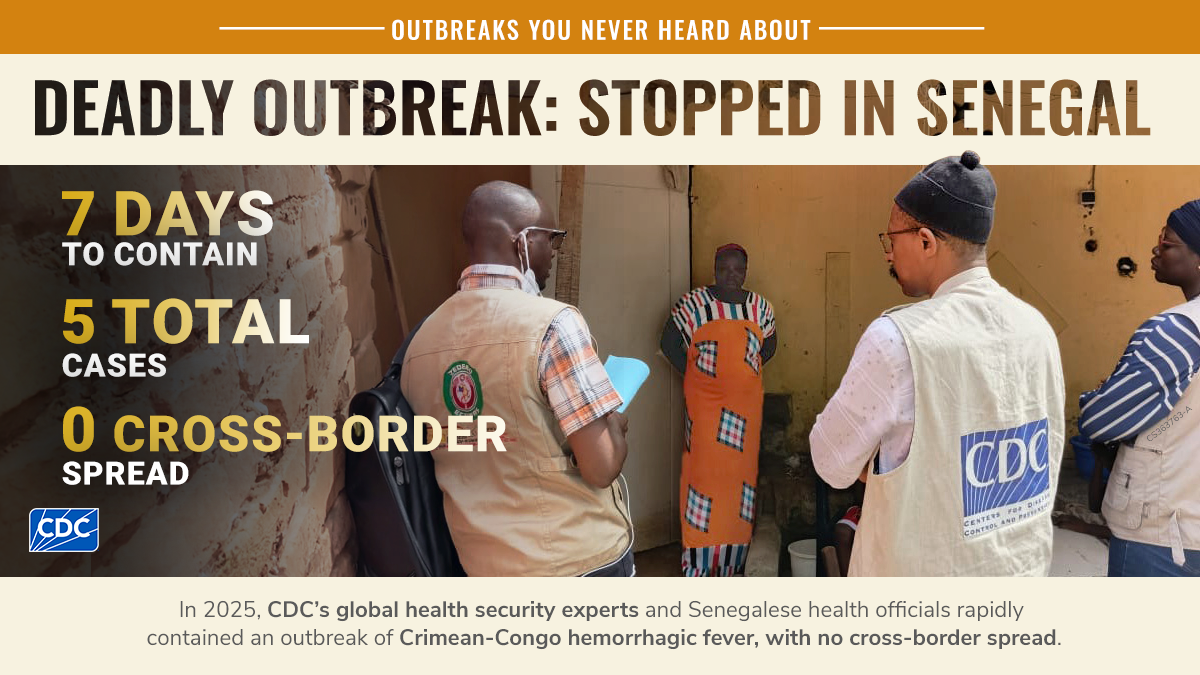
In 2025, Senegal faced an outbreak of Crimean-Congo hemorrhagic fever, a deadly disease that can spread between people and animals. CDC-trained disease detectives joined CDC global health security and technical experts and country partners to quickly trace contacts and test human and animal samples, helping contain the outbreak in just one week and prevent further spread.
Lassa Fever: Stopped in Its Tracks
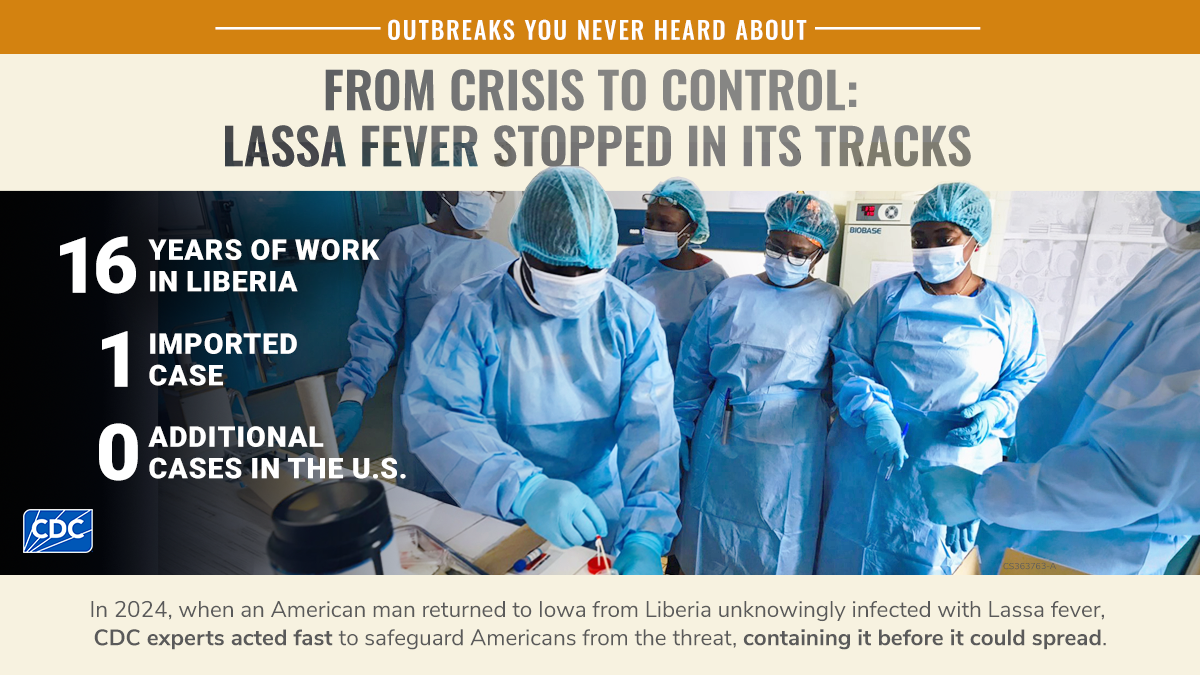
In 2024, a U.S. traveler returned from Liberia with Lassa fever, a potentially deadly virus. Drawing on 16 years of CDC’s work strengthening disease detection and response in Liberia, CDC experts quickly provided Iowa health officials with laboratory testing, contact tracing, and infection prevention support—helping prevent spread in the United States.
Deadly Marburg Outbreak Stopped Before It Spread
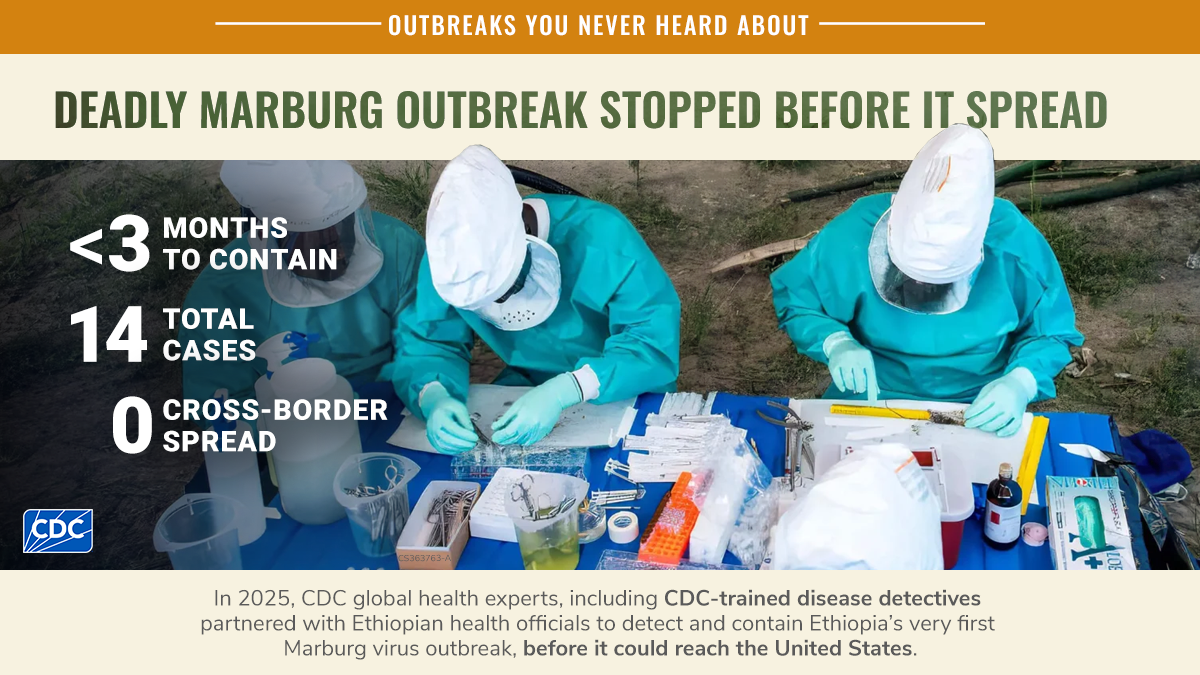
When Marburg virus surfaced in Ethiopia for the first time, CDC experts and trained Ethiopian disease detectives moved quickly to investigate cases, strengthen surveillance, and support border health measures—helping contain the outbreak before it spread farther or reached the United States.
Mystery Illness Quickly Solved in Major Travel Route
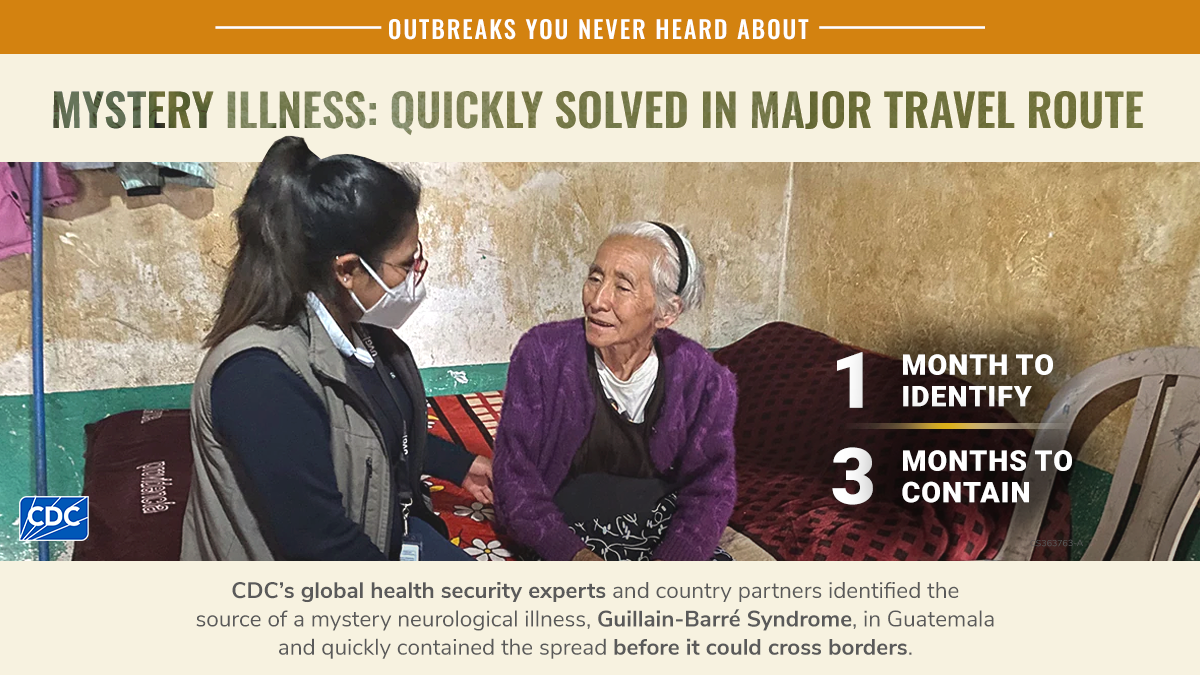
In late 2023, a cluster of severe neurological illness emerged along Guatemala’s Pan-American Highway. CDC experts and local partners identified a likely foodborne cause within one month and contained the outbreak within three months—preventing further spread along a major travel corridor to the United States.
Hidden Threat Uncovered Thanks to CDC-Trained Expert
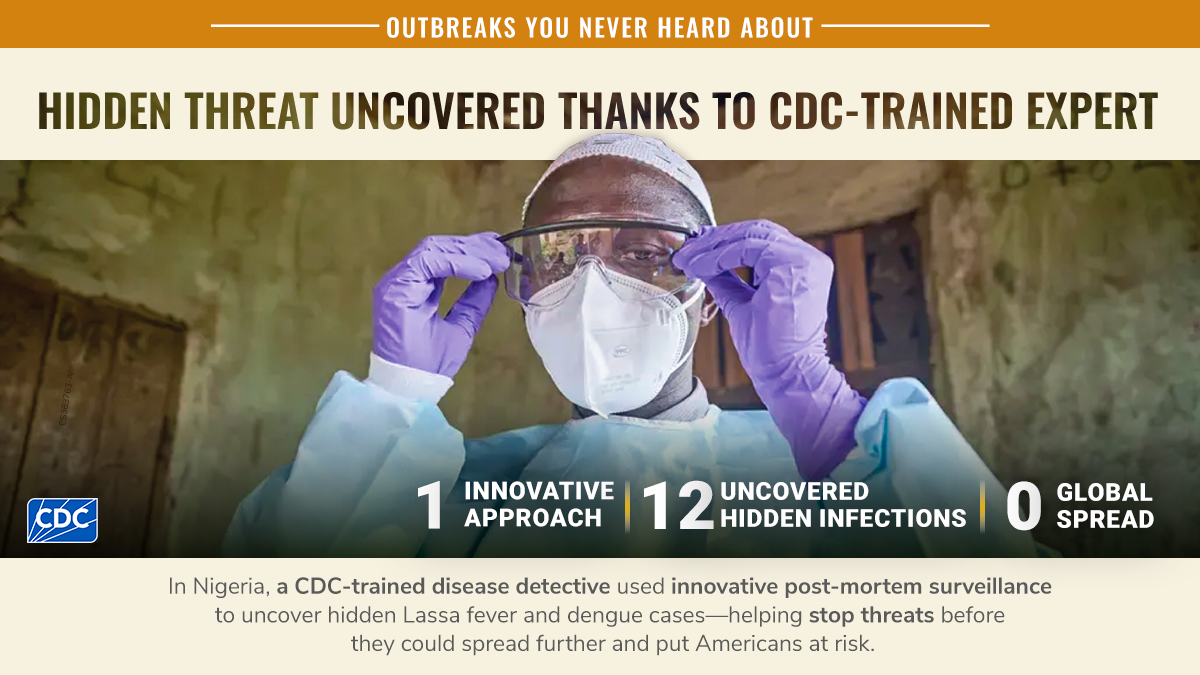
In northwest Nigeria, a CDC-trained disease detective helped uncover 11 previously undetected Lassa fever infections and one dengue infection through an innovative post-mortem surveillance system—giving health officials critical information to identify the hidden threats and prevent their spread across borders.
This page was last updated on this date. Updates may include minor edits, image changes, or other modifications to page content.
The information on this page was last reviewed by subject matter experts to ensure accuracy.