


What to know
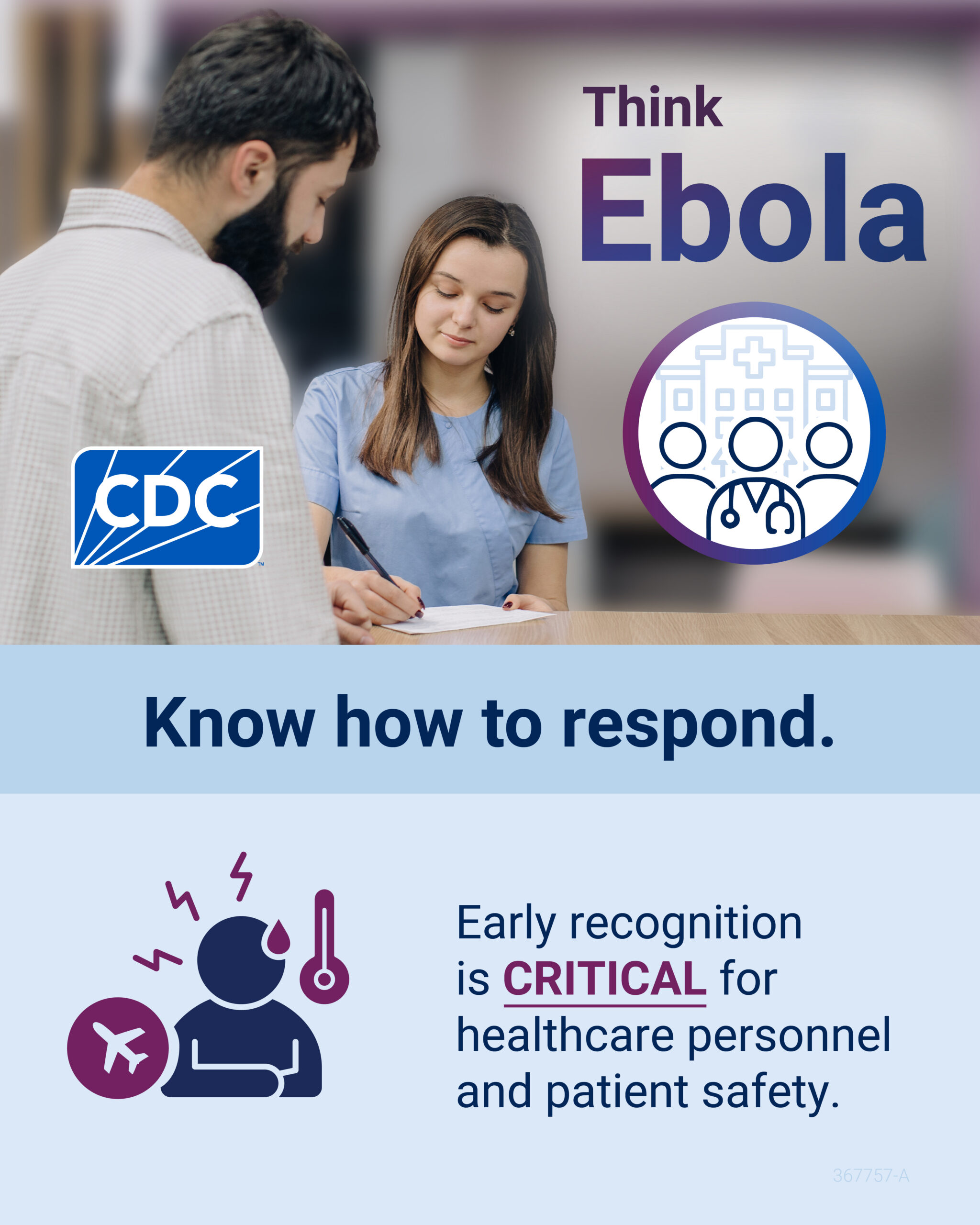
CDC has resources to help U.S. healthcare personnel safely assess returning travelers with Ebola risk factors and symptoms. Early recognition is critical for healthcare personnel and patient safety.
Overview
- Organizations can share these communication tools with their partners and members.
- Printable job aids, posters and signs support Ebola risk assessment and basic infection control measures.
Ways to use these resources
- Share educational materials and graphics through digital channels or display in places partners and healthcare personnel may see them.
Print resources
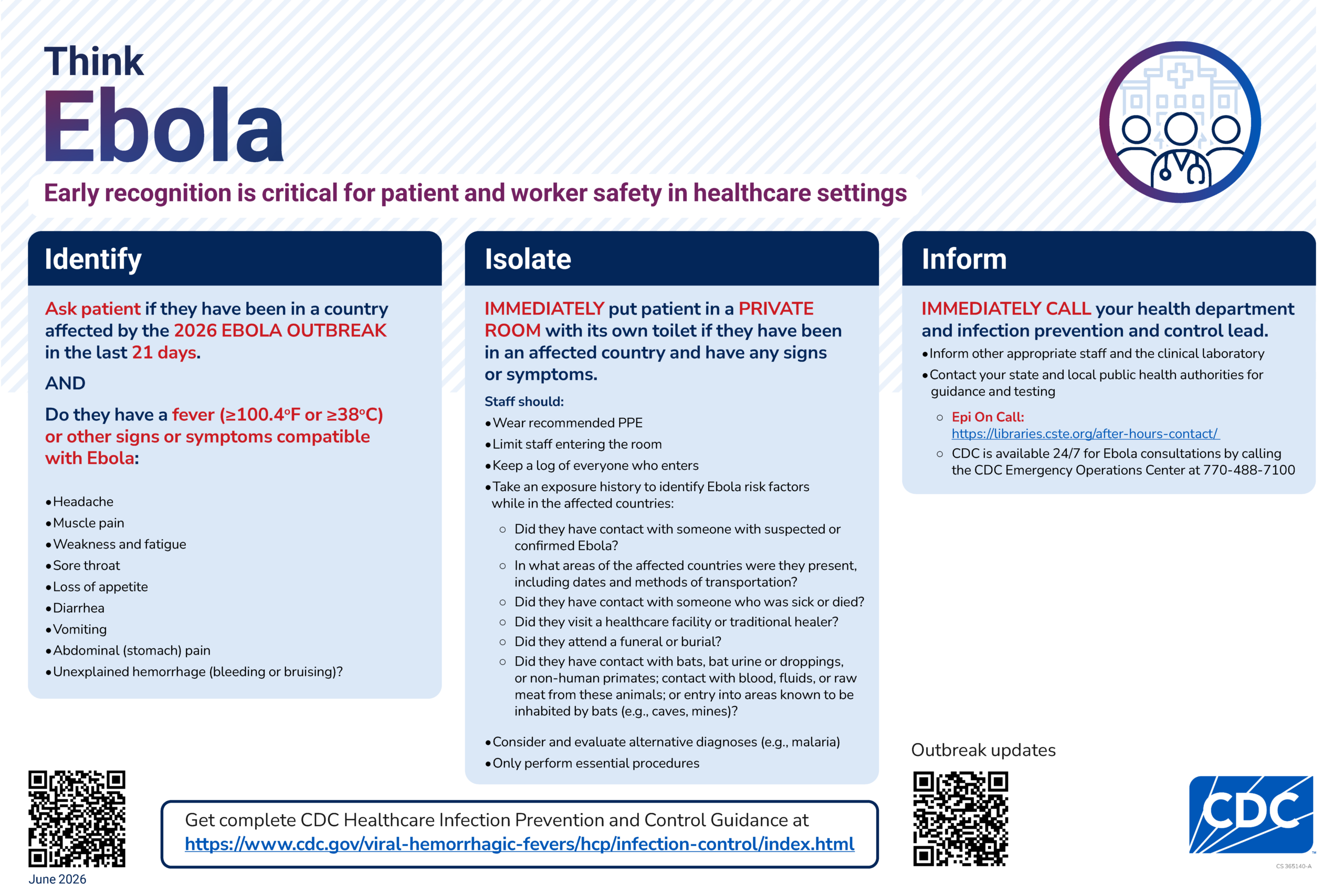
Download a printable poster on basic infection control for patients who may have Ebola disease.
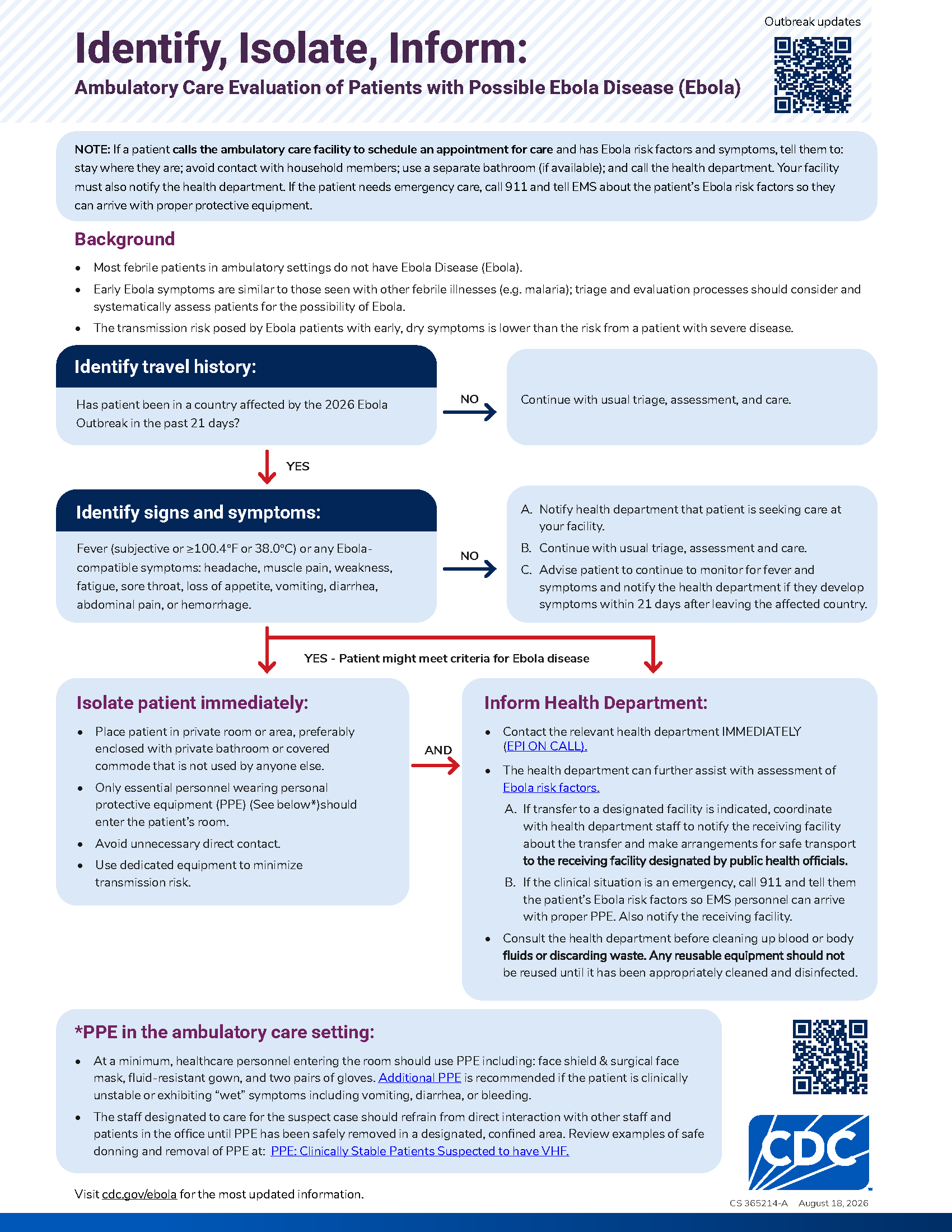
This ambulatory algorithm is for U.S. healthcare providers to evaluate patients for Ebola disease.

A health facility sign instructing patients to notify staff of recent travel and Ebola symptoms.
Job aids
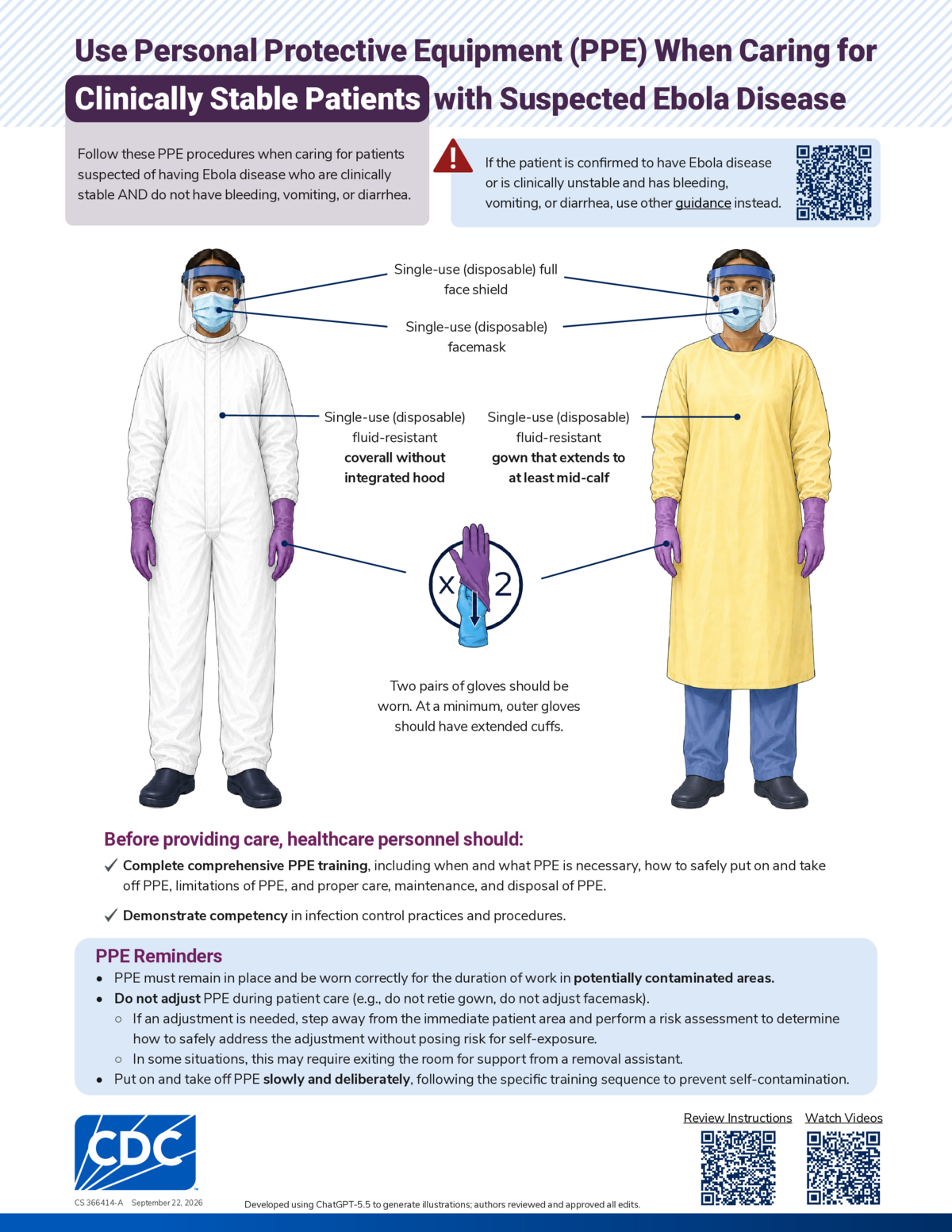
A job aid for PPE use when caring for clinically stable patients with suspected Ebola disease.
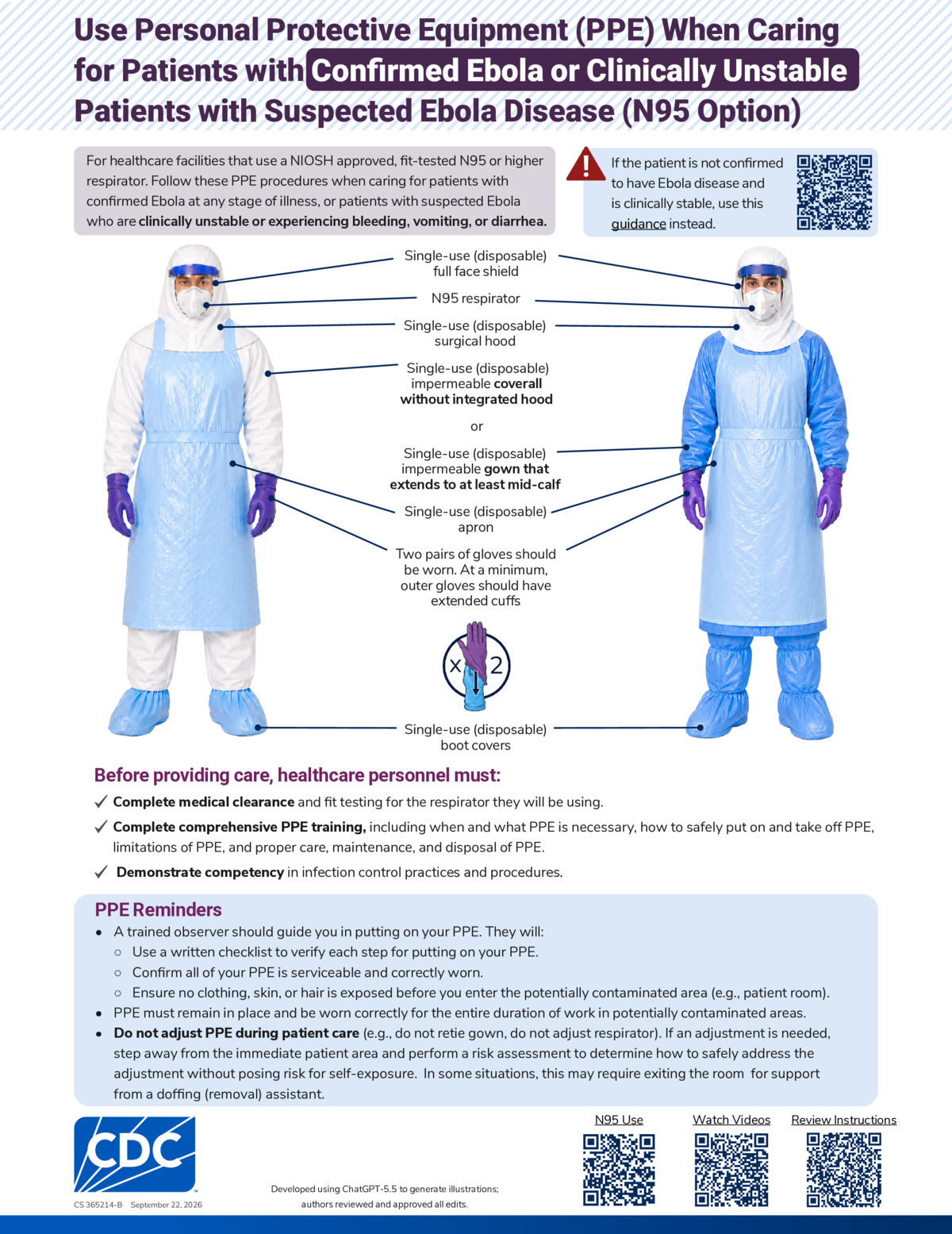
Job aid for PPE use with N95 to care for confirmed or clinically unstable suspected Ebola patients.
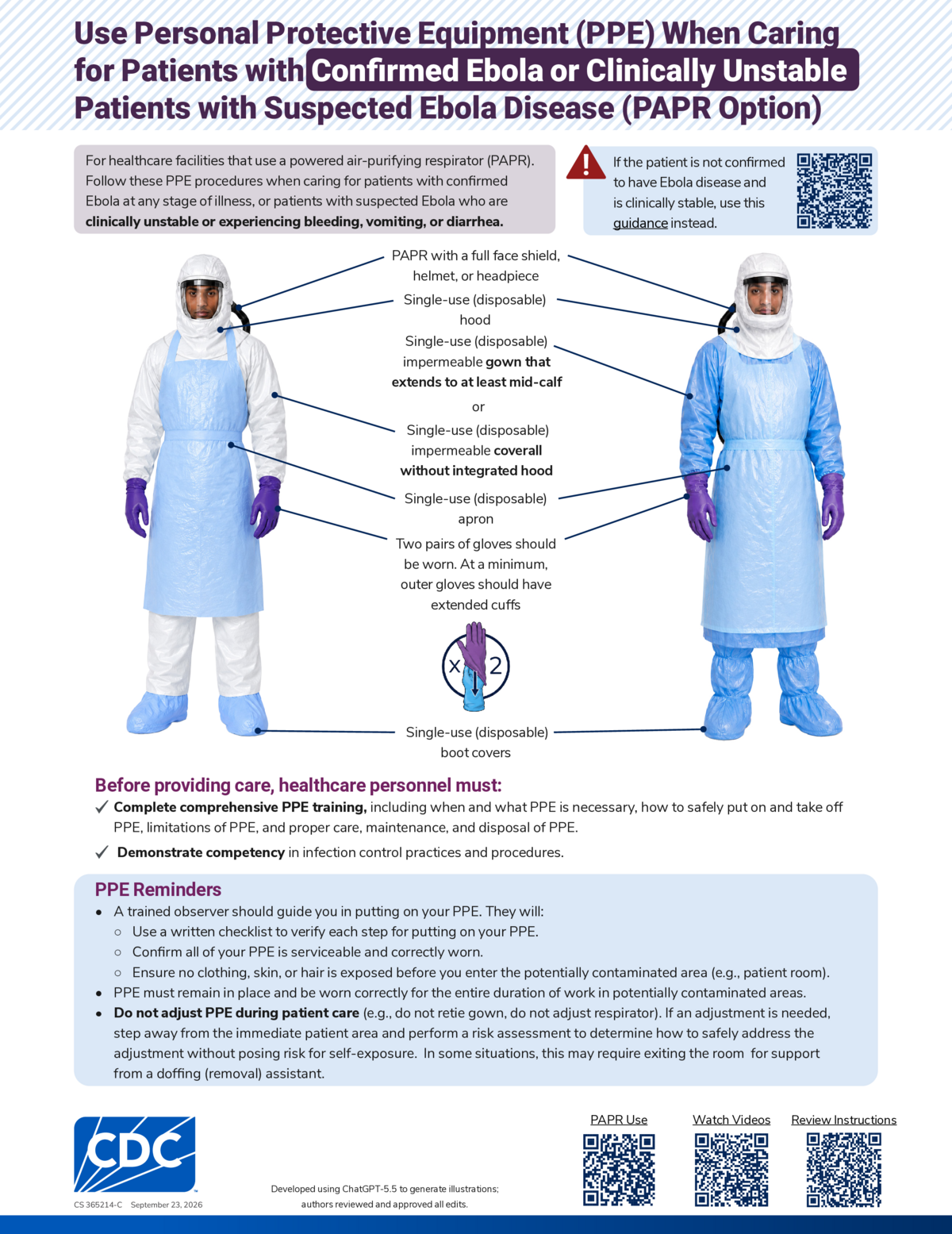
Job aid for PPE use with PAPR to care for confirmed or clinically unstable suspected Ebola patients.
Training resources

Train reception and intake staff on how to quickly identify a patient who might have Ebola.
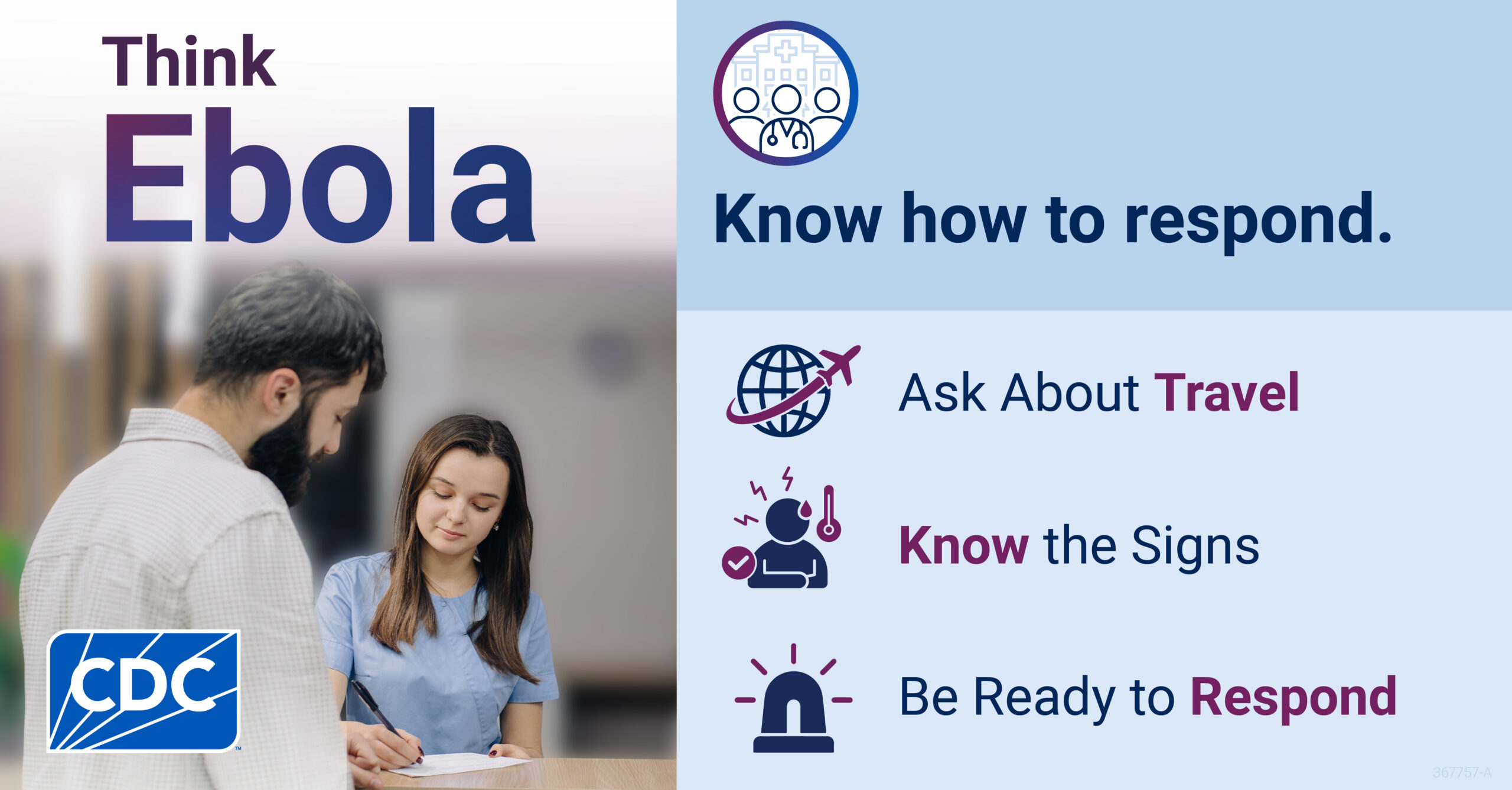
Messages
- Healthcare personnel: CDC is responding to an Ebola outbreak in the Democratic Republic of the Congo. Although the risk of Ebola spreading to the United States remains low, CDC's Ebola resources help prepare you to assess returning travelers for Ebola risk factors and symptoms, evaluate patients and protect your staff. https://www.cdc.gov/viral-hemorrhagic-fevers/hcp/infection-control/index.html#cdc_infection_control_res-resources
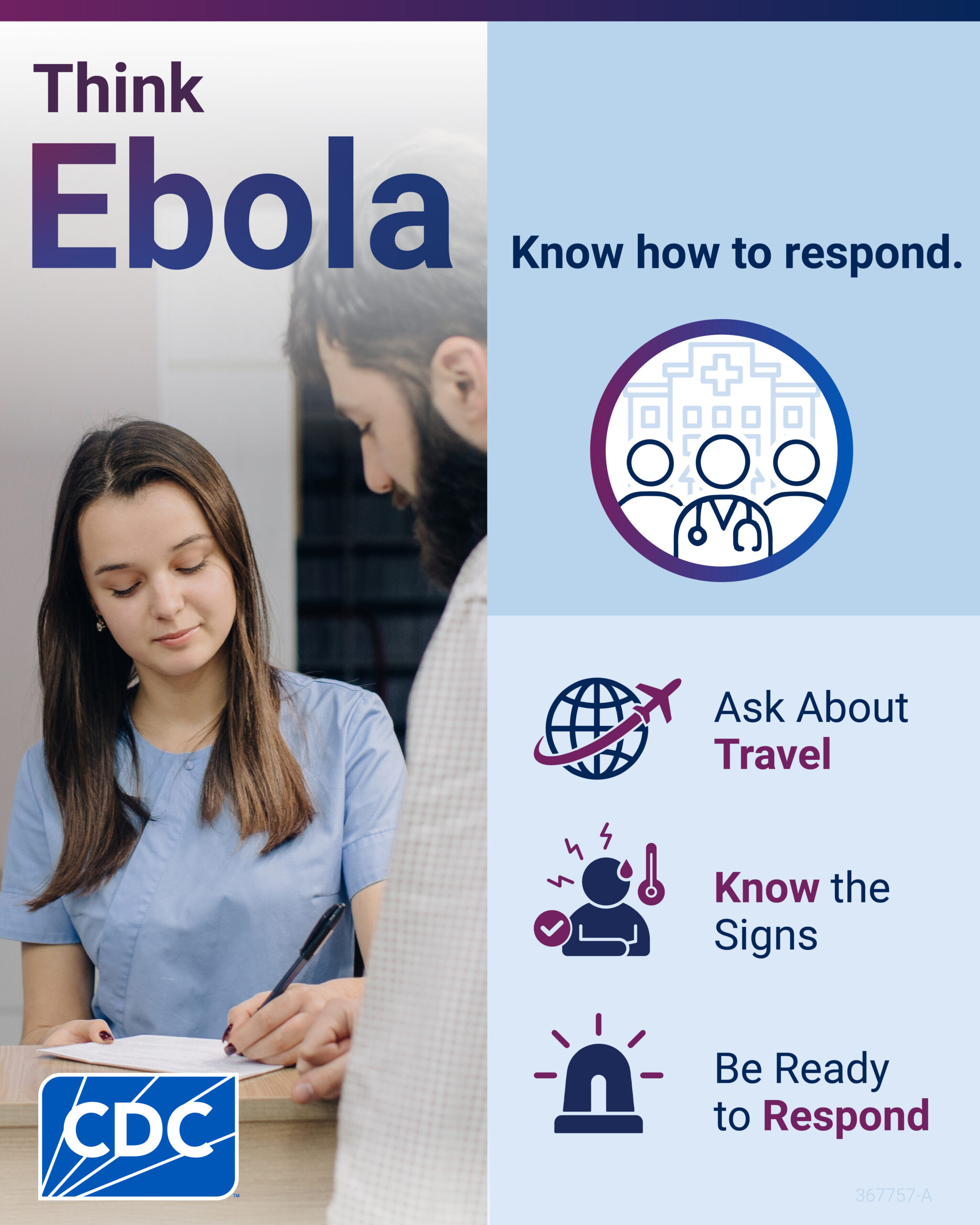
- Healthcare personnel: Prepare now to safely assess returning travelers who may have Ebola risk factors and symptoms. Early recognition is critical for healthcare personnel and patient safety. During routine triage: Ask about recent travel, assess for Ebola symptoms and isolate at-risk patients immediately. CDC has resources to help, including a step-by-step guide to use when assessing returning travelers with possible Ebola disease: Infection Prevention and Control for Patients in U.S. Hospitals with Suspected or Confirmed Viral Hemorrhagic Fevers | Viral Hemorrhagic Fevers (VHFs) | CDC
- Healthcare personnel: three things you should know to stay safe during the current Ebola outbreak: Travelers from affected areas may seek medical care for infectious symptoms that look like Ebola. Routine triage practices—including assessing travel history and symptoms—help identify at-risk patients early. Some returning travelers will have another infection, such as malaria or traveler's diarrhea. However, because early Ebola symptoms resemble those of other illnesses, taking a thorough exposure and travel history is crucial to identify risk factors. Link: Infection Prevention and Control for Patients in U.S. Hospitals with Suspected or Confirmed Viral Hemorrhagic Fevers | Viral Hemorrhagic Fevers (VHFs) | CDC
- Healthcare facilities: Now is the time to prepare for a patient with possible Ebola. CDC has resources to help, including infection control guidance and a printable step-by-step guide to use during triage to identify patients who may need additional evaluation for Ebola. Infection Prevention and Control for Patients in U.S. Hospitals with Suspected or Confirmed Viral Hemorrhagic Fevers | Viral Hemorrhagic Fevers (VHFs) | CDC
Guidance
Viral hemorrhagic fevers are rare, but serious viral diseases. Learn how to care for patients and co...
Guidance for U.S. hospital staff caring for a suspected or confirmed VHF patient.
PPE procedures for caring for VHF patients in U.S. hospitals
Guidance for Emergency Services for management of patients confirmed or suspected with selected VHF.
Content Source
National Center for Emerging and Zoonotic Infectious Diseases (NCEZID)
About This Page
Published: July 30, 2026
Updated: October 6, 2026
This page was last updated on this date. Updates may include minor edits, image changes, or other modifications to page content.
Reviewed: October 6, 2026
The information on this page was last reviewed by subject matter experts to ensure accuracy.