



Key points
- Respiratory and cutaneous diphtheria are the most common disease presentations.
- Respiratory diphtheria can lead to severe complications including airway obstruction, myocarditis, neuropathy, and death.
- Diphtheria has clinical features that can be confused with other infections.
- Follow CDC’s immunization schedule to ensure your patients are protected from diphtheria.

Disease presentation
Diphtheria can involve almost any mucous membrane. Clinically, diphtheria can be classified by the type of manifestation, depending on the disease site.
Respiratory sites most commonly include:
- Pharyngeal and tonsillar diphtheria
- Laryngeal diphtheria
- Nasal diphtheria
Cutaneous infections can also occur.
Common symptoms
Respiratory diphtheria
Respiratory diphtheria has a gradual onset and is characterized by:
- Mild fever
- Sore throat
- Difficulty swallowing
- Malaise
- Loss of appetite
- Hoarseness (if the larynx is involved)
The hallmark of respiratory diphtheria is a pseudomembrane that appears within 2–3 days of illness. It appears over the mucous lining of the tonsils, pharynx, larynx, or nares and can extend into the trachea.
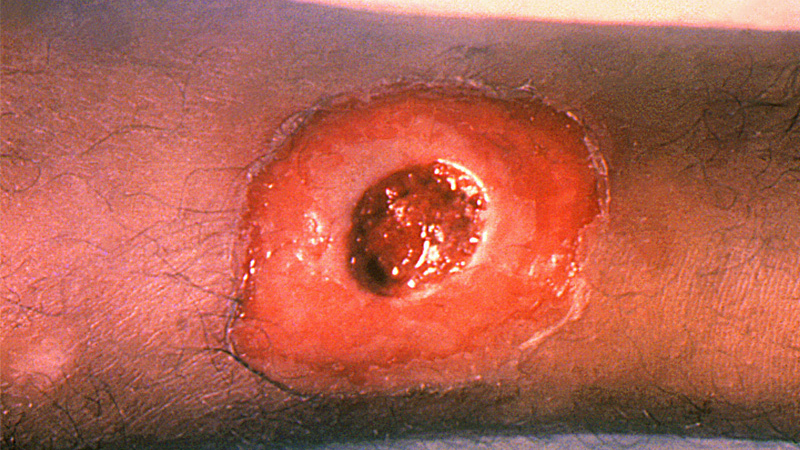
Cutaneous diphtheria
Cutaneous diphtheria may present as a scaling rash or ulcers with clearly demarcated edges and membrane. These skin infections are slow to heal.
Complications
Respiratory diphtheria
Most complications, including death, are attributable to the toxin's effects.
Complications include:
- Respiratory insufficiency due to airway obstruction
- Myocarditis
- Neuritis
Risk of death
The overall case-fatality rate for diphtheria is 5–10%. People younger than 5 years and older than 40 years of age experience higher death rates (up to 20%).
Cutaneous diphtheria
The systemic complications from cutaneous diphtheria appear to be less than from other sites.
Similar diseases
Infection with other pathogens could result in similar clinical presentation as diphtheria, including:
- Group A Streptococcus
- Staphylococcus aureus
- Candida albicans
- Epstein-Barr
- Cytomegalovirus
- Adenovirus
- Herpes
Other Corynebacterium species
Two other Corynebacterium species (C. ulcerans and C. pseudotuberculosis) may produce diphtheria toxin; both are zoonotic.
Toxin-producing C. ulcerans may cause disease indistinguishable from that caused by toxin-producing C. diphtheriae. However, person-to-person spread hasn't been documented.
Toxin-producing C. pseudotuberculosis can cause lymphadenitis in humans.
This page was last updated on this date. Updates may include minor edits, image changes, or other modifications to page content.
The information on this page was last reviewed by subject matter experts to ensure accuracy.