



Key points
- Diphtheria is a serious disease caused by a toxin produced by some strains of bacteria called Corynebacterium diphtheriae.
- Keeping up to date with recommended vaccines is the best protection against diphtheria.
- Talk to a vaccine provider if you have questions about diphtheria vaccines.

What it is
Diphtheria is a name for any illness caused by a toxin produced by some strains of C. diphtheriae. Diphtheria toxin, rather than C. diphtheriae, is responsible for the serious effects of diphtheria. The toxin kills healthy tissues and can cause many serious health problems.
What it isn't
C. diphtheriae that don't make diphtheria toxin can also cause infections, but they aren't generally as serious. Those infections aren't called diphtheria and are treated differently. They aren't described on this page.

Types
Respiratory diphtheria
The most serious type of diphtheria occurs when toxin-producing C. diphtheriae infect the upper respiratory tract (nose, throat). When this happens, it's called respiratory diphtheria.
Skin infections
C. diphtheriae can also infect the skin and other body parts. Cutaneous (skin infection) diphtheria is when bacteria that make diphtheria toxin infect the skin.
Symptoms
Symptoms and complications are different for respiratory diphtheria and diphtheria skin infections.
Risk factors
Close contact
Close contact with someone with diphtheria increases the risk of getting infected. Close contact with someone with diphtheria includes
- Living with them
- Being close together often
- Sharing respiratory secretions (saliva, spit)
- Being exposed to wound secretions (open sores or ulcers)
International travel
Nearly all diphtheria cases in the United States are associated with international travel to an affected area.
Vaccination status
People who aren't up to date with their diphtheria vaccines are at increased risk of severe disease with respiratory diphtheria.
How it spreads
People most commonly spread C. diphtheriae by coughing or sneezing, which creates small respiratory droplets that contain the bacteria. Other people can get infected if they breathe in those droplets.
People can also get infected from touching open sores or ulcers caused by C. diphtheriae.
Prevention
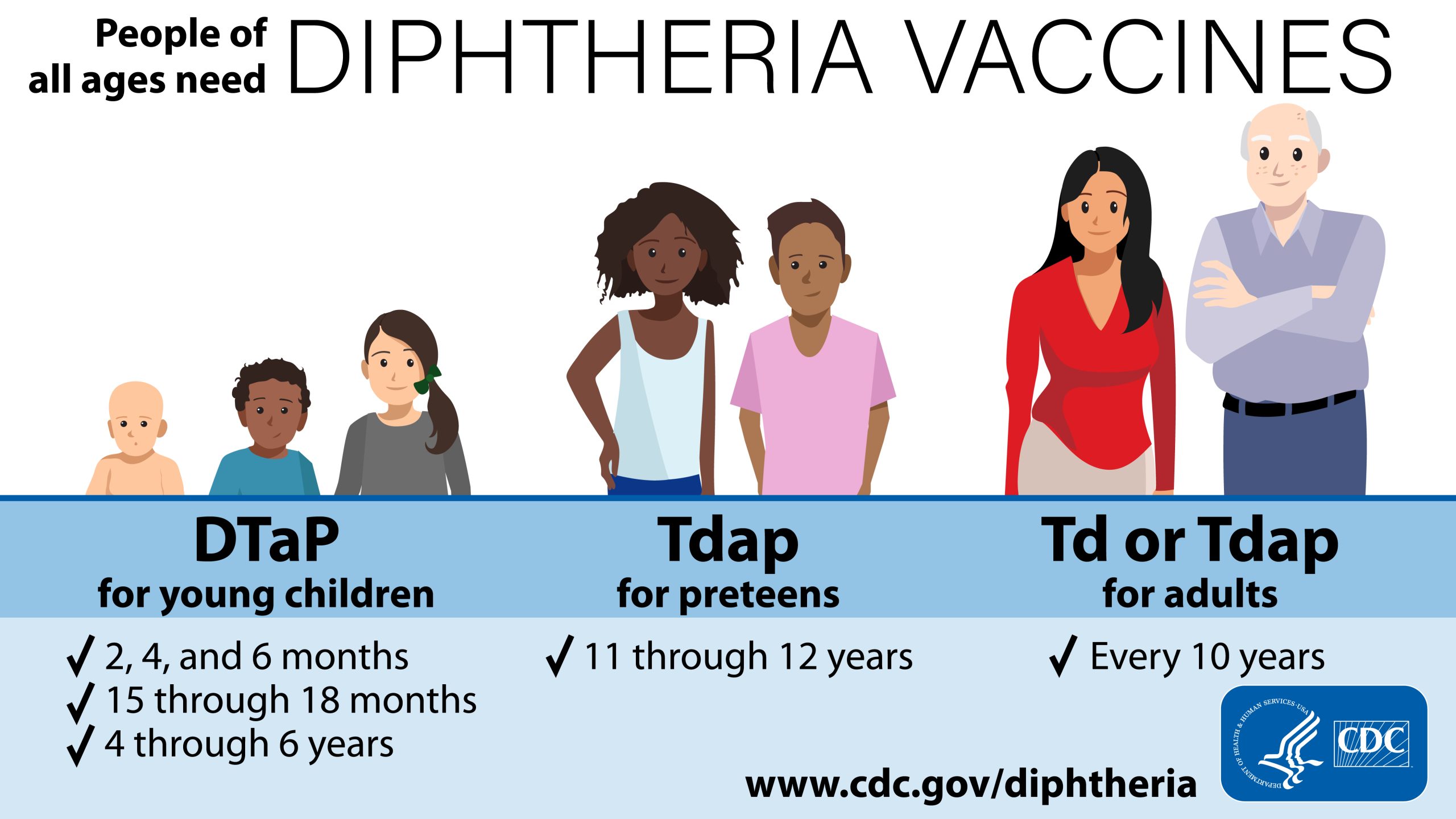
Vaccination
The best way to prevent diphtheria is to get vaccinated. CDC recommends diphtheria vaccination for everyone.
Antibiotics
Close contacts of someone with diphtheria should receive antibiotics to prevent them from getting sick. They should also be
- Monitored for illness
- Tested for diphtheria
- Vaccinated if their diphtheria vaccines aren't up to date
Health departments investigate each diphtheria case to identify close contacts and make sure they get the right preventive measures.
Testing and diagnosis
Healthcare providers usually decide if a person has diphtheria by looking for common signs and symptoms. If they suspect respiratory diphtheria, they'll start treatment right away without waiting for testing results.
Testing involves swabbing the skin wound or the back of the throat and nose. Healthcare providers send the samples to a lab for testing. Laboratorians try to culture (grow) and identify any bacteria. However, growing bacteria takes time.
If C. diphtheriae grow, then laboratorians at CDC have to test to see if the bacteria make diphtheria toxin. This is the only way to make sure a patient has diphtheria.
If a case is confirmed, clinicians will work with the health department and CDC to
- Determine the appropriate treatment
- Reduce the spread of disease to those who may have been exposed
Treatment and recovery
Respiratory diphtheria: Treatment usually involves diphtheria antitoxin and antibiotics.
Skin infections: Generally, only antibiotics are used.
Diphtheria antitoxin stops the toxin from causing more damage to the body. Antibiotics kill and get rid of the bacteria.
Testing is repeated after finishing all prescribed antibiotics to make sure the bacteria are completely gone.
This page was last updated on this date. Updates may include minor edits, image changes, or other modifications to page content.
The information on this page was last reviewed by subject matter experts to ensure accuracy.