


Key points
- 1 in 4: About one in four people infected with dengue will get sick.
- For people who get sick with dengue, symptoms can be mild or severe.
- Severe dengue can be life-threatening within a few hours and often requires care at a hospital.
Symptoms
The most common symptom of dengue is fever with any of the following:
- Aches and pains (headache, eye pain, typically behind the eyes, muscle, joint, or bone pain)
- Nausea, vomiting
- Rash
- Any warning sign

- Mild symptoms of dengue can be confused with other illnesses that cause fever.
- Symptoms of dengue typically last 2–7 days.
- Most people will recover after about a week.
When to seek emergency help
Symptoms of dengue can become severe within a few hours. Severe dengue is a medical emergency.
About 1 in 20 people who get sick with dengue will develop severe dengue. Severe dengue can result in shock, internal bleeding, and death.
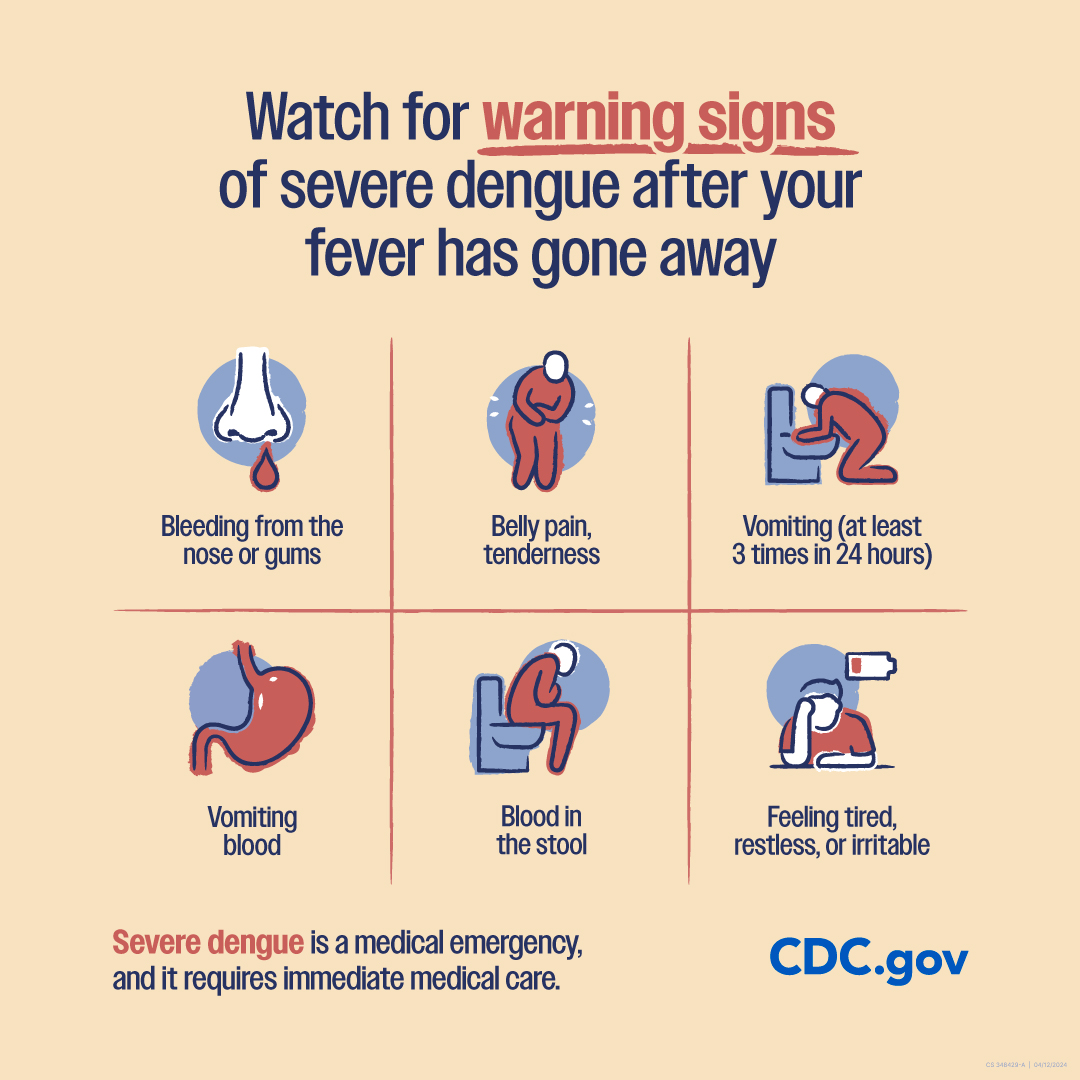
Warning signs are symptoms that indicate a person may be at higher risk for developing severe dengue. Immediately go to a local clinic or emergency room if you or a family member has any of the following warning signs:
- Belly pain or tenderness
- Vomiting (at least 3 times in 24 hours)
- Bleeding from the nose or gums
- Vomiting blood, or blood in the stool
- Feeling extremely tired or restless
Warning Signs
Watch for warning signs. Warning signs usually begin in the 24–48 hours after fever has gone away.
Testing
- See your healthcare provider if you have symptoms of dengue and live in or have recently traveled to an area with risk of dengue.
- A blood test is the only way to confirm the diagnosis.
- Laboratory confirmation is not required to manage illness from dengue, and your healthcare provider might provide care based on your signs and symptoms.
- Your healthcare provider may order blood tests to look for dengue or other similar viruses like Zika or chikungunya.
Content Source
National Center for Emerging and Zoonotic Infectious Diseases (NCEZID)
About This Page
Published: May 15, 2024
Updated: October 19, 2026
This page was last updated on this date. Updates may include minor edits, image changes, or other modifications to page content.
Reviewed: May 22, 2025
The information on this page was last reviewed by subject matter experts to ensure accuracy.