What to know
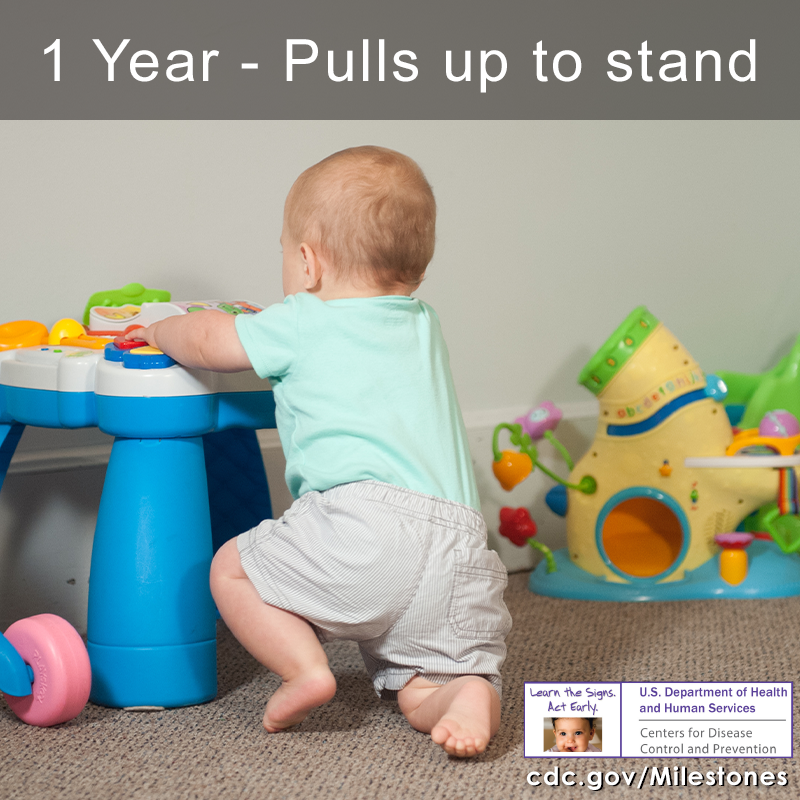
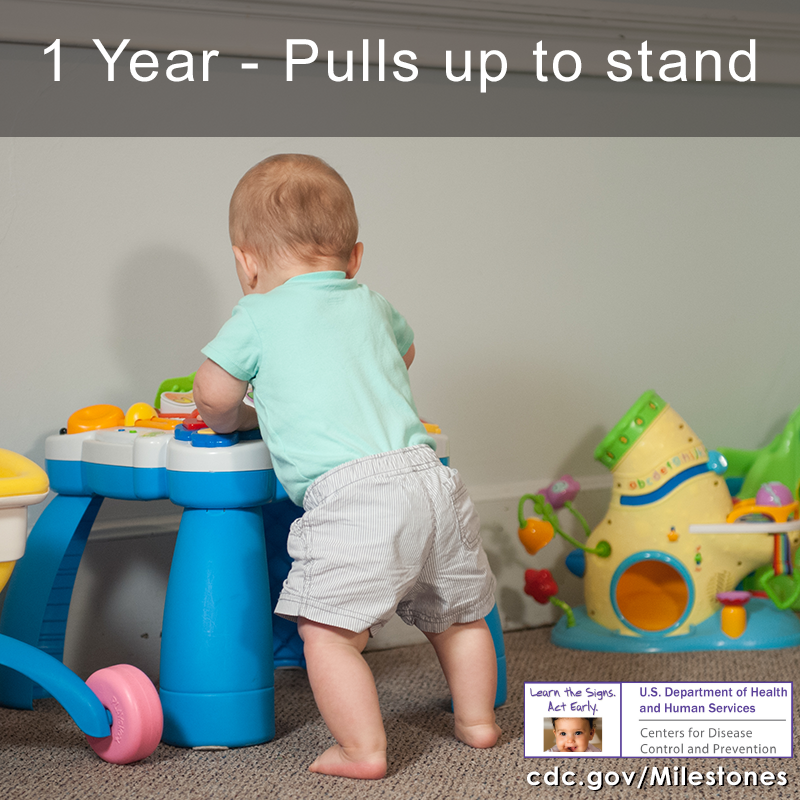
- Learn about the developmental milestones that most babies do by 1 year of age.
- See important information to share with your doctor.
- Find tips and activities you can do for your 1-year-old.

Ways to monitor milestones
How your child plays, learns, speaks, acts, and moves offers important clues about your child's development. Developmental milestones are things most children (75% or more) can do by a certain age.
Milestone checklists
Check the milestones your baby has reached by 1 year by completing a checklist, available below and in three additional formats:
- CDC's free Milestone Tracker mobile app, for iOS and Android devices
- Web-based Digital Online Checklist
- Printable checklist
What most babies do by 1 year
Click the links below to view a photo or video of each milestone.
Social/Emotional Milestones
Language/Communication Milestones
- Waves “bye-bye”
- Calls a parent “mama” or “dada” or another special name
- Understands “no” (pauses briefly or stops when you say it)
Cognitive Milestones (learning, thinking, problem-solving)
- Puts something in a container, like a block in a cup
- Looks for things he sees you hide, like a toy under a blanket
Movement/Physical Development Milestones
Share with your child’s doctor
Things to share and consider
- What are some things you and your baby do together?
- What are some things your baby likes to do?
- Is there anything your baby does or does not do that concerns you?
- Has your baby lost any skills he/she once had?
- Does your baby have any special healthcare needs or was he/she born prematurely?
You know your child best. Don't wait. If your child is not meeting one or more milestones, has lost skills he or she once had, or you have other concerns, act early. Talk with your child's doctor, share your concerns, and ask about developmental screening.
Tips and activities
What You Can Do for Your 1-year-old

As your baby's first teacher, you can help his or her learning and brain development. Try these simple tips and activities in a safe way. Talk with your baby's doctor and teachers if you have questions or for more ideas on how to help your baby's development.
- Teach your baby "wanted behaviors." Show her what to do and use positive words or give her hugs and kisses when she does it. For example, if she pulls your pet's tail, teach her how to pet gently and give her a hug when she does it.
- Talk or sing to your baby about what you're doing. For example, "Mommy is washing your hands" or sing, "This is the way we wash our hands."
- Build on what your baby tries to say. If he says "ta," say "Yes, a truck," or if he says "truck," say "Yes, that's a big, blue truck."
This page was last updated on this date. Updates may include minor edits, image changes, or other modifications to page content.
The information on this page was last reviewed by subject matter experts to ensure accuracy.
- Special acknowledgments to the subject matter experts and others who contributed to the review of data and selection of developmental milestones, especially Paul H. Lipkin, MD, Michelle M. Macias, MD, Julie F. Pajek, PhD, Judith S. Shaw, EdD, MPH, RN, Karnesha Slaughter, MPH, Jane K. Squires, PhD, Toni M. Whitaker, MD, Lisa D. Wiggins, PhD, and Jennifer M. Zubler, MD.
- Sincere gratitude to Natalia Benza, MD and José O. Rodríguez, MD, MBA for their thoughtful review of the Spanish-language translation of these milestones.