



What to know

At A Glance

Summary
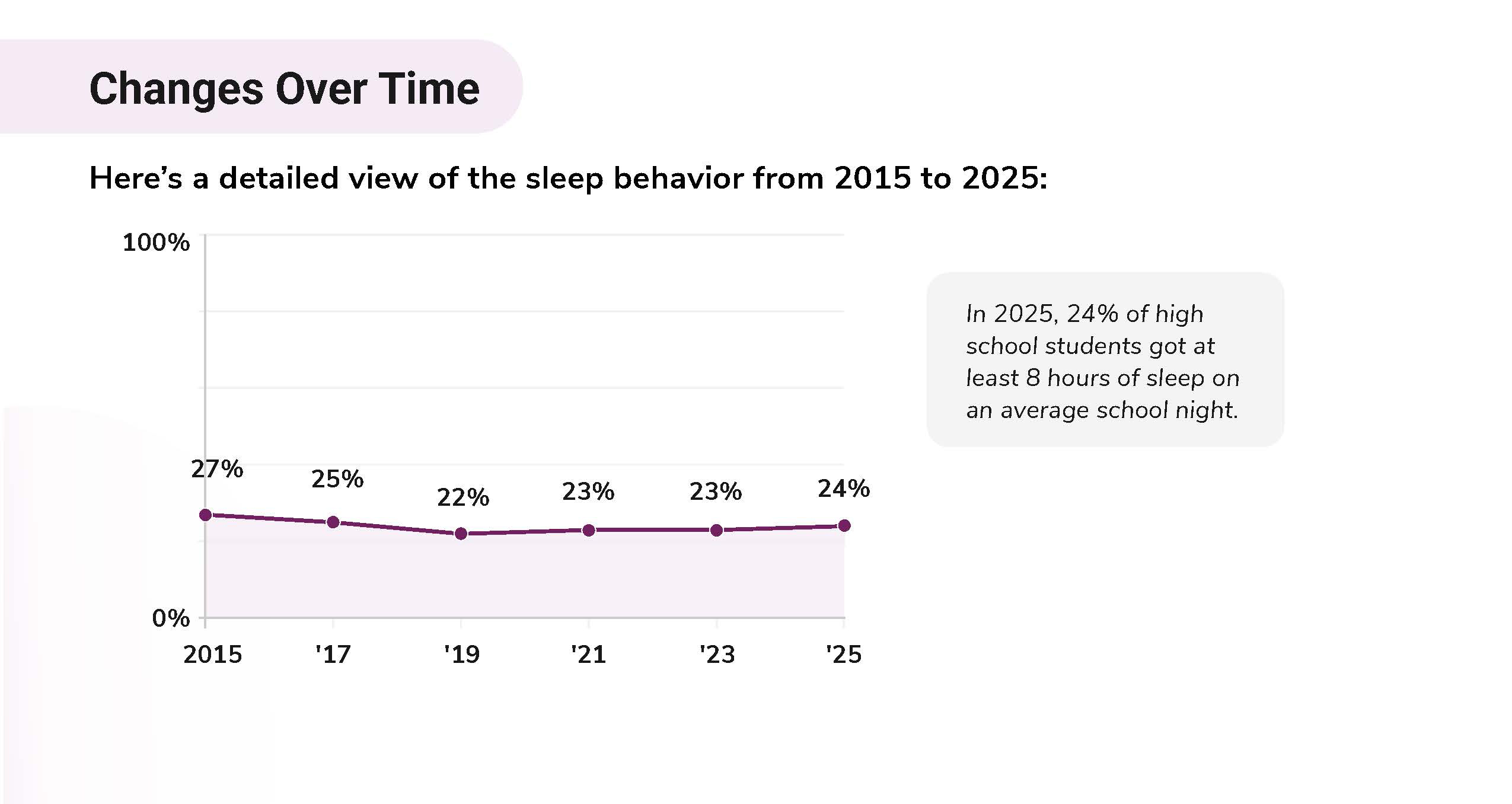
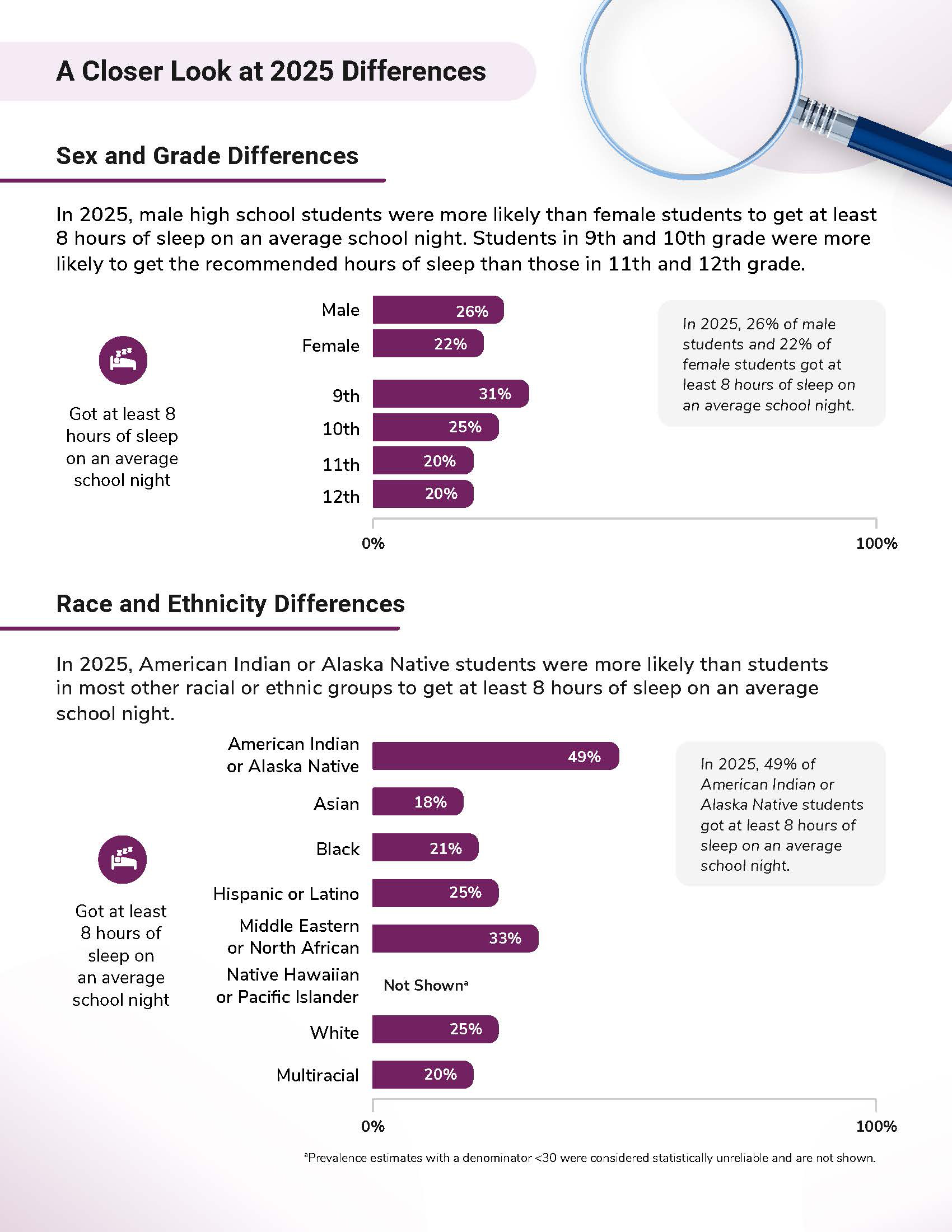
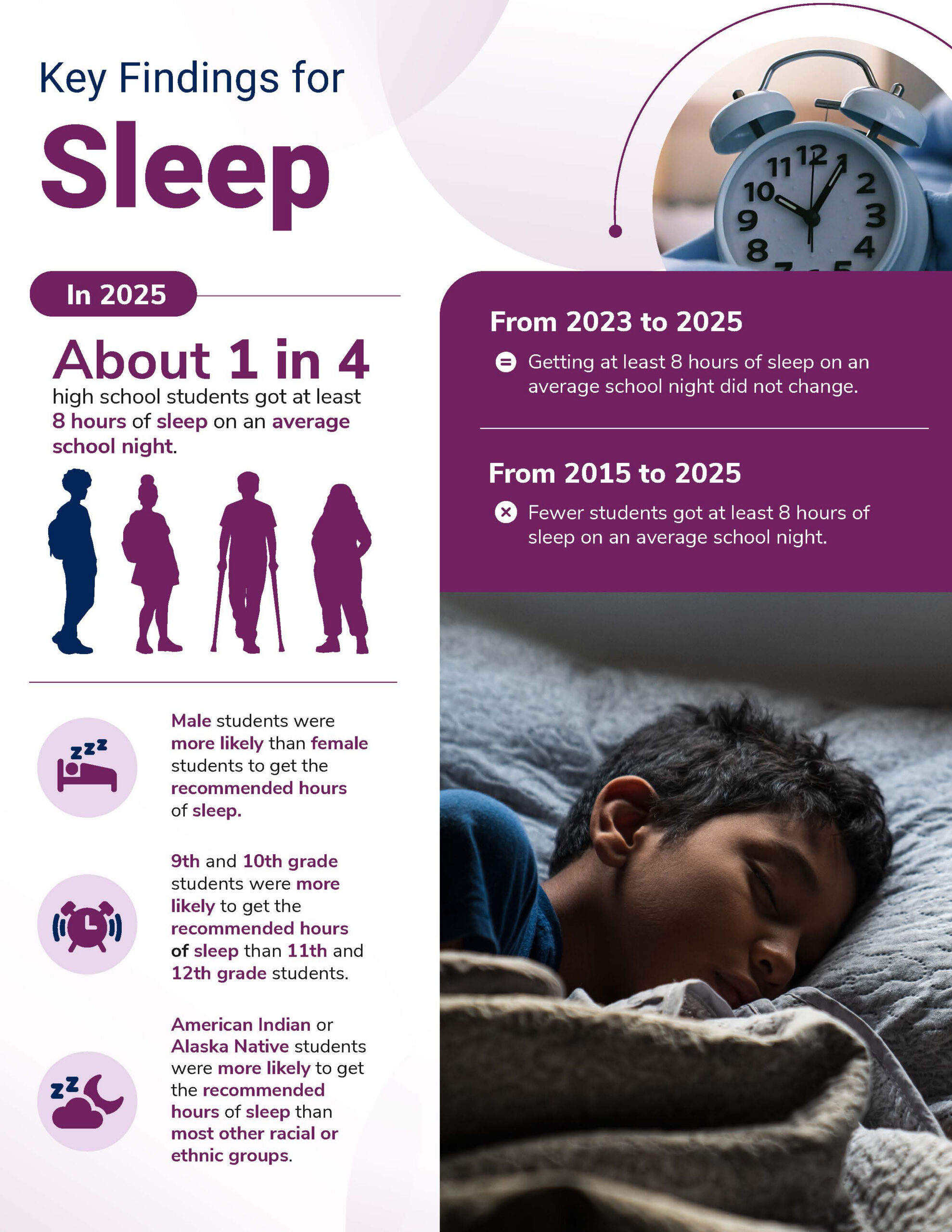
The combination of late bedtimes and early school start times means that most students do not get enough sleep. The American Academy of Sleep Medicine recommends that adolescents aged 13–18 get 8 to 10 hours of sleep a night. Sufficient sleep supports physical health, mental health, attention, behavior, and readiness to learn.
Parents and families are essential in helping adolescents get enough sleep. They can consider:
- Modeling good sleep habits by setting and maintaining regular wake-up times and bedtimes, including on weekends. Research has also shown that adolescents whose parents set their bedtimes usually get more sleep than those whose parents do not set bedtimes.
- Setting boundaries on digital media use at night. For example, they can require that all devices be put away at least 1 hour before bedtime.
- Storing phones overnight outside the bedroom. Storage of digital screens in bedrooms compared to storage in other places is associated with shorter hours of sleep, later bedtimes, and poorer sleep quality.
Schools can also take practical steps to support parents' efforts to help students get the sleep they need. They can consider:
- Including sleep education in their health curriculum to help students understand why sleep matters and how daily habits can affect sleep quality and duration. Lessons could cover topics such as digital device use before sleep, sleep patterns, sleep disorders, snoring, drowsy driving, and insomnia.
- Learning about the relationship between school start times and student sleep and working with students, families, and school staff to consider later school start times.

This page was last updated on this date. Updates may include minor edits, image changes, or other modifications to page content.
The information on this page was last reviewed by subject matter experts to ensure accuracy.