Dietary Behaviors

For Everyone

What to know

What adolescents eat and drink each day plays an important role in their growth, development, and overall health. But many adolescents don’t meet dietary recommendations, which puts them at risk for not getting enough of the nutrients they need.
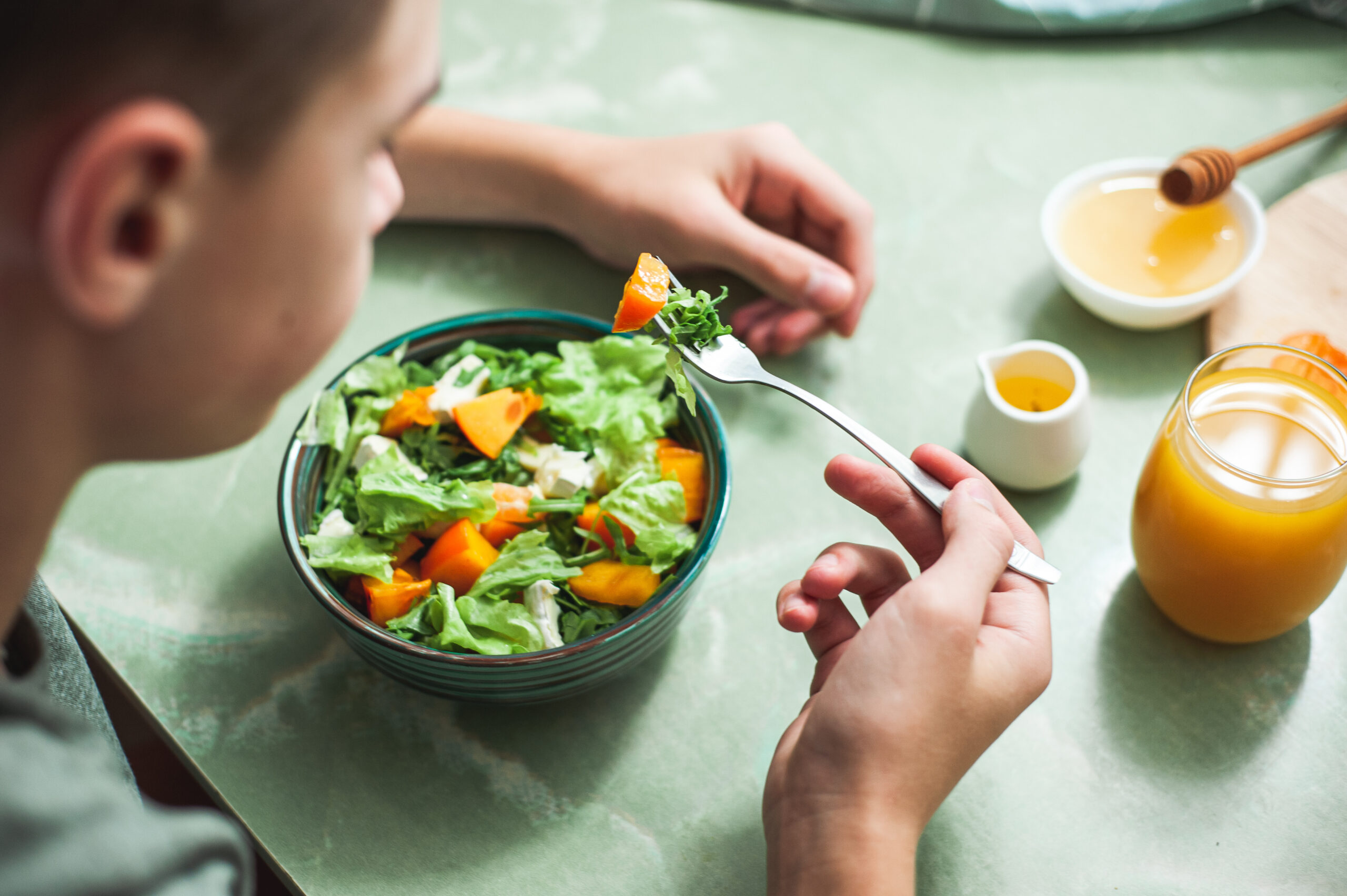
High school student eating a salad.

At A Glance

2-year changes and 10-year trends in how high school students are doing across six dietary behaviors.

Table titled 'At a Glance' showing 2-year changes (2023–2025) and 10-year (2015–2025) trends for six dietary behaviors among high school students. Ate fruit daily: improved over 2 years, no change over 10 years. Ate vegetables daily: improved over 2 years, no change over 10 years. Ate breakfast daily: no change over 2 years, worsened over 10 years. Drank plain water at least 3 times a day: improved over both periods. Drank soda daily: no change over 2 years, improved over 10 years. Drank sports drinks daily: no change over 2 years, improved over 10 years.

Summary

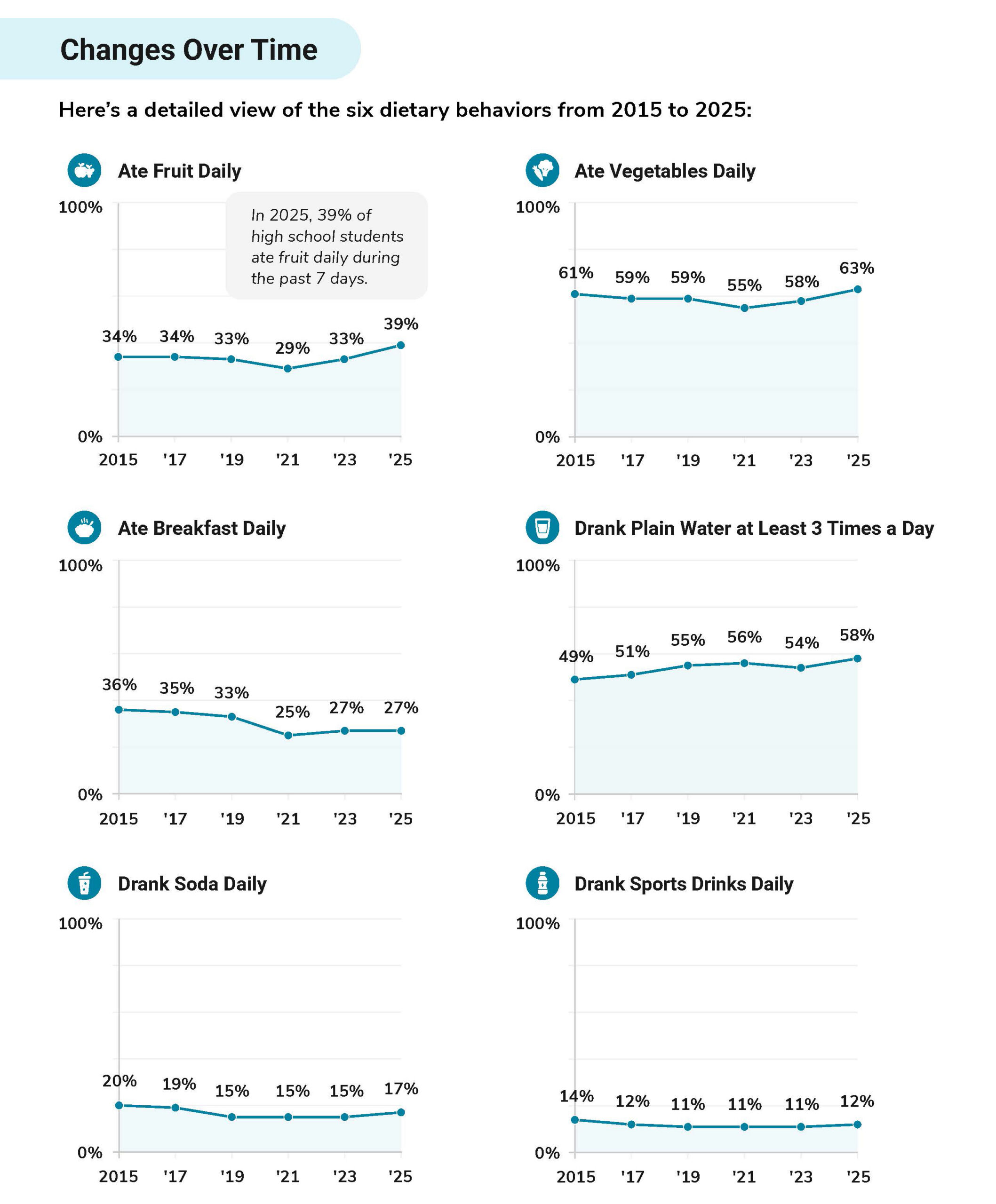
Dietary behaviors changes over time.

Six line charts titled 'Changes Over Time' showing percentages of high school students reporting dietary behaviors from 2015 to 2025. Ate Fruit Daily: 34%, 34%, 33%, 29%, 33%, 39%. Ate Vegetables Daily: 61%, 59%, 59%, 55%, 58%, 63%. Ate Breakfast Daily: 36%, 35%, 33%, 25%, 27%, 27%. Drank Plain Water at Least 3 Times a Day: 49%, 51%, 55%, 56%, 54%, 58%. Drank Soda Daily: 20%, 19%, 15%, 15%, 15%, 17%. Drank Sports Drinks Daily: 14%, 12%, 11%, 11%, 11%, 12%. A callout notes that in 2025, 39% of high school students ate fruit daily during the past 7 days.

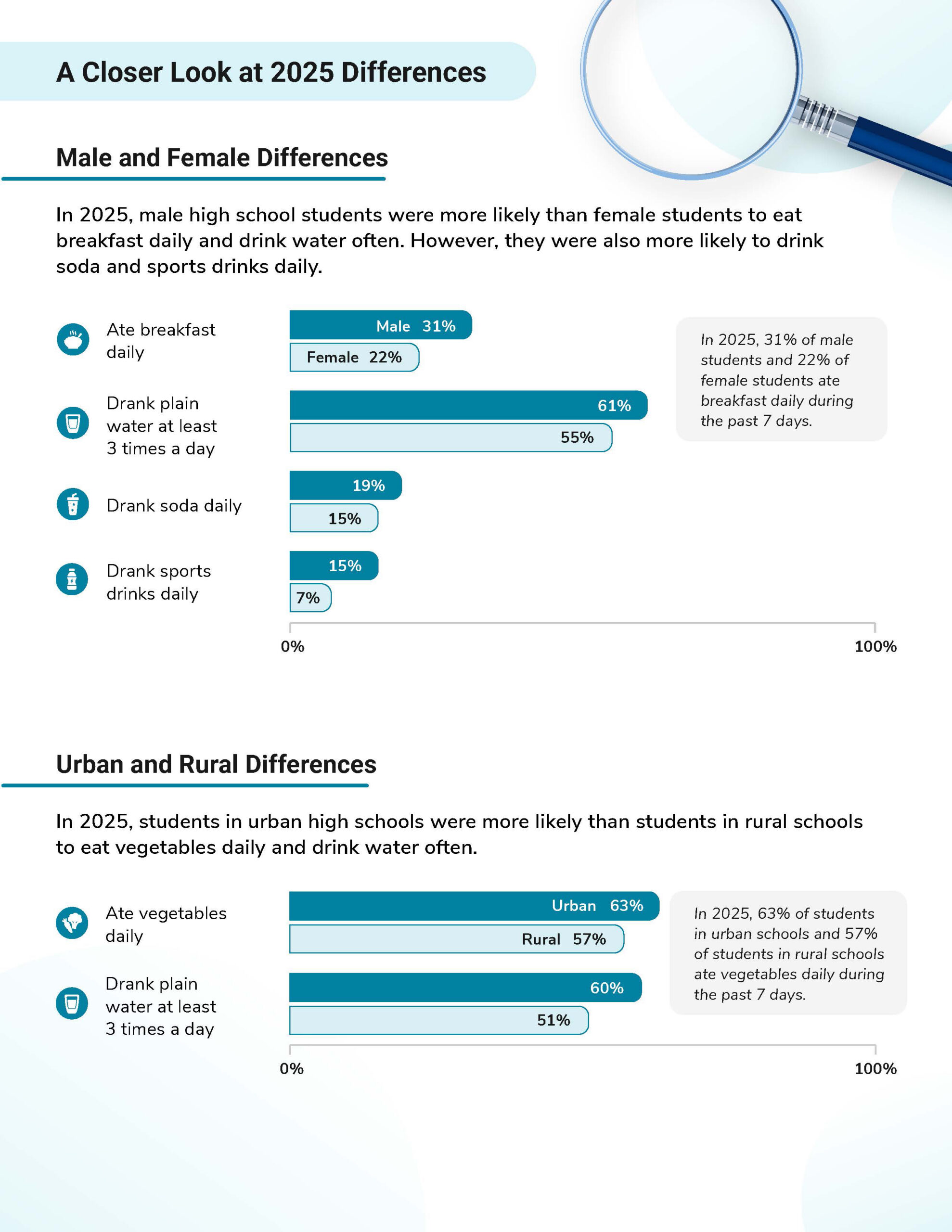
A closer look at 2025 differences in dietary behaviors of high school students.

Bar charts titled 'A Closer Look at 2025 Differences.' Male and Female Differences: Ate breakfast daily — Male 31%, Female 22%. Drank plain water at least 3 times a day — Male 61%, Female 55%. Drank soda daily — Male 19%, Female 15%. Drank sports drinks daily — Male 15%, Female 7%. Text notes males were more likely to eat breakfast and drink water, but also more likely to drink soda and sports drinks. Urban and Rural Differences: Ate vegetables daily — Urban 63%, Rural 57%. Drank plain water at least 3 times a day — Urban 60%, Rural 51%. Text notes urban students were more likely to eat vegetables and drink water than rural students.

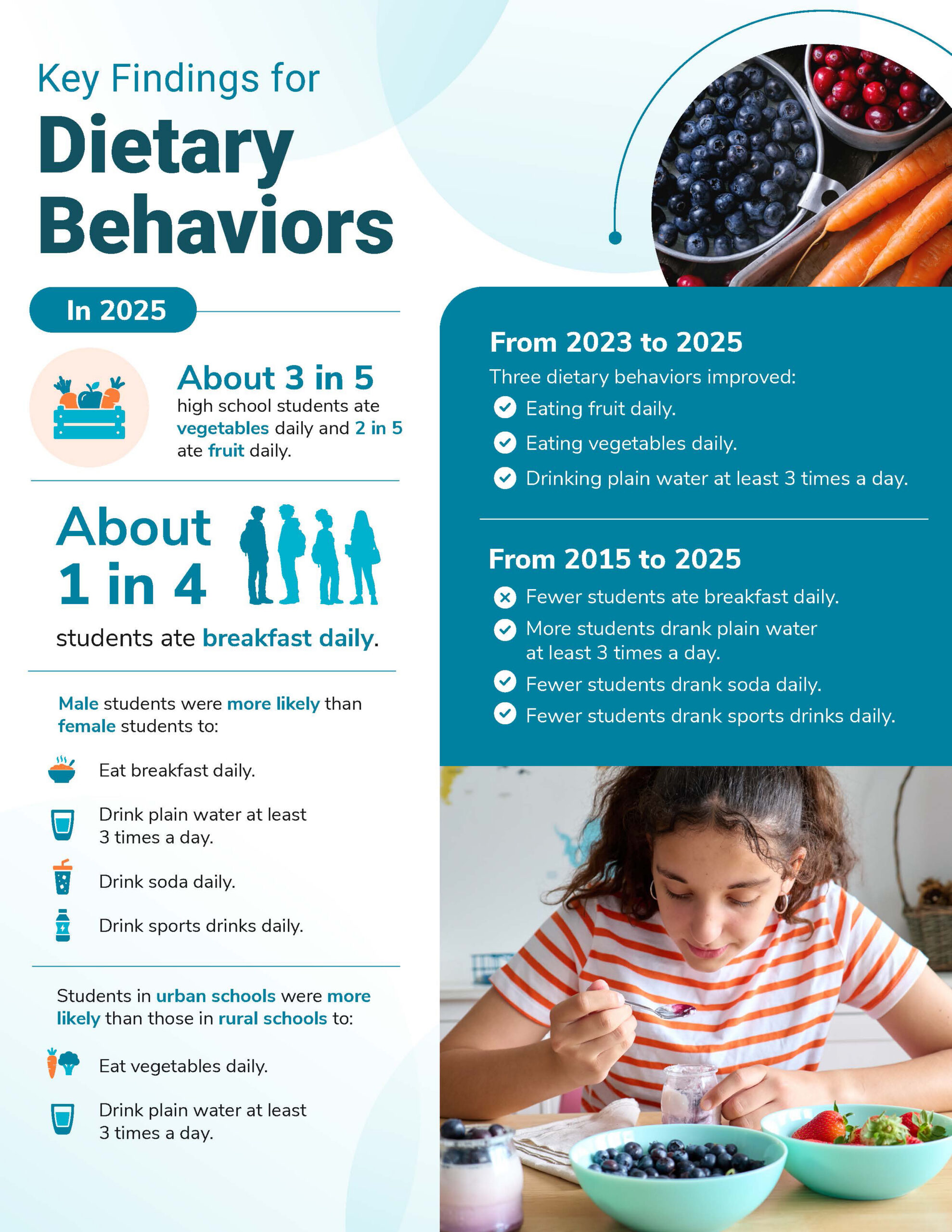
Key findings for dietary behaviors.

Infographic titled 'Key Findings for Dietary Behaviors.' In 2025, about 3 in 5 high school students ate vegetables daily and 2 in 5 ate fruit daily. About 1 in 4 students ate breakfast daily. Male students were more likely than female students to eat breakfast daily, drink plain water at least 3 times a day, drink soda daily, and drink sports drinks daily. Students in urban schools were more likely than those in rural schools to eat vegetables daily and drink plain water at least 3 times a day. From 2023 to 2025, three behaviors improved: eating fruit daily, eating vegetables daily, and drinking plain water at least 3 times a day. From 2015 to 2025: fewer students ate breakfast daily; more students drank plain water at least 3 times a day; fewer students drank soda daily; fewer students drank sports drinks daily. Includes photos of berries, carrots, and a girl eating a bowl of fruit and yogurt.

Schools, families, and communities all have a role to play in helping students build healthy dietary habits now and in the future. For example, parents and families can consider:

  • Modeling healthy dietary behaviors like choosing water instead of sugary drinks, which are a leading source of added sugars for adolescents.
  • Involving adolescents in meal planning and grocery shopping to teach them how to choose healthy foods and beverages.
  • Encouraging adolescents to eat a healthy breakfast and lunch whether at home or at school.
  • Volunteering to serve on school wellness committees or health teams.

Schools also have a vital role to play because many students eat one or more meals at school each day. To create a healthy nutrition environment, schools can consider:

  • Providing and promoting appealing, nutritious foods and beverages throughout the school day.
  • Making free drinking water easily available during the school day.
  • Following Smart Snacks in School nutrition standards for foods and beverages sold in vending machines and cafeteria à la carte lines.
  • Providing health education on the benefits of consuming healthy foods and beverages.
  • Adopting programs that provide free school meals for all students and alternative breakfast models such as "grab and go."
  • Supporting school nutrition staff through training, help with recipe development, and taste tests of new menu items.

Schools can also work with families and community groups to make sure students get consistent messages and support for healthy eating in all settings. This can include messaging campaigns, nutrition education events, and other activities that make healthy choices practical, appealing, and easier to adopt.

Cafeteria worker and high school student talking in cafeteria line.

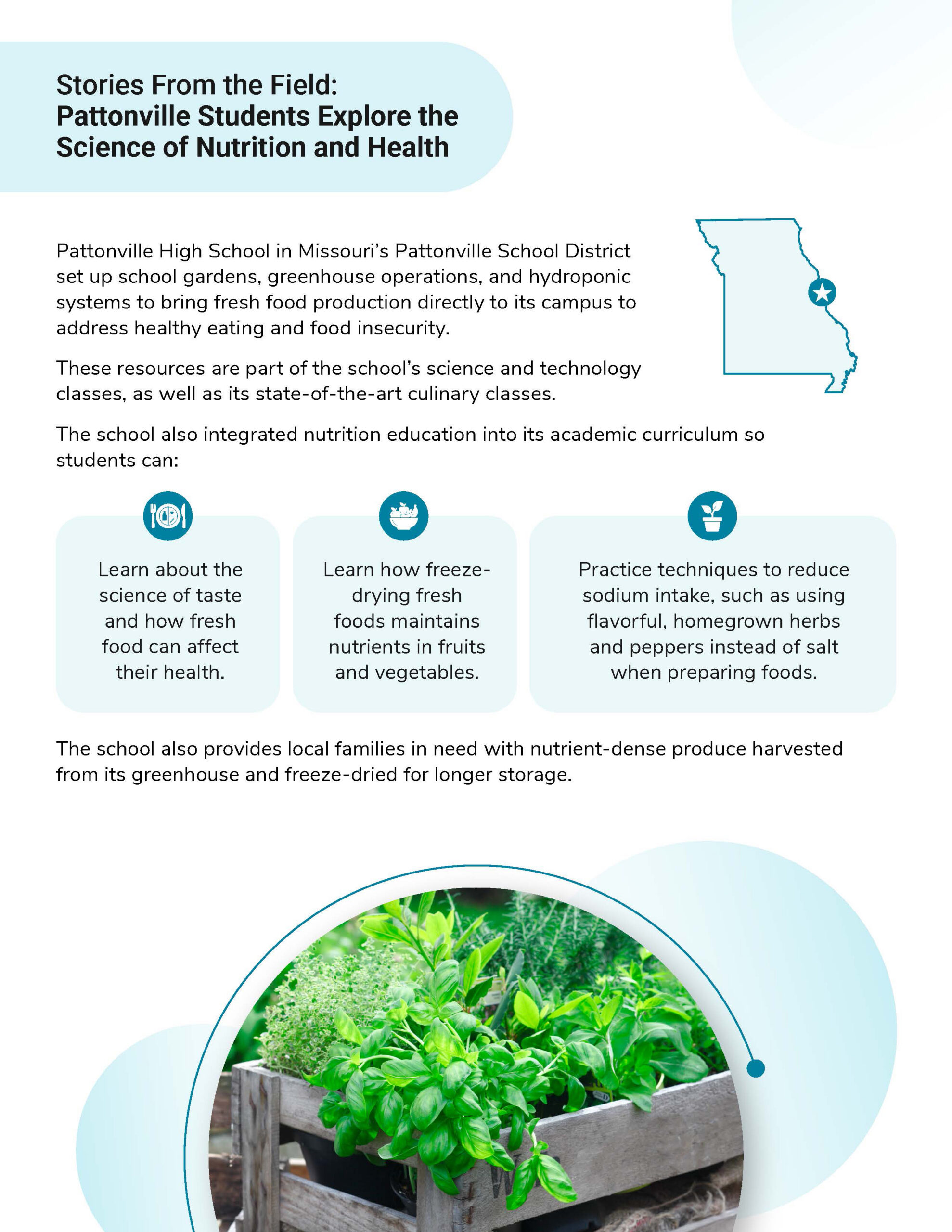
Stories From the Field: Pattonville students explore the science of nutrition and health.

Story image titled 'Stories From the Field: Pattonville Students Explore the Science of Nutrition and Health.' Text explains that Pattonville High School in Missouri's Pattonville School District set up school gardens, greenhouse operations, and hydroponic systems to bring fresh food production to campus and address healthy eating and food insecurity. These resources support science, technology, and culinary classes. Nutrition education is integrated into the curriculum so students can learn about the science of taste and how fresh food affects health, learn how freeze-drying preserves nutrients in fruits and vegetables, and practice reducing sodium intake using homegrown herbs and peppers instead of salt. The school also provides local families in need with freeze-dried, nutrient-dense produce from its greenhouse. Includes a map of Missouri with Pattonville marked and a photo of a garden with herbs growing in a wooden planter.

Content Source
Adolescent and School Health; National Center for Chronic Disease Prevention and Health Promotion
About This Page
Published:
Updated: August 14, 2026

This page was last updated on this date. Updates may include minor edits, image changes, or other modifications to page content.

Reviewed: August 14, 2026

The information on this page was last reviewed by subject matter experts to ensure accuracy.