



At a glance
PulseNet rapidly identifies potential outbreaks through cluster detection. The goals of PulseNet are to provide real-time surveillance of bacterial foodborne diseases and assist epidemiologists in investigating outbreaks. PulseNet also provides a rapid and effective means of communication between public health laboratories.
Outbreak detection
PulseNet is often the first step in identifying a widespread foodborne outbreak. Investigations have brought about lasting changes in food industry practices and new regulations that have made our food safer. PulseNet works closely with the Food and Drug Administration (FDA) and the United States Department of Agriculture (USDA).
Central pillar of U.S. food safety system
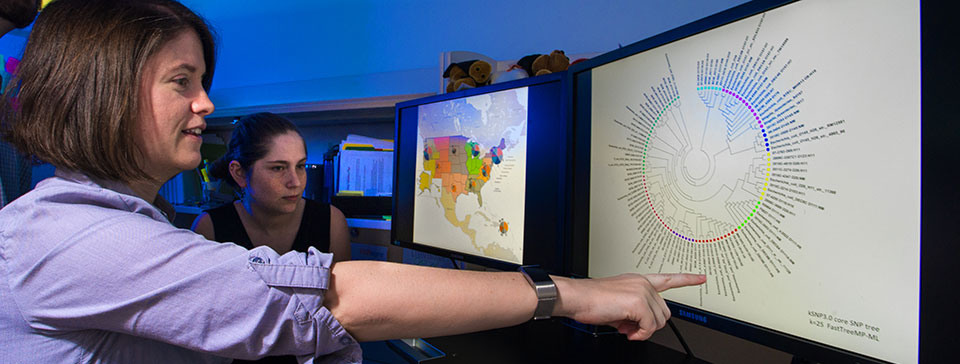
PulseNet solves outbreaks of foodborne disease. Scientists detect outbreaks—large and small—by connecting the dots between cases of similar illness that are happening anywhere in the country. During outbreak investigations, scientists can use PulseNet data to identify the specific type of bacteria that caused people to get sick, track down the food that was contaminated, and find out what happened to cause the contamination.
Laboratories on the PulseNet network use whole genome sequencing to piece together and identify the DNA fingerprints of the bacteria causing people to get sick. Scientists study these fingerprints and post their finding on a message board so other laboratories across the country are aware of their findings.
The basics of foodborne outbreaks
How does outbreak detection work?
- State, local, or federal laboratories analyze data generated in real time using DNA fingerprinting. Public health microbiologists enter this information into an electronic database and submit the data immediately to CDC.
- CDC scientists review the DNA fingerprints from the electronic database and identify the bacteria making people sick. They do this by looking for groups of matching patterns, or clusters.
- State and local health departments are notified about a possible outbreak.
- Scientists work with FDA and USDA officials, epidemiologists, environmental health specialists to identify the contaminated food. If a link is found between cases (or clusters), it is then classified as an outbreak.
- The public is alerted of the outbreak, and the manufacturer may voluntarily recall the contaminated food item(s).
PulseNet rapidly identifies potential outbreaks through cluster detection. The goals of PulseNet are to provide real-time monitoring of bacterial foodborne diseases and assist epidemiologists in investigating outbreaks. PulseNet also provides a rapid and effective means of communication between public health laboratories.
How does whole genome sequencing work?
For scientists to preform WGS, they must first capture the genetic material (or DNA) from an organism. After collecting the DNA, it's then prepared for sequencing through a series of steps. Once sequencing is completed, scientists are able to analyze the information and identify unique DNA fingerprints. For PulseNet, the DNA from bacteria is sequenced to identify foodborne outbreaks in the United States, and abroad.
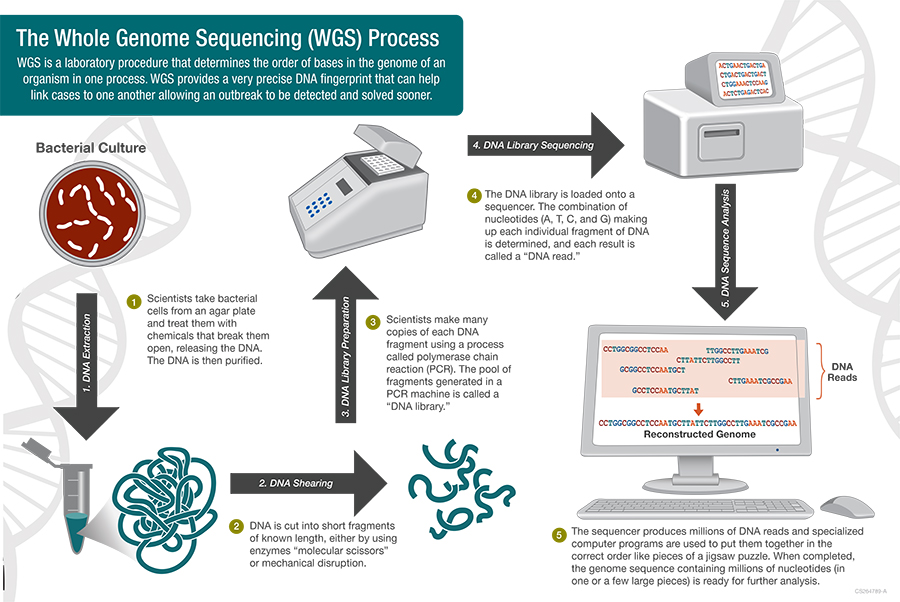
- DNA Shearing: Scientists use specific materials to cut DNA into pieces that are small enough for the sequencing machine to read.
- DNA Barcoding: Unique identifiers are added to DNA pieces in order to separate each organisms genetic code.
- DNA Sequencing: The DNA from different bacteria are combined and put into the sequencing machine. This machine identifies the nucleotide bases that make up the DNA fingerprint of each bacteria.
- Analysis: Scientists use computer's and software tools the compare the DNA fingerprints and identify differences.
Whole genome support in laboratories
PulseNet established the structure to support WGS in public health laboratories though:
- Training laboratory scientists to preform sequencing
- Purchasing equipment and supplies
- Updating data software and systems
The implementation of WGS was made possible through collaborations with CDC's Advanced Molecular Detection Office, Food Safety Office, and Antimicrobial Resistance Solutions Initiative.
Connecting partners committed to food safety
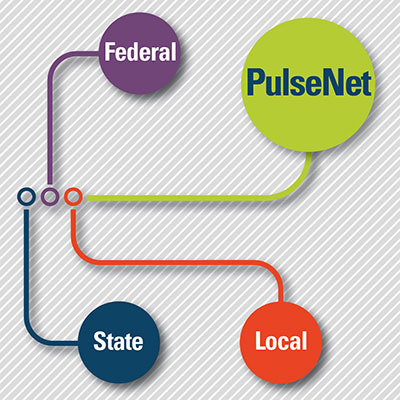
PulseNet is made up of 82 federal, state, and local public health laboratories in all 50 states, Washington, D.C., and Puerto Rico. These labs use standardized laboratory and data analysis methods to characterize the foodborne bacteria making people sick. PulseNet's standardized tools allow public health labs around the country to work together in a coordinated network to monitor for potential outbreaks by analyzing and comparing data from laboratory samples.
Whole genome sequencing (WGS) information is only one clue in solving a foodborne disease outbreaks. Investigators also need information gathered outside the laboratory, such as the places people went and the food they ate before they got sick; and public health departments need strong workforces to collect this information. WGS information supports the epidemiological investigations and helps public health investigators identify and solve more outbreaks while they are still small.
Successful outbreak investigations help identify unsafe foods and production processes. Regulatory agencies and industry can use this new knowledge to prevent future illness.
What PulseNet monitors
More than just food
In addition to foodborne outbreaks, PulseNet has also identified outbreaks caused by bacteria identified from:
- Pet turtles
- Hedgehogs
- Petting zoo animals
- Rodents
- Reptiles
- Animal feed
- Recreational water such as lakes, pools and streams
Bacteria PulseNet monitors
PulseNet monitors and detects outbreaks for these foodborne illness-causing bacteria:
- Campylobacter
- Cronobacter
- Clostridium botulinum
- Escherichia coli O157 and other Shiga-toxin producing E. coli
- Listeria monocytogenes
- Salmonella
- Shigella
- Vibrio cholerae
- Vibrio parahaemolyticus
- Yersinia enterocolitica
For more information on current CDC foodborne outbreak investigations, visit the CDC Food Safety website.
Staying ahead of the curve
Whole genome sequencing improves the ability of public health scientists to connect the dots between sick people and sources of infection. To best use this advanced technology, we must continue to support and develop state laboratory capacity, and also support state capacity to investigate foodborne outbreaks and illnesses. CDC is committed to supporting state and local health departments with the resources and training needed to cultivate highly skilled epidemiologists and laboratory scientists.
PulseNet scientists at CDC are constantly working to advance laboratory and data analysis tools used to investigate outbreaks. By researching and developing new technologies beyond WGS, CDC scientists will be able to ensure that the PulseNet laboratory network remains cutting-edge.
This page was last updated on this date. Updates may include minor edits, image changes, or other modifications to page content.
The information on this page was last reviewed by subject matter experts to ensure accuracy.