



Key points
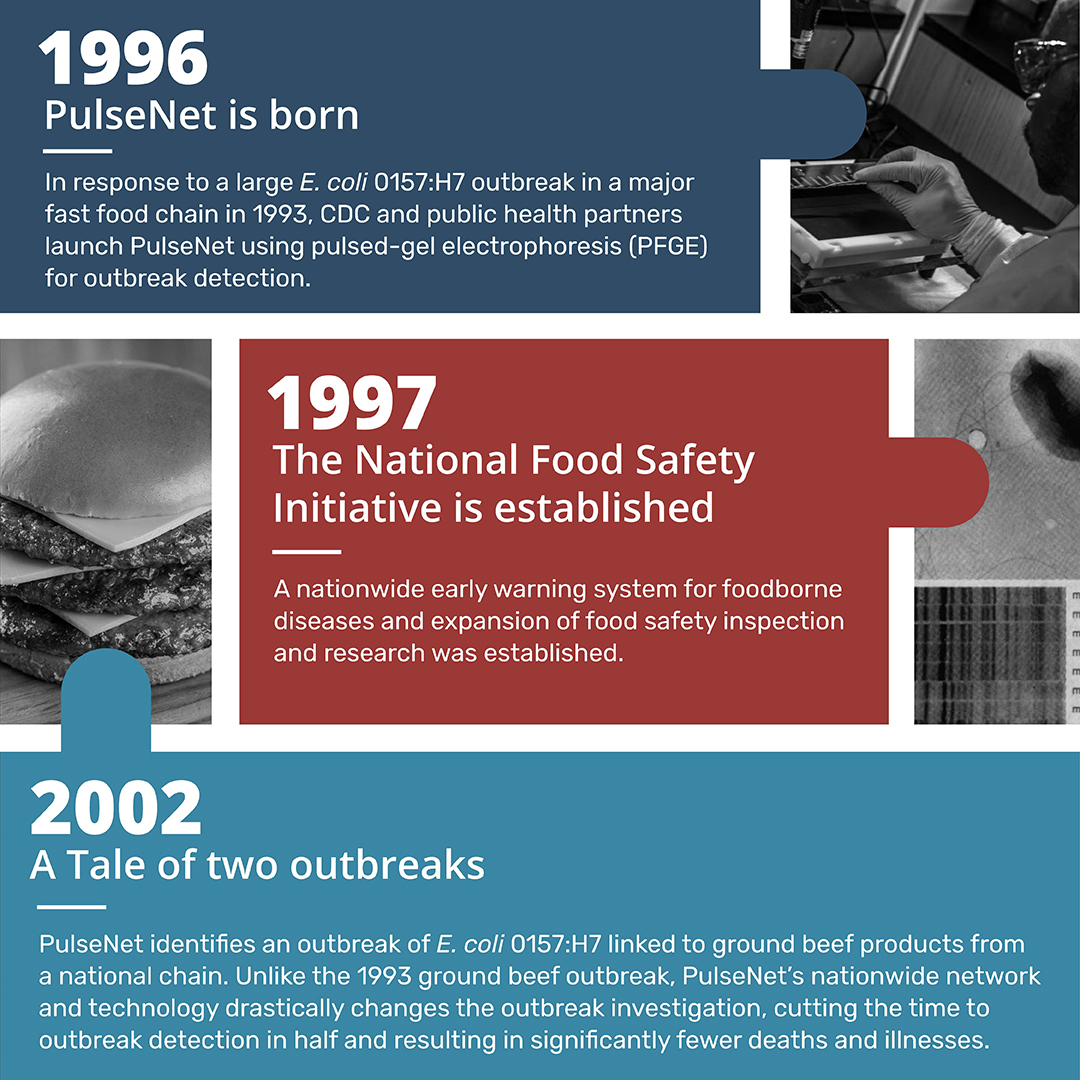
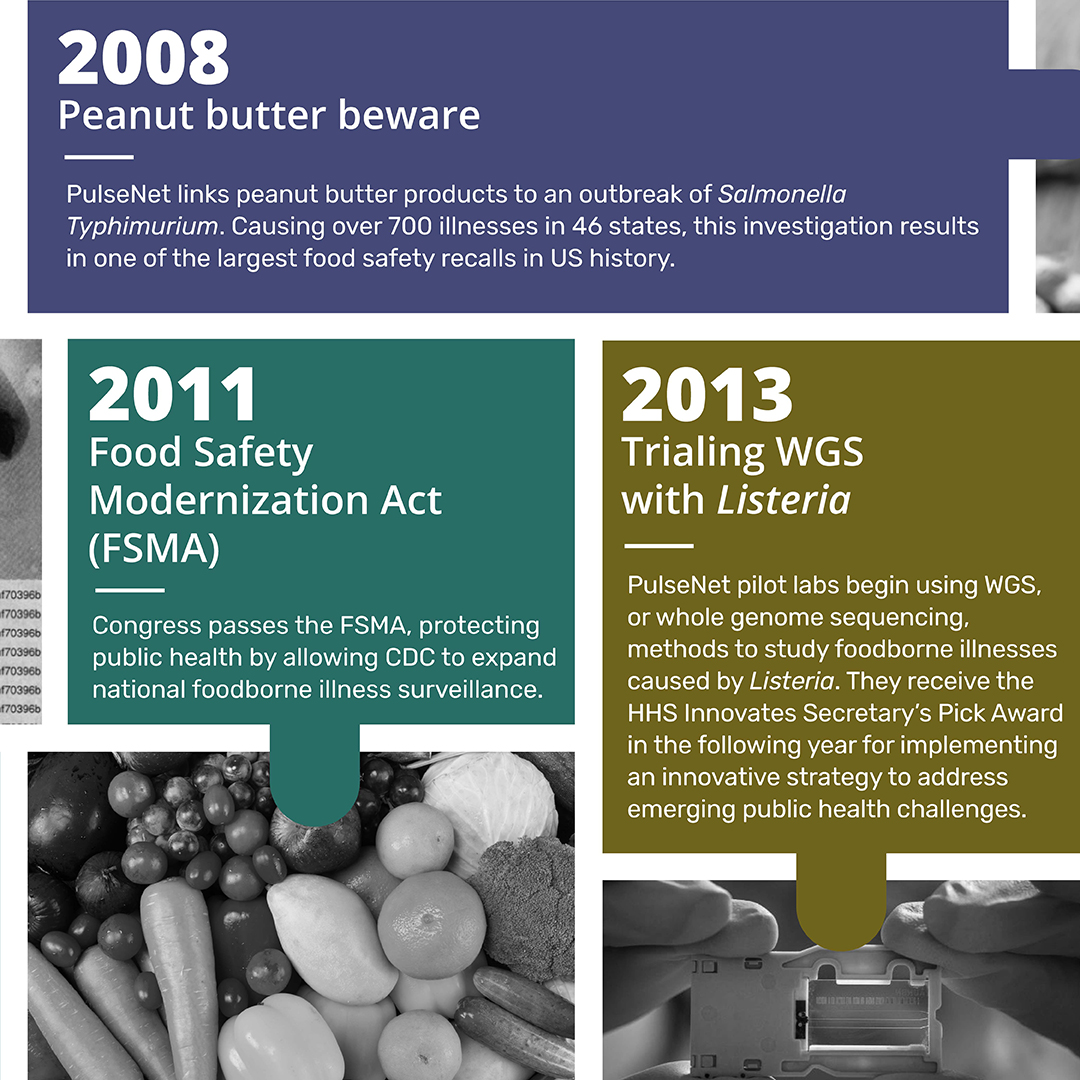
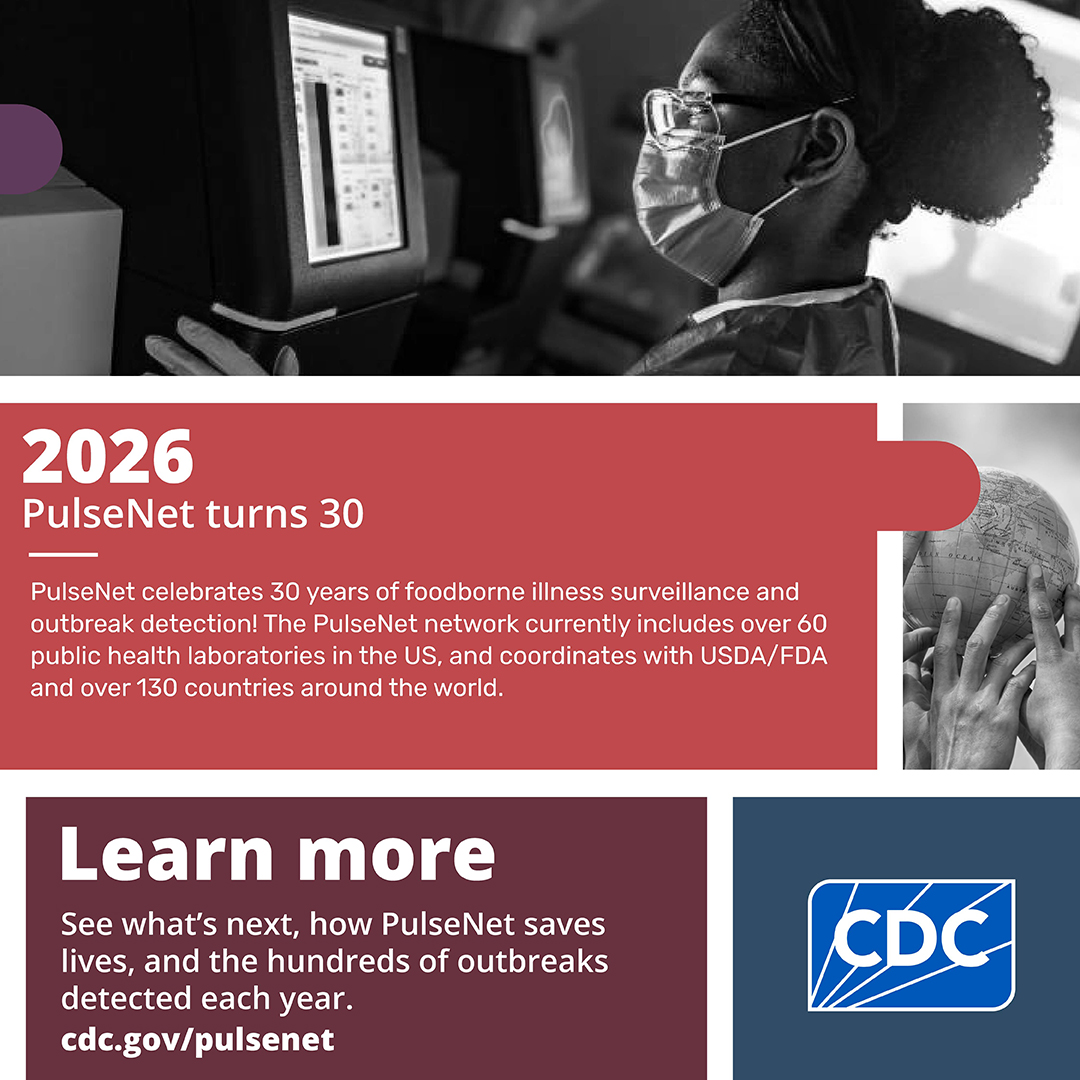
- PulseNet was established in 1996, and for 30 years has improved the United States food safety systems by connecting foodborne illnesses and detecting outbreaks.
- Every U.S. state has at least 1 laboratory that uses PulseNet technology and can access databases with over 1 million bacterial DNA fingerprints.

How it impacts lives
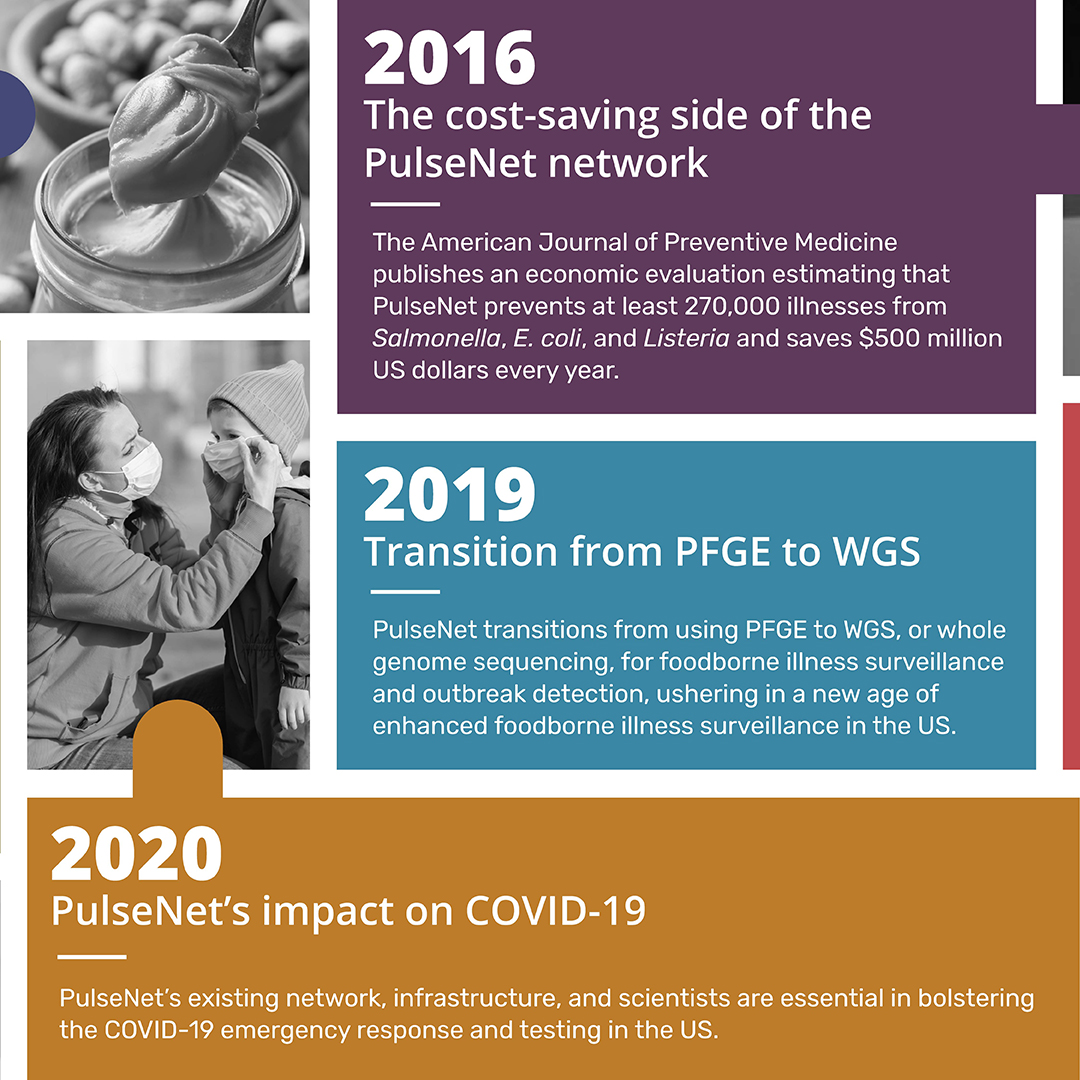
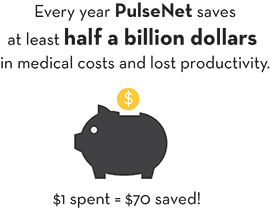
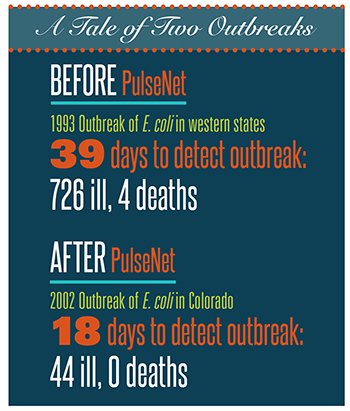
Since PulseNet was launched in 1996, over 1 billion pounds of contaminated foods have been recalled in the U.S., and an estimated 270,000 foodborne illnesses are prevented every year from the three most common causes: Salmonella, E. coli, and Listeria.

Priorities
PulseNet strives to be a leader in laboratory technology and public health. CDC scientists, public health laboratories, and clinicians all ensure the bacterial DNA fingerprints needed to identify outbreaks are collected and shared. PulseNet continues to be on the forefront of evolving diagnostic methods, utilizes new technology, and looks for modern ways to harmonize systems and detect outbreaks.
PulseNet continues to use whole genome sequencing (WGS) to detect outbreaks. This tool reveals all the genetic material, or genome, in one efficient process. CDC and PulseNet is expanding the use of WGS in state laboratories, and is currently using this tool to identify outbreaks of foodborne illness associated with Listeria, Campylobacter, E. coli, and Salmonella.
PulseNet continues to use whole genome sequencing (WGS) to detect outbreaks. This tool reveals all the genetic material, or genome, in one efficient process. CDC and PulseNet is expanding the use of WGS in state laboratories, and is currently using this tool to identify outbreaks of foodborne illness associated with Listeria, Campylobacter, E. coli, and Salmonella.
What's ahead
Culture-Independent Diagnostic Tests (CIDTs)
CIDTs are new tests that will allow laboratories to detect bacterial DNA fingerprints directly from patient samples. This test method doesn't require growing (culturing) the bacteria in order to properly identify it. Laboratories are increasing the use of CIDTs in order to save costs and identify foodborne illnesses faster. PulseNet is developing advanced methods to detect outbreaks without the need for culture.
This page was last updated on this date. Updates may include minor edits, image changes, or other modifications to page content.
The information on this page was last reviewed by subject matter experts to ensure accuracy.