


Key points
- Loud noise at work can damage your hearing.
- NIOSH established a recommended exposure limit (REL) of 85 A-weighted decibels (dBA) averaged over an eight-hour workday.
- Noise exposure is a risk that is present in all industries.
- Employers, health and safety professionals, and workers can all take action to prevent hazardous noise exposure in the workplace.

Noise and hearing loss basics
Loud noise can damage your hearing.
Noise is considered hazardous based on:
- How loud the sound is
- How long the exposure lasts
- How often the exposure is repeated
Use precaution when noise reaches 85dBA
NIOSH established a recommended exposure limit (REL) of 85 A-weighted decibels (dBA) averaged over an eight-hour workday. Workers exposed to noise at or above the NIOSH REL are at risk of developing significant hearing loss over their working lifetime. Although the NIOSH REL is based on exposure for eight hours, everyone differs in their susceptibility to noise.

How to tell if sounds are too loud
Use a sound level meter
You can check the noise level using a sound level meter.
If you need to raise your voice
Sounds that are 85 dBA often require you to raise your voice to be heard by someone 3 feet away. Equipment that can produce noise levels around 85-90 dBA include:
- Printing presses
- Lawn mowers
- Vacuums
- Power tools
If you need to shout
As noise reaches 95 dBA or more, you likely have to shout to be heard by someone 3 feet away. Exposures that average 95 dBA or higher include:
- Bulldozers
- Ambulance sirens
- Chain saws
- Bars/nightclubs
- Large sporting events
Other signs
Your ears ring or sounds seem dull or flat after leaving the noisy area.
You need to turn up the car radio or your phone volume at the end of your shift compared to before your shift. You may also notice the radio volume feels too loud when you get in your car the following day.
Industries at risk
Noise exposure is a risk that is present in all industries.
Hazardous noise most commonly occurs in industries such as mining, manufacturing, and construction. However, every industry has workers who are exposed to hazardous noise. For example, people working as janitors or administrative staff at noisy workplaces are also at risk for hearing loss.
Prevent hazardous noise exposure at work
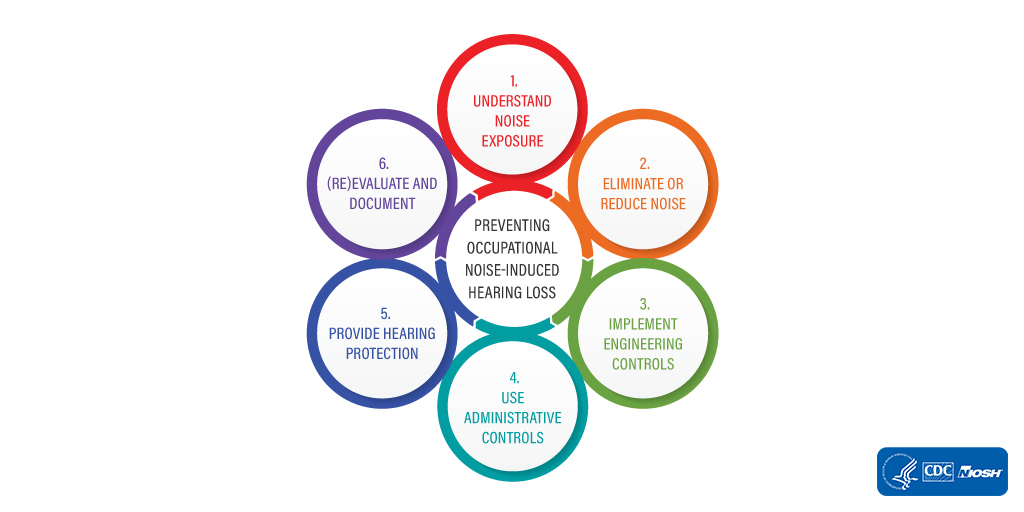
Employers, health and safety professionals, and workers can all take action to prevent hazardous noise exposure in the workplace. However, it is ultimately the employer's responsibility to provide a safe work environment.
Prevention steps for employers
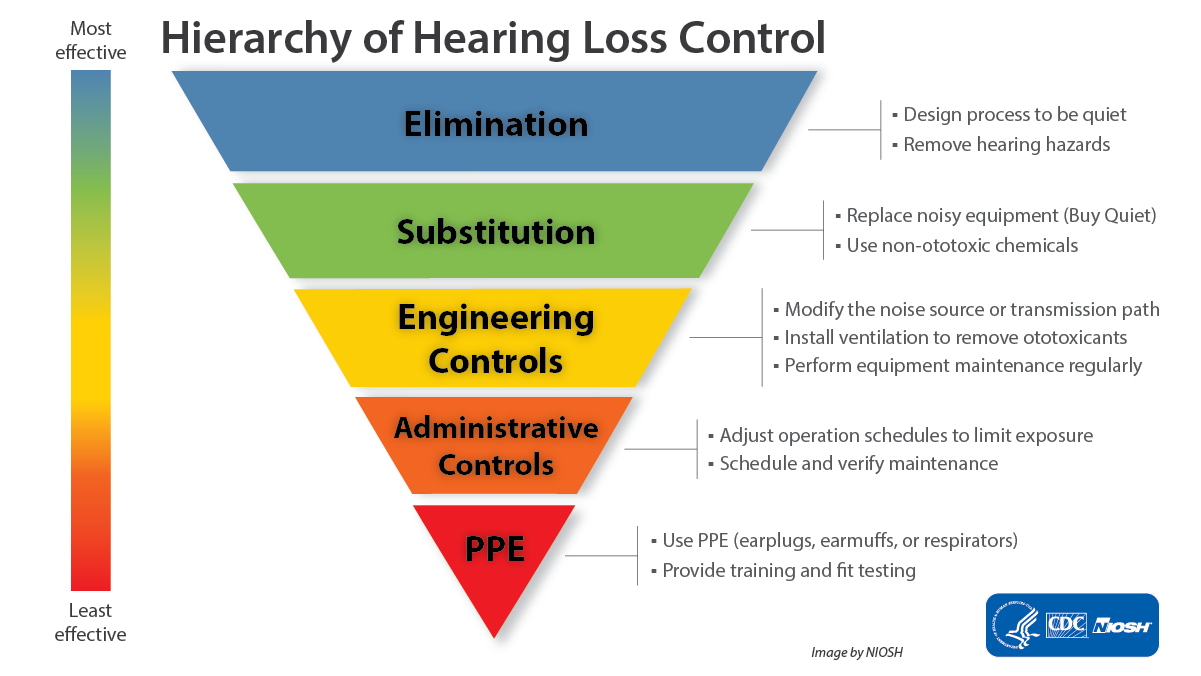
The hierarchy of controls groups preventative actions by how well they may reduce or remove a hazard. As shown below, the most effective way to prevent noise-induced hearing loss is to remove the noise source; the least effective way is to rely on Personal Protective Equipment (PPE). Employers may need to use a combination of actions to protect workers' hearing.
Be sure to consider all potential exposures. For example, isolating the noise does not reduce ototoxic chemical exposures in the area.
A detailed prevention guide for employers
Prevention steps for workers
If you work in a noisy environment, take the following actions to help protect yourself:
- Try to take a break from the noisy activity.
- Reduce your time in noisy areas.
- Keep the volume low when listening to the radio or personal devices.
- Only listen to the radio or personal devices in non-noisy areas.
- Always wear hearing protection in noisy areas.
- Wear hearing protection correctly (follow manufacturer instructions).
Request assistance from NIOSH
You can request assistance from NIOSH. Management, unions, or workers can request a NIOSH Health Hazard Evaluation (HHE) to learn whether hearing hazards are present in the workplace. The HHE Program provides recommendations to reduce hazards and prevent occupational hearing loss.

You can also contact CDC-INFO with questions or email the NIOSH hearing loss prevention team at NIOSHNoiseResearch@cdc.gov.
This page was last updated on this date. Updates may include minor edits, image changes, or other modifications to page content.
The information on this page was last reviewed by subject matter experts to ensure accuracy.