



Key points
- Firefighters and other first responders benefit from understanding safety risks and hazards of structure fires.
- Structure fire safety risks and hazards vary by construction type.
- NIOSH provides resources and services to help firefighters stay safe on the job.
Why it's important
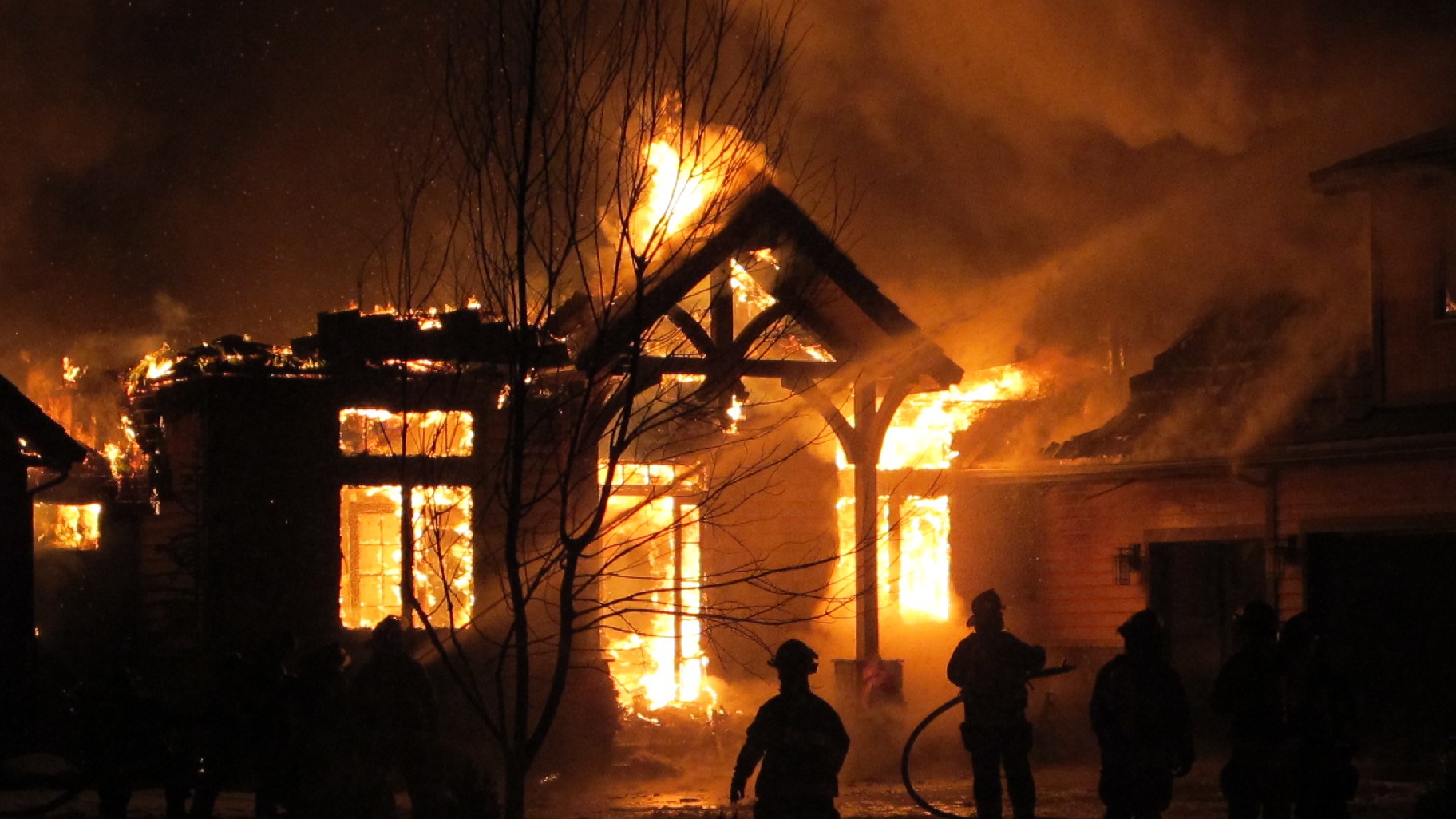
Firefighters face many risks that may be unique to the building. In some cases, building materials or building contents may be combustible. Combustible materials can fuel a fire, and building materials vary by construction type.
Firefighters and incident commanders can safely respond to structure fires by understanding the risks of construction types.
Construction types
Type I - Fire resistive
Fire resistive construction is classified by structural components having specific fire resistance ratings. These structural components are not combustible until direct fire contact heats beyond the rating. Building contents are the combustible materials in these construction types.
Examples
Commercial buildings, high-rise buildings, and parking garages
Risks
Fire load, occupancy type or mixed occupancies, occupant evacuation, ventilation issues, fire suppression equipment logistics, ingress and egress of the fire floor, response delay, weather impacts, and collapse zones
Type II - Noncombustible or protected noncombustible
Type II construction allows a more diverse range of building materials than Type I. In addition to steel and concrete, glass, aluminum, and other combustibles are used in a limited manner.
Examples
Commercial buildings, low-rise buildings, and some multifamily buildings such as garden apartments
Risks
Large open areas, apparatus and personnel access, fire load, building code variances, occupant evacuation, ventilation challenges, suppression equipment logistics, ingress and egress of the fire floor, response delay, weather impacts, and collapse zones
Type III - Exterior protected or ordinary
Ordinary construction is sometimes referred to as “Main Street” construction. Typically, this construction type has masonry exterior walls and combustible interior structural components.
There are two classifications within Type III construction. Type III A which are protected or Type III B which are unprotected. These buildings do not always have fire suppression systems. They may also be aging and nearing the end of use.
Examples
Mixed-use occupancies, “taxpayer” style buildings (business at street level, with residential occupancies above), mercantile, etc
Risks
Aging structures, unknown and undocumented renovations, unknown fixed fire suppression and/or detection systems, collapse zones, connected exposures, lack of fire breaks, and unknown void spaces
Type IV - Heavy timber
Type IV construction is commonly known as heavy-timber or “mill” construction. This construction type shares some characteristics with Type III. The main similarities are exterior wall masonry and combustible interior components.
Type IV uses large wooden structural components. These components have significantly more mass than other wood framing styles. Concealed void spaces are not usually permitted between structural components in this construction type.
Examples
Factories, mills, barns (these are not usually masonry exteriors), warehouses, and churches
Risks
Collapse zones, unknown fire protection and/or detection systems, and undocumented conversion of occupancy types
Type V - Wood frame
This construction type allows combustible materials for all major structural components. A minimum of 1-hour fire resistance of structural components is typically required. Plaster or gypsum board that make up the interior walls aid fire resistance.
These buildings use various framing styles. Framing styles include balloon, platform, log, and post and beam or plank and beam.
Examples
Some hotels (first floor with masonry exterior and additional stories with wood), residential structures, multifamily buildings, and low and mid-rise buildings
Risks
Residential occupancies do not require further inspection beyond initial occupancy (depending on local ordinance) unless permitted renovations are conducted, fire load, and lack of public knowledge
What's being done
NIOSH conducts research and provides services and resources to help firefighters stay safe on the job.
NIOSH Fire Fighter Fatality Investigation and Prevention Program (FFFIPP)
FFFIPP conducts free, independent investigations of firefighter line-of-duty deaths and serious injuries. The program informs prevention actions to help avoid similar events.
Resources
Basement and below-grade fires
Firefighters are at significant risk of death or serious injury when responding to basement or below-grade fires. Below-grade fires are fires that occur below the ground level of the building. Firefighters can be trapped if the floor collapses and suffer from burns and asphyxiation.
Fire damaged floors and roofs
Firefighters are at risk of falling through fire-damaged floors and roofs. Fire-damaged surfaces may also collapse onto firefighters. As fire degrades the support system, there may be little indication to firefighters working above or below the fire.
Floors and roofs can fail within minutes of fire exposure. New construction technology such as engineered wood floor joists may fail sooner than traditional construction methods.
High-risk buildings
High-risk buildings can be vacant or abandoned structures. These buildings pose hazards to firefighters and communities. Many of these buildings are structurally unsound and not safe for any person to enter.
Ladder safety
Proper ladder set up and use is important for firefighters to stay safe on the job. Firefighters may increase their risk of injury if using a ladder incorrectly.
Natural gas and propane
Firefighters may respond to a fire where natural gas and propane are present. Taking extra precautions and following safety procedures reduces the risk of death and serious injury.
Row house fires
Row house fires are hazardous to firefighters because of unique challenges specific to their construction. They also have increased risk for fire expansion.
Social media graphics
Structural collapse
Firefighters are at significant risk of death and serious injury from structural collapse because it often occurs without warning.
Training
Firefighters experience many hazards when participating in live-fire training. Training facilities with approved burn buildings can use live-fire training to prepare crews for real fire emergencies. The national consensus guidelines in NFPA 1400 help reduce the risk of death and serious injury during live-fire training.
- IFSTA 2016, Building Construction Related to the Fire Service, 4th Edition, International Fire Service Training Association
- Building Construction Review for Firefighters, Fire Engineering, 6/11/2018, Building Construction Review for Firefighters - Fire Training (fireengineering.com)