



Key points
- New World screwworm (NWS) is a fly that lays its eggs in open wounds and body openings such as the eyes, ears, nose, or mouth.
- NWS eggs hatch into parasitic maggots (larvae) that burrow into and feed on living tissue or flesh.
- If you live, travel, or spend a lot of time outdoors in an area where NWS flies have infested animals, you may be at higher risk for NWS.
Overview
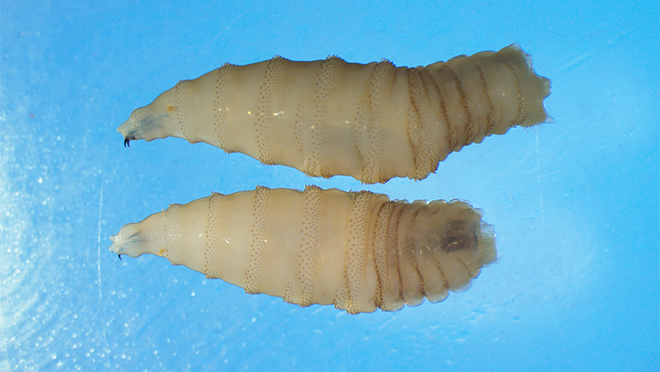
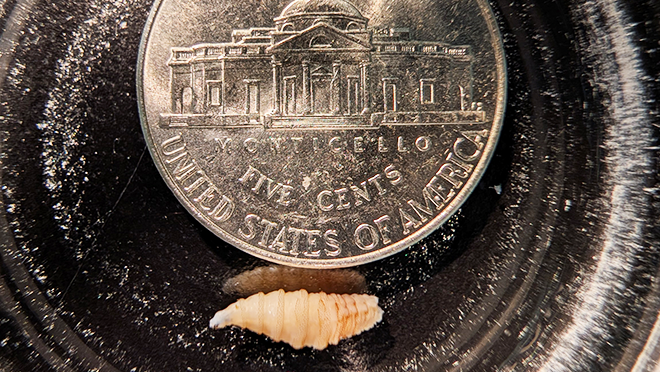
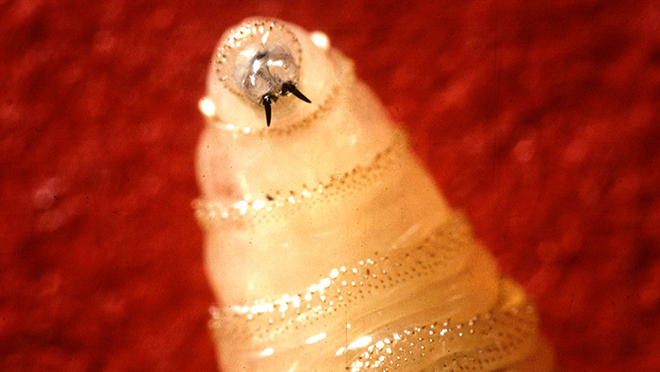
New World screwworm (NWS), or Cochliomyia hominivorax, is species of parasitic fly that completes part of its lifecycle by feeding on the tissue or flesh of warm-blooded animals and people. NWS flies are attracted to wounds and body openings like the nose, eyes, ears, and mouth, where they lay eggs. The eggs hatch into maggots (larvae) that eat live tissue, causing a worsening, often painful, and foul-smelling wound.
NWS is typically found in South America and parts of the Caribbean. However, the fly has steadily moved northward from South America through every country in Central America, Mexico, and the United States since 2023.
Visit screwworm.gov for more information about NWS in animals.
Symptoms
Symptoms can include
- Feeling or seeing maggots (larvae) move in a skin wound or sore, or in the ears, nose, eyes, or mouth.
- Painful skin wounds or sores that worsen within a few days.
- A foul-smelling odor from the site of the infestation.
- Bleeding from open sores.
Bacterial infections may also occur in wounds where NWS maggots are present, leading to symptoms like fever or chills.
Risk factors
You and your pets may be at higher risk for NWS if you live in or travel to areas where NWS flies have infested animals. If you are in one of these areas, you may be more at risk if you:
- Spend a lot of time outdoors during the day, especially if sleeping or unable to keep flies away.
- Have any open wounds. Even small breaks in the skin, including from a scratch, insect bite, or recent surgery may attract NWS flies.
- Have a medical condition that can cause bleeding or open sores, such as eczema, skin or sinus cancer, or from treatments that create breaks in the skin.
- Spend extended time around livestock or other warm-blooded animals in areas where there are NWS cases.
How it spreads
New World screwworm infestations begin when a female fly lays eggs on open wounds or other parts of the body in live, warm-blooded animals. Most infestations occur in animals, but they also occur in people. The smell of a wound or body opening such as the nose, mouth, eyes, ears, or genitals can attract female flies. Wounds as small as a tick bite may attract a female fly to lay her eggs. One female can lay 200 – 300 eggs at a time and may lay up to 3,000 eggs during her 10- to 30-day lifespan.
Eggs hatch into maggots that burrow into the wound to feed on the living flesh. After feeding for about 7 days, larvae drop to the ground, burrow into the soil, and emerge as adult screwworm flies.
Prevention
Preventing breaks in the skin and avoiding NWS flies is key to protecting yourself.
- Keep open wounds clean and covered, no matter how small or location on the body.
- Sleep indoors with closed windows or screened open windows. If you are outside, sleep under a bed net or inside a screened tent.
- Protect your skin and prevent insect bites by
- Using an EPA-registered insect repellent.
- Treating clothing and gear with products containing 0.5% permethrin.
- Wearing loose-fitting, long-sleeved shirts and pants, hats, and socks to limit access to your body by NWS flies.
Treatment
- If you see or feel maggots in or on a wound or other area of your body, contact your healthcare provider immediately. Tell them if you have recently traveled to or are in an area where NWS cases have been reported.
- Do not try to remove any maggots or egg masses yourself. If maggots or eggs fall out of the wound, place them in a leak-proof container with rubbing alcohol to kill them. Bring them with you to your healthcare provider.
Urgent
Animal impact
NWS mainly impacts livestock, pets, wildlife, and sometimes birds.
Veterinarians should report any suspicious cases immediately to their state animal health official and APHIS office.
Learn more about NWS in animals.
![[thumbnail] (hidden)](/new-world-screwworm/media/images/2026/03/NWS-what-you-need-to-know-thumbnail.png)
This page was last updated on this date. Updates may include minor edits, image changes, or other modifications to page content.
The information on this page was last reviewed by subject matter experts to ensure accuracy.