



What to know
- If you get sick with measles symptoms, call a doctor or hospital right away to let them know so that they can guide your treatment.
- To prevent spreading measles, stay home until the fifth day after you develop the rash, and stay away from people at home who aren't sick.
- If you have emergency warning signs of measles sickness, go to the emergency room. Have someone call before you arrive and let the hospital know a person with measles is coming.
- If you've been exposed to someone who has measles, immediately call your healthcare provider. There may be steps you can take to help reduce your risk of measles.
Steps to take if you get sick with measles
Measles usually starts with a fever, cough, runny nose, and red eyes, followed by a rash. If you have measles, up to 90% of the people close to you, if they are not immune, will also become infected.
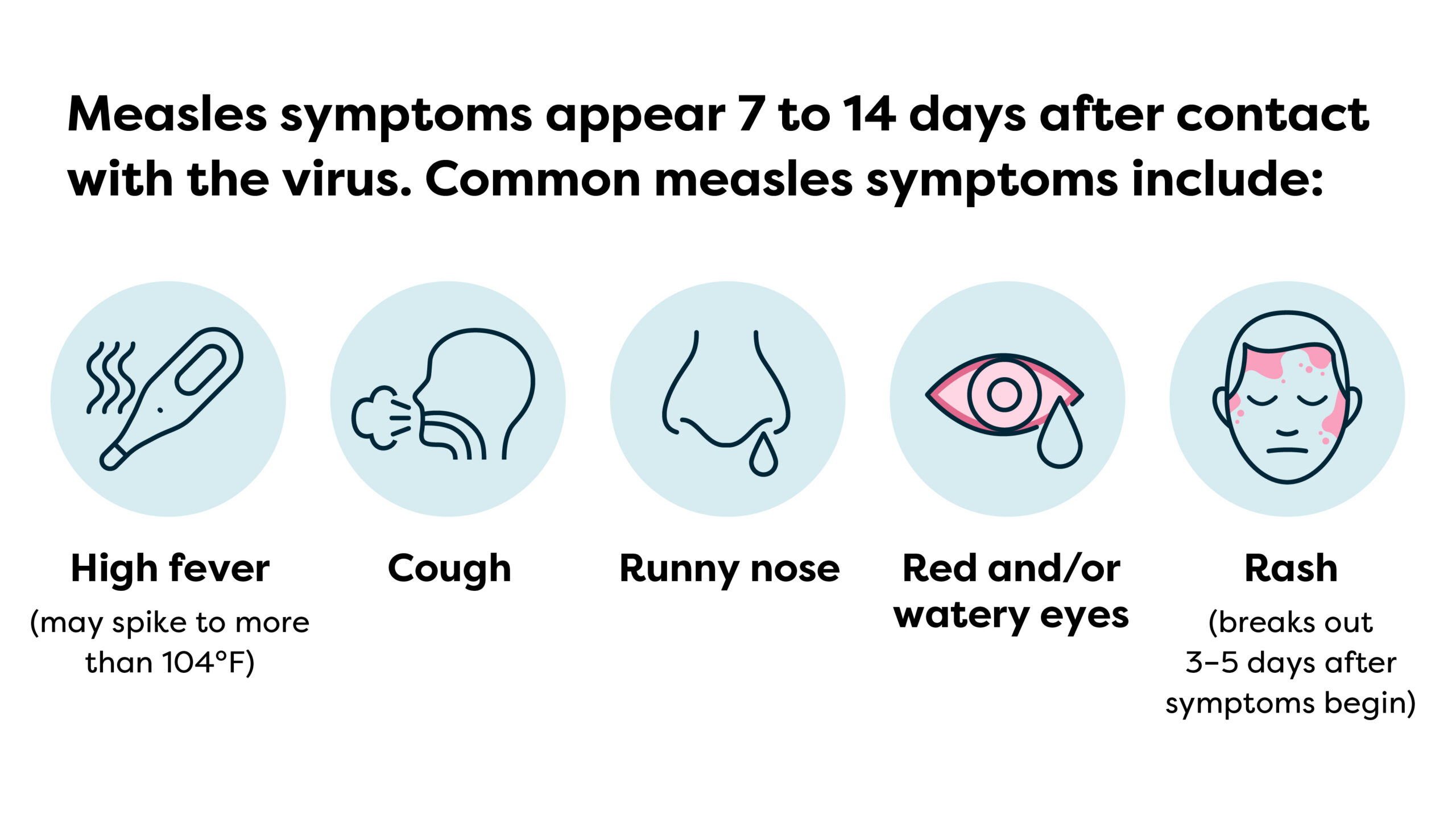
If you have measles symptoms:
- Call a doctor or hospital right away to let them know that you may be sick with measles. They may make special arrangements to evaluate you, if needed, without putting other patients and medical office staff at risk for getting measles.
- To protect other people, stay home until the fifth day after you develop the rash.
- While you're at home, stay away from other people who are not already confirmed to be sick with measles.
When to seek emergency care
If you are sick with measles and your symptoms get rapidly worse, or if you have any of symptoms below, go to the emergency department of a hospital immediately. DO NOT WAIT.
- Trouble breathing (or breathing faster than normal)
- Pain when breathing or coughing
- Dehydration (dry nose and mouth, urinating less, crying without making tears)
- Fever or headache that will not stop
- Confusion, decreased alertness, or severe weakness
- Blue color around the mouth, low energy, or difficulty feeding (for young children)
Have someone call before you arrive at the hospital to let them know a person with measles is coming. They will give you instructions to arrive safely and avoid exposing other people.
Steps to take if you think you were around someone with measles
Measles is highly contagious. Measles spreads through the air when an infected person coughs or sneezes.
- The virus can stay in the air for 2 hours after a person with measles leaves the space.
- Measles can spread up to 4 days before the rash appears, when someone doesn't yet know they are sick with measles.
If you were near someone with measles
If you were in the same place as someone who has measles, or who has signs and symptoms of measles but is undiagnosed, tell your healthcare provider immediately. The healthcare provider can:
- Determine if you are immune to measles based on your vaccination record, age, or laboratory evidence of prior infection.
- Make special arrangements to evaluate you, if needed, without putting other patients and medical office staff at risk for getting measles.
- Advise you about ways to help reduce your risk for developing measles if you are not immune to measles, and were exposed within the last few days. These include MMR vaccine and a medicine called immune globulin.
- Monitor you for signs and symptoms of measles.
If you are not immune and do not get MMR vaccine or immune globulin after exposure
You can help protect other people by taking steps to ensure that measles doesn't spread, if you do develop measles.
- Ask your healthcare provider when you can no longer make other people sick. This may be up to 21 days after you were near someone with measles.
- During that time, stay away from places where there are people who could easily get very sick. These include schools, hospitals, and childcare centers.
Preventing measles infection after exposure
If you are not immune to measles, and were exposed within the last few days, MMR vaccine or a medicine called immune globulin may help reduce your risk for developing measles. Your healthcare provider can advise you on next steps and monitor you for signs and symptoms of measles.
This page was last updated on this date. Updates may include minor edits, image changes, or other modifications to page content.
The information on this page was last reviewed by subject matter experts to ensure accuracy.