



At a glance
This data release presents findings from the SHIELD project (Surveillance of HIV-related Service Barriers Among Individuals with Early or Late HIV Diagnoses), a pilot surveillance project that surveyed persons who received a recent early (stage 0) or late (stage 3) HIV diagnosis. SHIELD data identified barriers to, and gaps in, HIV prevention and testing services that contributed to missed opportunities for HIV prevention and earlier diagnosis.
Current data release
Key findings
Overview
SHIELD data were collected in collaboration with 4 state and local health departments in areas with a high number of new HIV diagnoses: Florida Department of Health, Louisiana Department of Health, Michigan Department of Health and Human Services, and City of Houston. SHIELD is a supplemental surveillance project that gathers information exclusively from persons with a recent stage 0 or stage 3 diagnosis. Information about these populations can inform strategies to address critical service barriers and gaps that may contribute to HIV transmission and delayed diagnosis. This data release provides data describing demographic and behavioral characteristics, access to healthcare services, and use of HIV testing and prevention services among 462 participants who received an early (stage 0) or late (stage 3) HIV diagnosis.
This overview summarizes the data presented in this release. For complete results, refer to Tables and Figures. Refer to the Technical Notes below for information on project methods, definitions, and data specifications.
Demographics and social and economic context
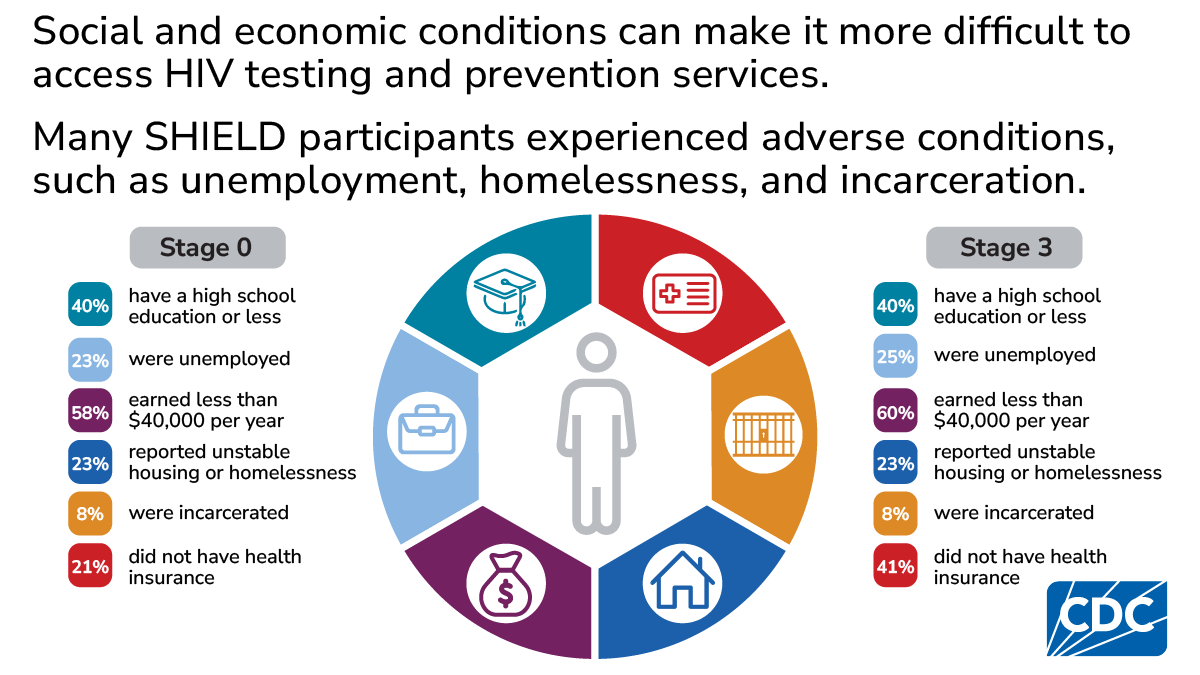
Social and economic conditions can shape access to HIV testing and prevention services.
Social and economic factors:
- 40% of participants with a stage 0 diagnosis and 40% of participants with a stage 3 diagnosis had a high school education or less
- 23% of participants with a stage 0 diagnosis and 25% of participants with a stage 3 diagnosis were unemployed at the time of the survey
- 58% of participants with a stage 0 diagnosis and 60% of participants with a stage 3 diagnosis reported an annual household income of less than $40,000 during the previous calendar year
- 23% of participants with a stage 0 diagnosis and 23% of participants with a stage 3 diagnosis reported unstable housing or homelessness in the 12 months before HIV diagnosis
- 8% of participants with a stage 0 diagnosis and 8% of participants with a stage 3 diagnosis had been incarcerated in the 12 months before HIV diagnosis
- 21% of participants with a stage 0 diagnosis and 41% of participants with a stage 3 diagnosis had no health insurance in the 12 months before HIV diagnosis
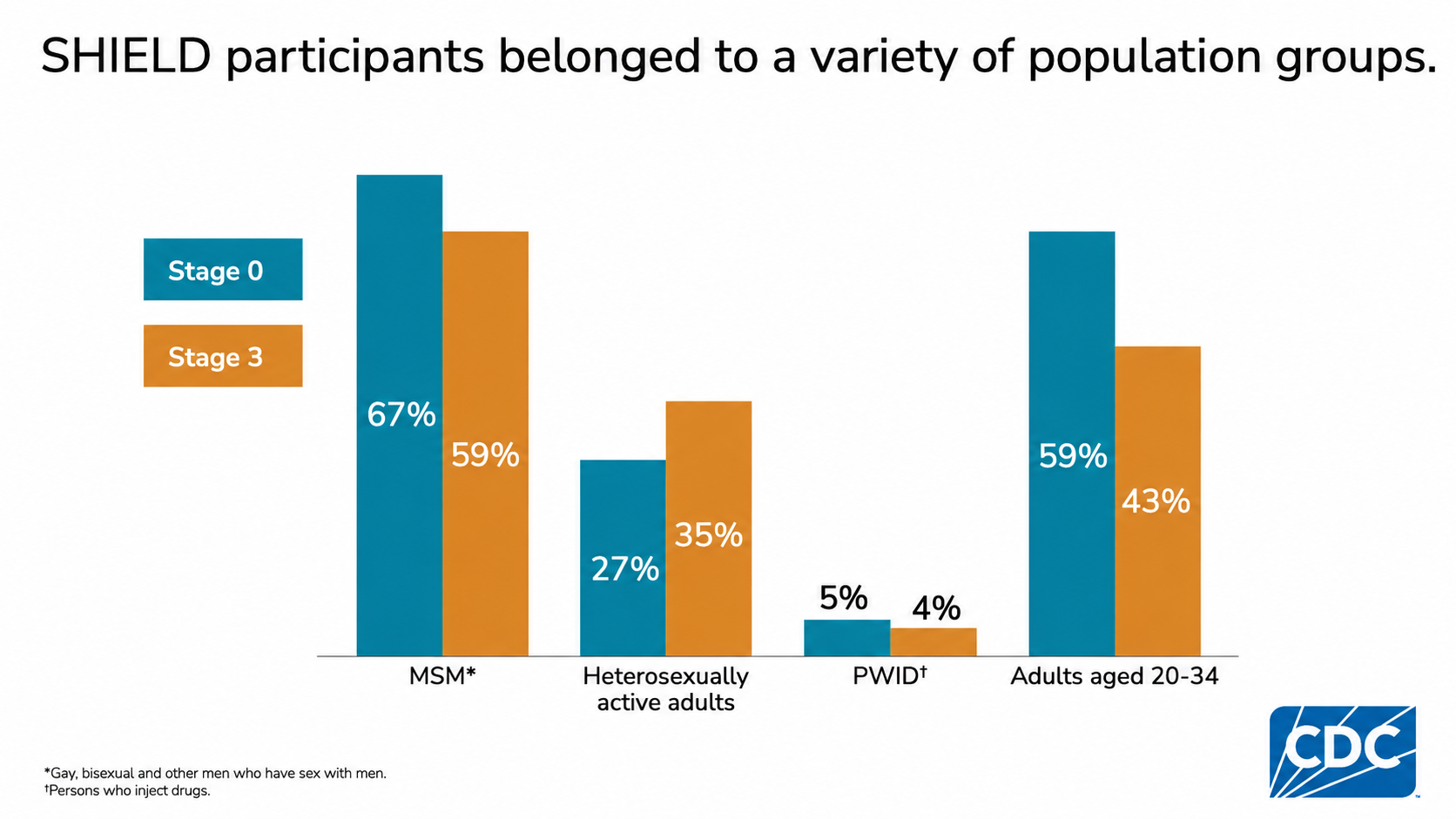
Selected population groups:
- 67% of participants with a stage 0 diagnosis and 59% of participants with a stage 3 diagnosis were gay, bisexual, or other men who have sex with men (MSM)
- 27% of participants with a stage 0 diagnosis and 35% of participants with a stage 3 diagnosis were heterosexually active adults
- 5% of participants with a stage 0 diagnosis and 4% of participants with a stage 3 diagnosis were persons who inject drugs (PWID) in the 12 months before HIV diagnosis
- 59% of participants with a stage 0 diagnosis and 43% of participants with a stage 3 diagnosis were aged 20–34 years
HIV testing history before HIV diagnosis
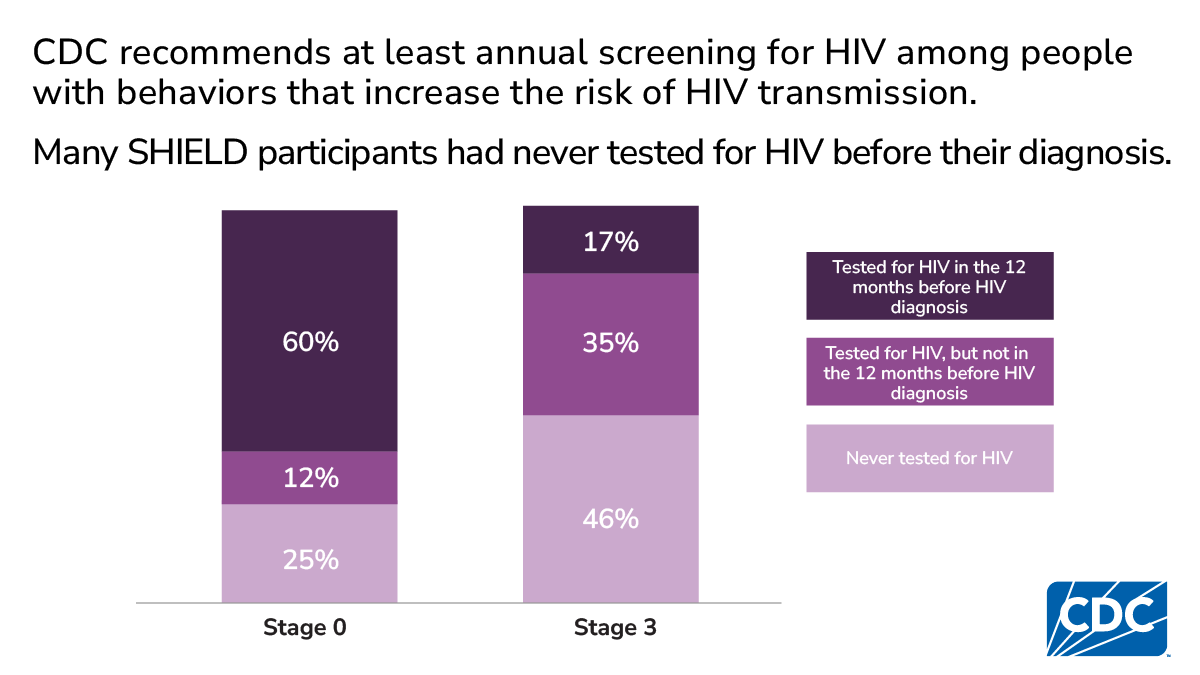
Routine testing for HIV supports earlier HIV diagnosis. Earlier testing and treatment improves health outcomes for persons with diagnosed HIV, decreases risk of onward transmission, and provides opportunities for HIV prevention, including PrEP, for persons who test negative. CDC recommends at least annual HIV screening for persons with certain risk factors that increase their chances of getting HIV. SHIELD findings highlight that HIV testing uptake was low before HIV diagnosis, especially among participants who received their diagnosis at stage 3.
Never tested for HIV before diagnosis:
- 25% of participants with a stage 0 diagnosis and 46% of participants with a stage 3 diagnosis had never tested for HIV before their diagnosis
- Lack of perceived risk was the most frequently reported reason for never testing for HIV before diagnosis among participants with a stage 0 diagnosis (47%) and a stage 3 diagnosis (51%)
Tested for HIV before diagnosis:
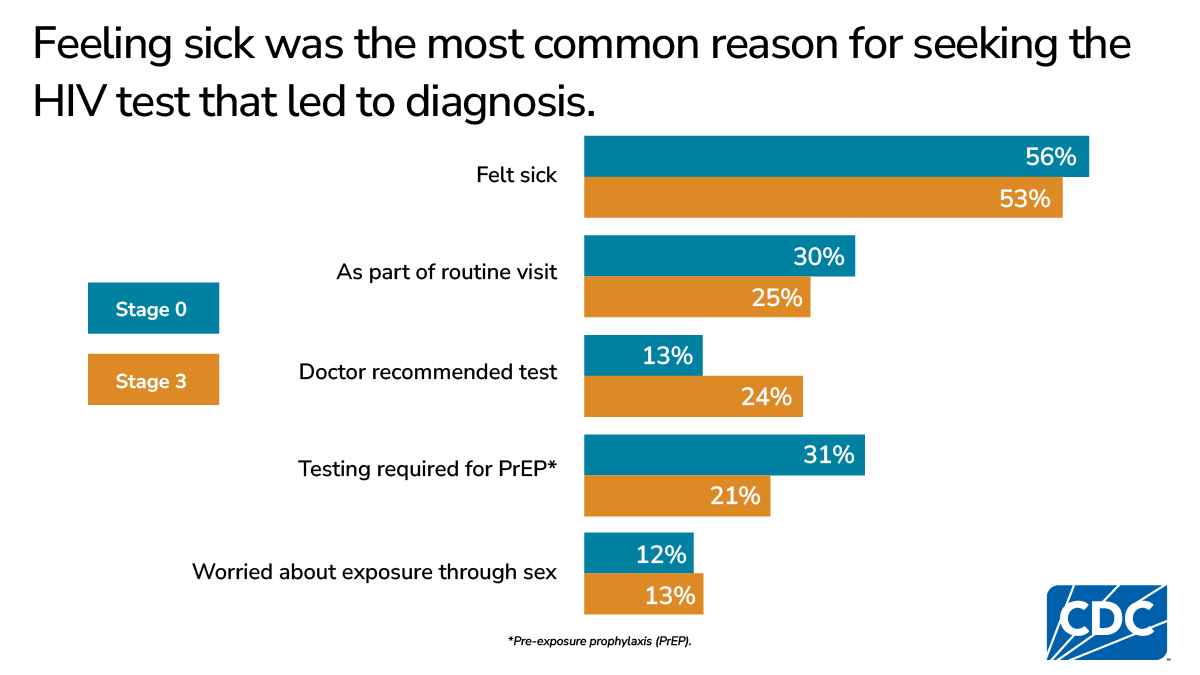
- 60% of participants with a stage 0 diagnosis and 17% of participants with a stage 3 diagnosis reported testing for HIV in the 12 months before their HIV diagnosis
- Feeling sick was the most frequently reported reason for getting the HIV test that led to HIV diagnosis among participants with a stage 0 diagnosis (56%) and a stage 3 diagnosis (53%)
- A hospital, emergency room, or other inpatient setting was the most frequently reported location of the HIV test that led to HIV diagnosis among participants with a stage 0 diagnosis (40%) and a stage 3 diagnosis (50%)
- 51% of participants with a stage 0 diagnosis and 71% of participants with a stage 3 diagnosis reported never being offered an HIV test by a healthcare worker before their HIV diagnosis
HIV self testing:
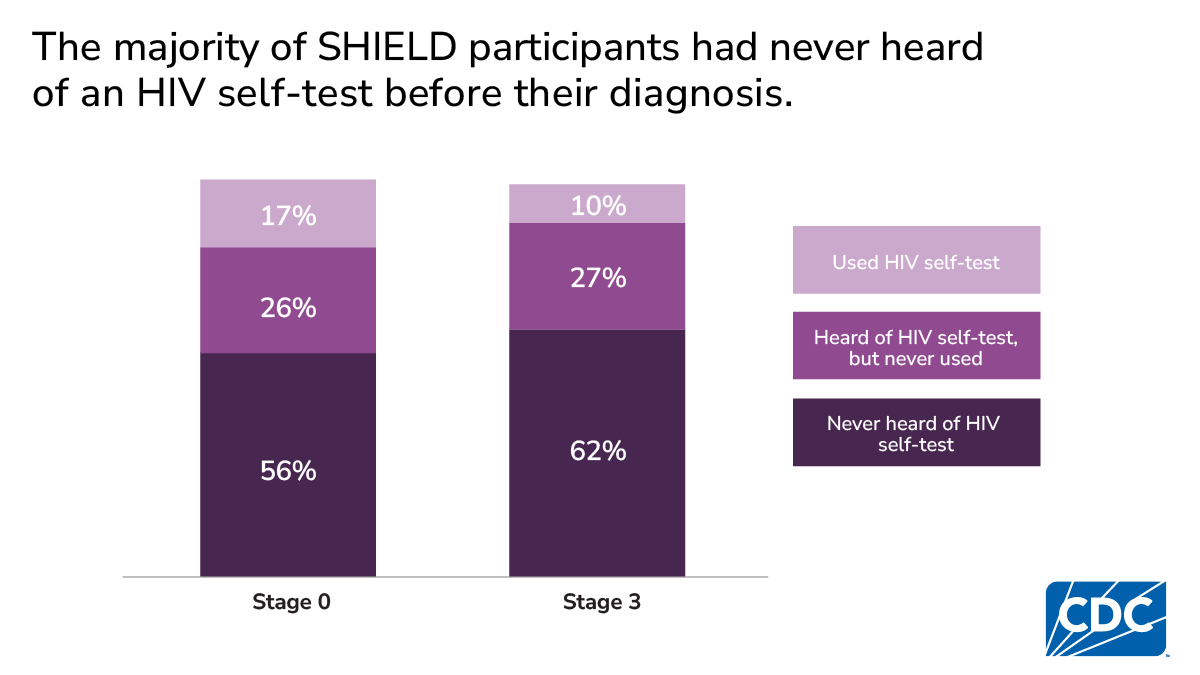
- 56% of participants with a stage 0 diagnosis and 62% of participants with a stage 3 diagnosis had never heard of an HIV self-test before their HIV diagnosis
- 17% of participants with a stage 0 diagnosis and 10% of participants with a stage 3 diagnosis reported ever using an HIV self-test before their HIV diagnosis
Pre-exposure prophylaxis (PrEP) and post-exposure prophylaxis (PEP) before HIV diagnosis
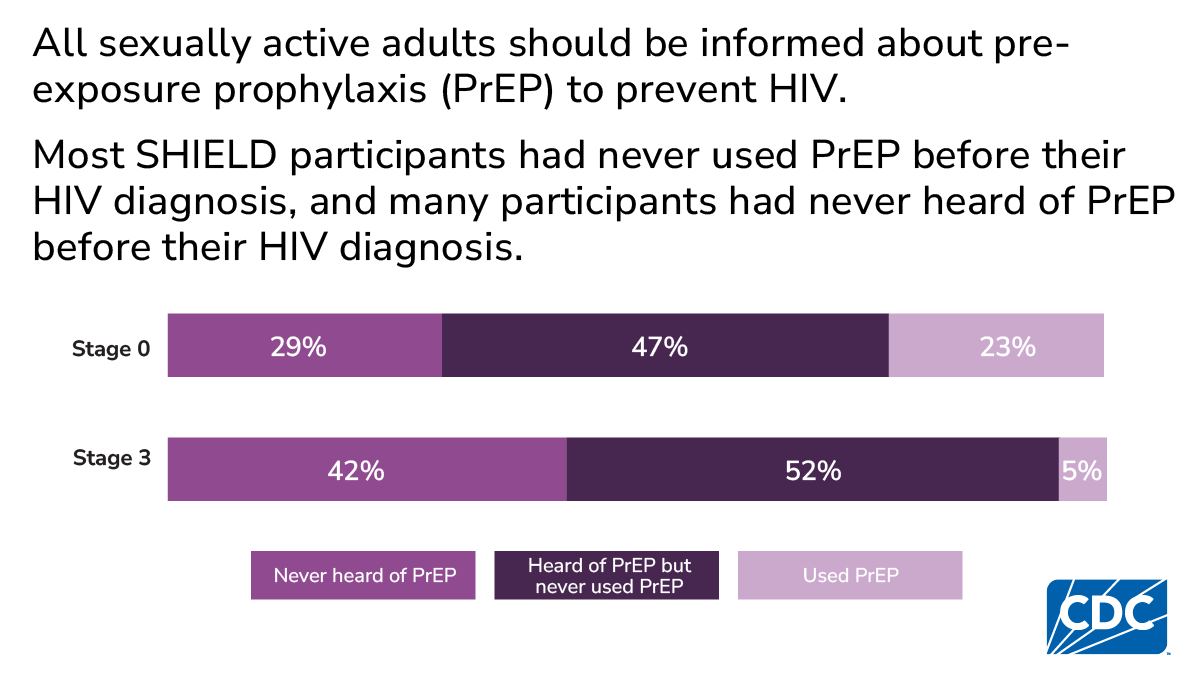
Consistent use of PrEP prevents sexual transmission of HIV. CDC recommends the use of PrEP for persons with certain risk factors that increase their chances of getting HIV. SHIELD findings highlight that PrEP awareness and use before HIV diagnosis was low among participants who received their diagnosis at stage 3.
- 29% of participants with a stage 0 diagnosis and 42% of participants with a stage 3 diagnosis had never heard of PrEP before their HIV diagnosis
- 47% of participants with a stage 0 diagnosis and 52% of participants with a stage 3 diagnosis had heard of PrEP but never used PrEP before their HIV diagnosis
- 23% of participants with a stage 0 diagnosis and 5% of participants with a stage 3 diagnosis had ever used PrEP before their HIV diagnosis
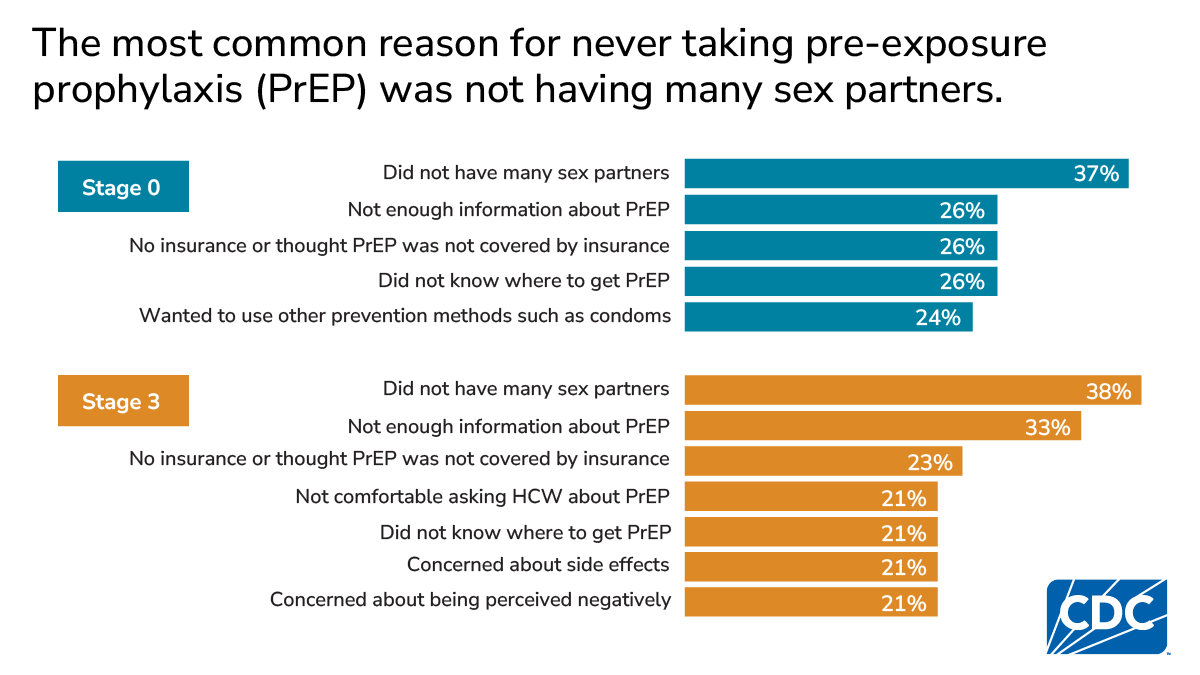
- Not having many sex partners was the most frequently reported reason for never using PrEP before HIV diagnosis among participants with a stage 0 diagnosis (37%) and a stage 3 diagnosis (38%)
Experiences with healthcare workers before HIV diagnosis
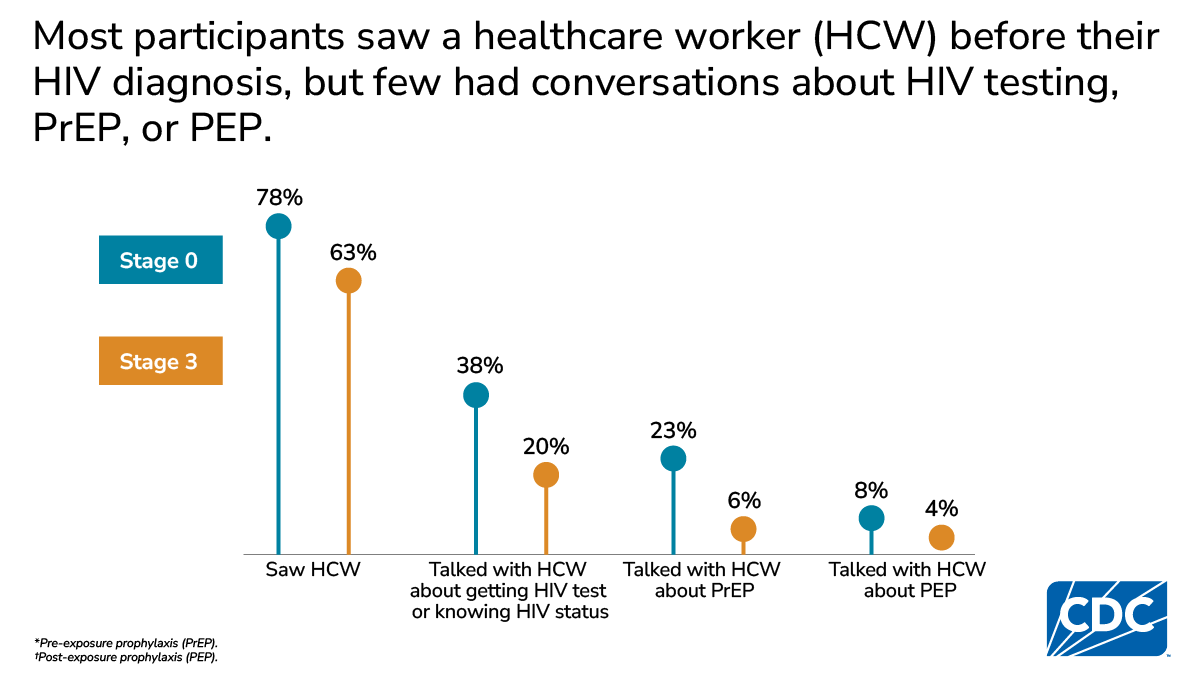
Interactions with healthcare workers are opportunities to provide critical HIV testing and prevention services. SHIELD findings highlight frequent missed opportunities to discuss or offer HIV testing and prevention services for participants who accessed healthcare before their HIV diagnosis.
- 78% of participants with a stage 0 diagnosis and 63% of participants with a stage 3 diagnosis had seen a healthcare worker in the 12 months before their HIV diagnosis
- Participants with a stage 0 or stage 3 HIV diagnosis reported talking with a healthcare worker before HIV diagnosis about:
- Getting an HIV test or knowing their HIV status (38%; 20%)
- PrEP (23%; 6%)
- 19% of participants with a stage 0 diagnosis and 21% of participants with a stage 3 diagnosis reported discrimination from a healthcare worker before HIV diagnosis
- Sexual orientation was the most frequently reported perceived reason for discrimination by a healthcare worker before HIV diagnosis among participants with a stage 0 diagnosis (44%) and a stage 3 diagnosis (32%)
Sexually transmitted diseases (STDs) before HIV diagnosis
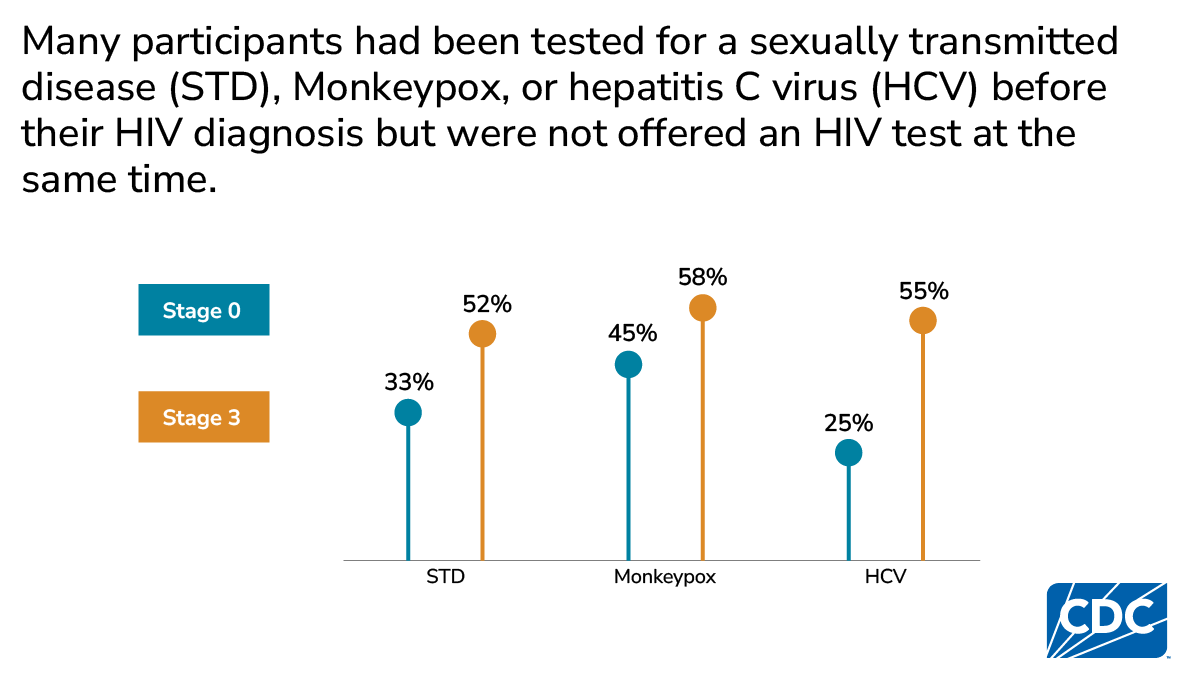
STDs can increase the likelihood of getting and transmitting HIV. STD testing presents an important opportunity to test for HIV. SHIELD findings highlight frequent missed opportunities to provide HIV testing at the same time as testing for other STDs.
- 33% of participants with a stage 0 diagnosis and 52% of participants with a stage 3 diagnosis who tested for STDs other than HIV in the 12 months before their HIV diagnosis reported not being offered an HIV test by a healthcare worker at the same time
Beliefs about community attitudes and perceptions before HIV diagnosis
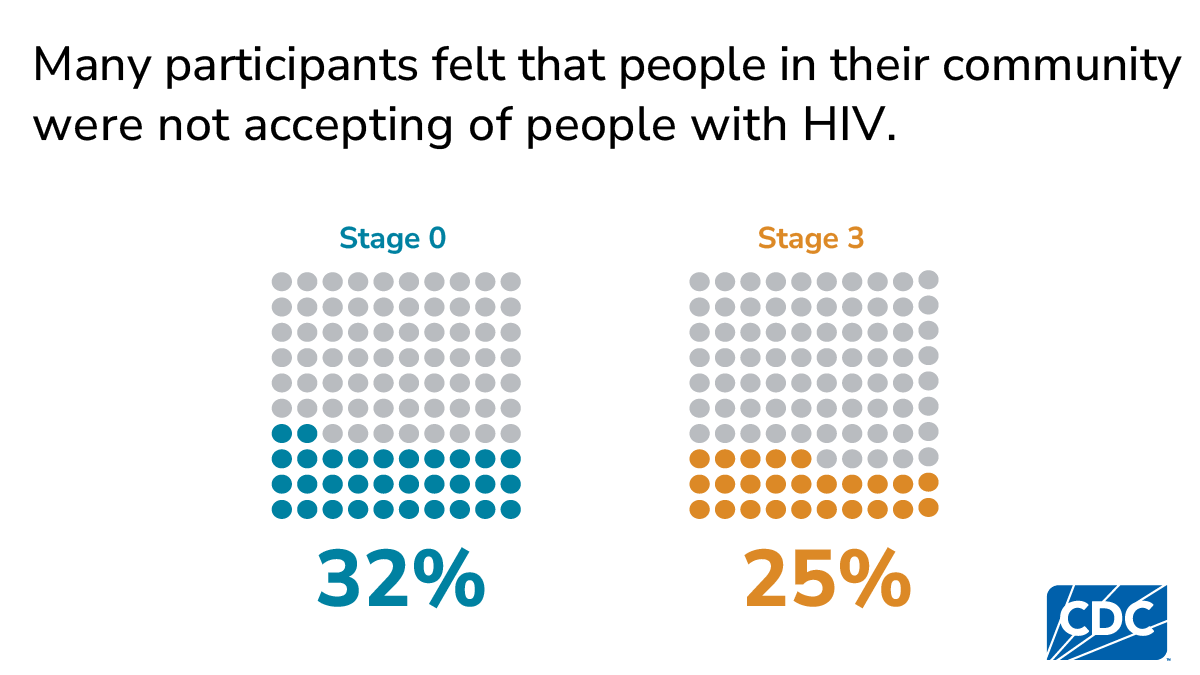
Community attitudes and perceptions shape how persons understand, respond to, and engage with HIV prevention and testing services. Negative attitudes may create stigma and fear while positive attitudes may promote acceptance and engagement.
- 32% of participants with a stage 0 diagnosis and 25% of participants with a stage 3 diagnosis strongly or somewhat disagreed with the statement that persons in their community were accepting of persons living with HIV
- 37% of participants with a stage 0 diagnosis and 34% of participants with a stage 3 diagnosis who had a sexual minority identity were not comfortable with persons knowing about their sexuality before their HIV diagnosis
- 41% of participants with a stage 0 diagnosis and 49% of participants with a stage 3 diagnosis who had a sexual minority identity were not comfortable with persons discussing their (participant's) sexuality in public situations before their HIV diagnosis
- 30% of (MSM) with a stage 0 diagnosis and 47% of MSM with a stage 3 diagnosis did not share that they were attracted to or had sex with men with a healthcare worker before their HIV diagnosis
Stressful life events before HIV diagnosis
Stressful life events increase vulnerability to HIV infection and worsen overall health outcomes. Addressing stress and mental health are essential to promoting engagement with HIV prevention and testing services.
- 34% of participants with a stage 0 diagnosis and 38% of participants with a stage 3 diagnosis reported job loss in the 12 months before their HIV diagnosis
- 35% of participants with a stage 0 diagnosis and 25% of participants with a stage 3 diagnosis reported seeking mental health services in the 12 months before their HIV diagnosis
- 35% of participants with a stage 0 diagnosis and 25% of participants with a stage 3 diagnosis reported receiving a diagnosis for a mental health condition in the 12 months before their HIV diagnosis
- 38% of participants with a stage 0 diagnosis and 32% of participants with a stage 3 diagnosis reported experiencing violence before their HIV diagnosis
- 4% of participants with a stage 0 diagnosis and 2% of participants with a stage 3 diagnosis received domestic violence services before HIV diagnosis
Technical notes
This data release presents data collected from the Surveillance of HIV-related Service Barriers Among Individuals with Early or Late HIV Diagnoses (SHIELD) project. SHIELD was conducted to enhance surveillance of barriers to HIV testing and HIV prevention services among persons who received an HIV diagnosis at either stage 0 (early diagnosis) or stage 3 (late diagnosis). SHIELD administered a quantitative behavioral survey to eligible participants that collected information about their experiences with HIV testing, HIV prevention, and other healthcare services during the 12 months before their HIV diagnosis. To enrich understanding of concepts measured on the quantitative behavioral survey, a subset of eligible participants also participated in a qualitative, in-depth interview. However, this data release presents findings from the quantitative behavioral survey only. Eligible participants were those aged 18 years or older who received an HIV diagnosis at either stage 0 or stage 3 within 12 months before sampling in one of the participating jurisdictions; eligible participants had the ability to complete the survey in either English or Spanish. Additionally, eligible participants must have lived primarily in the United States during the 12 months before their HIV diagnosis.
Stage 0 and stage 3 diagnoses were classified according to the latest case surveillance definitions1. Stage 0 diagnosis was defined as having the first confirmed positive HIV test result of any type within 6 months after a negative or indeterminate HIV test result or having a sequence of laboratory tests that demonstrated the presence of HIV-specific viral markers within 6 months before or after a negative or indeterminate antibody test result. Stage 3 diagnosis was defined as having a CD4 lymphocyte count <200 or CD4 percentage of total lymphocytes <14 or documentation of an AIDS-defining condition.
SHIELD data collection was conducted during July 2023–June 2025 in collaboration with four state and local health departments: Florida, Louisiana, Michigan, and Houston, Texas.
In accordance with guidelines for defining public health research2, CDC determined SHIELD is public health surveillance used for disease control, program, or policy purposes. Local institutional review board approval was obtained from participating areas where required. Informed consent was obtained from all surveyed participants.
Sampling Method
All new HIV diagnoses are reported to state and local health departments and entered into their local enhanced HIV/AIDS Reporting System (eHARS) database34. Eligible SHIELD participants were identified from participating health departments' eHARS databases. Beginning in July 2023, participating health departments identified all eligible persons who received an HIV diagnosis at stage 0 or stage 3 within the past 12 months; for the duration of the data collection period, health departments identified additional new eligible persons at regular intervals as they were reported to eHARS.
Although eligibility was restricted to those who received their HIV diagnosis within 12 months of sampling, participants could complete the survey within 24 months of their diagnosis to provide adequate time for project staff to locate, contact, and recruit sampled persons. In rare cases, participants completed the survey more than 24 months since their diagnosis if they had been successfully recruited within 24 months of diagnosis. The median time from HIV diagnosis to survey completion was 8 months (interquartile range: 5–12 months).
Data Collection
SHIELD participants chose to complete the quantitative behavioral survey in either English or Spanish with a trained interviewer over the phone or self-administered using a web-based platform. The same questionnaire was used in both phone and web modalities. Eligible persons who agreed to participate in the quantitative behavioral survey were given a unique ID number. Participants who chose the interviewer-administered telephone survey were given a phone number to call at a designated appointment time. Participants who chose the self-administered online survey were given the website URL where the survey was located and could complete the survey at any time and in a single session or multiple sessions. The survey took approximately 50 minutes to complete and consisted of questions about participants' demographic characteristics and behaviors prior to HIV diagnosis, including HIV testing history; pre-exposure prophylaxis (PrEP) history; healthcare use; sexual behaviors; substance use; stressful life events; and sexually transmitted diseases (STDs), hepatitis C, and monkeypox testing and diagnosis. In exchange for their time, participants received a $50 electronic gift card for completing the quantitative behavioral survey.
Data Analysis
Data presented in this release are considered a convenience sample of all persons who received recent HIV diagnoses at stage 0 or stage 3 reported to participating health departments during the eligibility period and are therefore not weighted. This release presents descriptive data; no statistical tests were performed. In addition, these data are cross-sectional; we did not attempt to infer causal relationships. Reported numbers fewer than 12, and percentages based on these numbers, should be interpreted with caution because the numbers are considered unreliable due to small cell size. Results are not generalizable to other populations or settings outside of the four participating project areas.
During July 2023–June 2025, 3,360 persons with a recent HIV diagnosis at stage 0 (n = 1,112) or stage 3 (n = 2,248) were sampled from the four participating health departments' eHARS databases. A total of 496 sampled persons participated in the survey, which included 189 persons with a stage 0 diagnosis and 307 persons with a stage 3 diagnosis. Of these 496 participants, 34 participants (14 stage 0 and 18 stage 3) were excluded from the analytic sample because their surveys were dropped or interrupted, they reported an HIV diagnosis date outside of the eligible timeframe, or they resided outside the United States during the 12 months before their diagnosis. The survey response rate was 18.1% among stage 0 participants, 15.4% among stage 3 participants, and 16.3% overall among all participants. By project area, response rates ranged from 10.0% to 25.1%.
The full analysis sample for this data release includes 462 participants. Additional inclusion criteria were applied for certain analyses of HIV testing, PrEP, substance use behaviors, and other measures; details of each analysis sample can be found in the footnotes of each table.
Measurement Notes
Stage at HIV Diagnosis
Stage 0 diagnosis: Early HIV diagnosis, as categorized in the state or local eHARS database to which the diagnosis was reported. The criteria for stage 0 consist of a sequence of discordant test results indicative of early HIV infection in which a negative or indeterminate result was within 180 days before a positive result. The discordant test results can be from the same specimen (i.e., a negative or indeterminate antibody test 0 days before a positive antibody or nucleic acid test). SHIELD participants classified as stage 0 at diagnosis may report no previous HIV test or no test within 12 months of HIV diagnosis either in error or if the HIV test that led to diagnosis revealed discordant antibody and antigen or nucleic acid test results indicating recent HIV transmission.
The criteria for stage 0 supersede and are independent of the criteria used for other stages1.
Stage 3 diagnosis: Late HIV diagnosis, as categorized in the state or local eHARS database to which the diagnosis was reported. The criteria for stage 3 consist of a CD4 lymphocyte count of <200 or a CD4 percentage of total lymphocytes of <14 or documentation of an AIDS-defining condition1.
Sociodemographic Characteristics
Sex: Categorized as male or female based on respondent's self-report.
Race/ethnicity: Participants were asked about whether they considered themselves as being of Hispanic, Latino/a, or Spanish origin. They were also asked about racial groups they identified as; participants could check all categories that applied to them. These data were used to create the following analytic racial/ethnic categories: American Indian/Alaska Native, Asian, Black/African American, Hispanic/Latino, Native Hawaiian/other Pacific Islander, White, and multiple/other races. Hispanic/Latino persons could be of any race, and persons categorized by race did not report Hispanic or Latino ethnicity. The number of persons reported in each race category may, however, include persons whose ethnicity was not reported.
Age: Participants' self-reported age at the time of the survey in years; categorized for epidemiologic relevance.
Sexual orientation: Participants self-reported their sexual orientation. Participants could report more than one orientation; these responses were grouped in a "multiple sexual orientations" category.
Social and Economic Context
Less than high school education: Reported never attending school or having completed less than grade 12.
Annual household income: Participants were asked about their combined monthly or yearly household income (in US$) from all sources for the calendar year before the survey.
Unemployed: Participants who reported their employment status at the time of the survey as "unemployed, out of work less than a year" or "unemployed, out of work more than a year."
Housing type in the 12 months before diagnosis: Participants could select more than one housing type. Categories included "shared housing with others without paying rent," "rented or owned housing," "shelter, safe haven, or transitional housing," "institutional housing," "other peoples' homes for a short period of time (also called couch surfing)," or "a place other than a home (including a car, on the street, or under a bridge)." Institutional housing included hospital, jail, prison, juvenile detention, long-term facility, nursing home, or drug treatment facility.
Housing status in the 12 months before diagnosis: Housing type was dichotomized into either "stable" or "unstable" housing. Stable housing included "shared housing with others without paying rent" and "rented or owned housing." Unstable housing included "shelter, safe haven, or transitional housing," "institutional housing," "other peoples' homes for a short period of time," or "a place other than a home." Participants who selected both stable and unstable housing types were included in the "unstable" category.
Incarcerated: Having been held in a detention center, jail, or prison for more than 24 hours in the 12 months before HIV diagnosis.
Uninsured: Not having any form of health insurance in the 12 months before HIV diagnosis.
Selected Population Group
Gay, bisexual, and other men who have sex with men (MSM): Male participants who reported either 1) gay or bisexual orientation or 2) ≥1 male sex partners in the 12 months before HIV diagnosis. This group was selected as a population group of interest in this data release because MSM accounted for approximately two-thirds of all new HIV diagnoses in the United States in 20233.
Heterosexually active adults: Participants who reported ≥1 opposite-sex sex partners in the 12 months before HIV diagnosis. Participants who reported both male and female sex partners in the 12 months before HIV diagnosis were not included in this category.
Persons who inject drugs (PWID): Participants who reported injecting drugs not prescribed by a doctor in the 12 months before their HIV diagnosis. This group was selected as a population group of interest in this data release because injection drug use is associated with HIV infection.
Adults aged 20–34 years: Participants who reported their age at the time of the survey as 20–34 years. This was selected as a population group of interest because this age group accounted for more than half of all new HIV diagnoses in the United States in 20233.
HIV Testing
HIV testing history before HIV diagnosis: Participants were asked about their HIV testing history and frequency at any time before their HIV diagnosis and during the 12 months before their HIV diagnosis. These measures exclude the HIV test or series of tests that led to HIV diagnosis.
HIV self-test: Participants were asked about whether they had heard of or used an HIV self-test, which was defined as a device that uses one's own oral fluid sample via mouth swab to test for HIV at home or in another private location.
Sexual Behaviors
Sex of sex partners in the 12 months before diagnosis: Participants were asked about the sex of their sex partners during the 12 months before their HIV diagnosis. In this measure, "sex" was not defined and might have included any combination of oral, vaginal, anal, or other type of sex with a partner.
Number of sex partners in the 12 months before diagnosis: Approximate number of vaginal or anal sex partners during the 12 months before HIV diagnosis. Excludes oral sex.
Transactional sex: Received any money, drugs, or some other type of payment or trade for sex during the 12 months before HIV diagnosis. This included oral, anal, or vaginal sex.
Stressful Life Events
Job loss in the 12 months before diagnosis: Included being laid off, leaving due to medical reasons, being moved from full-time to part-time, or having hours cut.
Harassed by law enforcement in the 12 months before HIV diagnosis: Included physical aggression, threats, intimidation, or name-calling.
Treatment for alcohol use at any time before HIV diagnosis: Included participation in an outpatient, residential, detox, or 12-step program, or taking medicine to treat alcohol use before HIV diagnosis.
Sought mental health services in the 12 months before HIV diagnosis: Included seeking assistance or treatment for mental health in the 12 months before HIV diagnosis, even if only one time.
Received diagnosis of mental health condition in the 12 months before HIV diagnosis: Included depression, anxiety, or another mental health condition.
Injection Drug Use
Used injection drugs before HIV diagnosis: Included injecting drugs not prescribed, or used in a way other than instructed by a healthcare provider, before HIV diagnosis. Injection refers to using a needle in a vein, under the skin, or in the muscle.
Participants reported their injection of specific drugs (excluding those prescribed to them) during any time before their HIV diagnosis and during the 12 months before HIV diagnosis, including:
- Speedball: Injection of heroin and cocaine together.
- Goofball: Injection of methamphetamine and an opioid together
- Fentanyl: Injection of fentanyl by itself or in combination with other drugs.
- Heroin: Injection of heroin by itself.
- Methamphetamine: Injection of methamphetamine (also known as meth or speed) by itself.
- Powder cocaine: Injection of powdered cocaine by itself.
- Crack cocaine: Injection of crack cocaine by itself.
- Painkillers: Injection of painkillers, such as Oxycontin, Dilaudid, or Percocet.
- Benzodiazepines: Injection of benzodiazepines or other downers, such as Valium, Xanax, or Klonopin.
- Methadone: Injection of methadone.
- Buprenorphine: Injection of buprenorphine, also known as Suboxone or Subutex.
- Another type of drug: Injection of any drug not prescribed for the participant, other than those listed above.
Non-injection Drug Use
Participants were asked about their use of drugs that were NOT injected during the 12 months before HIV diagnosis. Non-injection drug use included smoking, inhaling, or ingesting drugs that were not prescribed, or that were used in a way other than instructed by a healthcare provider. Participants were not limited in the number of substances they could report.
- Marijuana
- Methamphetamine (also known as meth or speed)
- Crack cocaine
- Powder cocaine
- Benzodiazepines or other downers, such as Valium, Xanax, or Klonopin
- Painkillers, such as Oxycontin, Dilaudid, or Percocet
- Molly or ecstasy (MDMA)
- Acid, LSD, or other hallucinogens
- Heroin
- Fentanyl by itself or in combination with other drugs
- Adderall, Ritalin, or other commonly prescribed stimulants
- Other drug: Non-injection of any drug not prescribed for the participant, other than those listed above.
The use of trade names is for identification only and does not imply endorsement by the Department of Health and Human Services or the Centers for Disease Control and Prevention.
Sexually Transmitted Diseases (STDs)
Tested for STDs before HIV diagnosis: Participants self-reported testing for STDs other than HIV, including gonorrhea, chlamydia, syphilis, genital herpes, human papillomavirus, or trichomoniasis, before their HIV diagnosis.
Tested for Monkeypox before HIV diagnosis: Participants self-reported testing for Monkeypox virus before their HIV diagnosis.
Tested for HCV before HIV diagnosis: Participants self-reported testing for hepatitis C virus (HCV) before their HIV diagnosis.
Received hepatitis C diagnosis before HIV diagnosis: Participants self-reported being told by a healthcare worker that they had hepatitis C.
Receipt of HIV Care
Saw healthcare worker for HIV care since HIV diagnosis: Respondent self-reported having ever visited a healthcare worker for HIV care. Healthcare workers included doctors, nurses, nurse practitioners, physician assistants, or pharmacists.
Saw healthcare worker within 30 days of HIV diagnosis: Respondent self-reported having visited a healthcare worker for HIV care within 30 days after their HIV diagnosis. Healthcare workers included doctors, nurses, nurse practitioners, physician assistants, or pharmacists.
Started HIV treatment within 7 days of visit to healthcare worker for HIV care: Respondent self-reported having started taking medication for HIV within 7 days after their first HIV care visit. Healthcare workers included doctors, nurses, nurse practitioners, physician assistants, or pharmacists.
Acknowledgments
- SHIELD participants, community partners, and project area staff
- ICF International
- Special Studies Team, Behavioral and Clinical Surveillance Branch, Division of HIV Prevention, National Center for HIV, Viral Hepatitis, STD, and TB Prevention, Centers for Disease Control and Prevention
Suggested citation
All material contained in this data release is in the public domain and may be used and reprinted without special permission; however, citation as to source is appreciated.
Centers for Disease Control and Prevention. Barriers to HIV Testing and Prevention Services Among Adults Who Received a Recent Early or Late HIV Diagnosis—4 U.S. Project Areas, 2023–2025. Published July 17, 2026. Accessed [date]. https://www.cdc.gov/hiv-data/shield/barriers-hiv-testing-and-prevention-services.html
This page was last updated on this date. Updates may include minor edits, image changes, or other modifications to page content.
The information on this page was last reviewed by subject matter experts to ensure accuracy.
- Centers for Disease Control and Prevention. Revised surveillance case definition for HIV infection—United States, 2014. MMWR 2014;63(RR-03):1–10. https://www.cdc.gov/mmwr/preview/mmwrhtml/rr6303a1.htm
- Centers for Disease Control and Prevention. Distinguishing public health research and public health nonresearch. Published July 2010. Accessed August 7, 2025. https://stacks.cdc.gov/view/cdc/24235
- Centers for Disease Control and Prevention. HIV diagnoses, deaths, and prevalence. Published April 29, 2025. Accessed September 16, 2025. https://www.cdc.gov/hiv-data/nhss/hiv-diagnoses-deaths-prevalence.html
- Johnson AS, Peruski A, Oster AM, et al. Enhancements to the National HIV Surveillance System, United States, 2013–2023. Public Health Rep 2024;139(6):654–661. doi:10.1177/00333549241253092