



At a glance
In 2024, 2,045,422 HIV tests were conducted by CDC-funded recipients and 18,985 persons were diagnosed with HIV (0.9% overall positivity). Of those diagnosed, 6,642 were persons with newly diagnosed HIV (0.3% newly diagnosed positivity) and 10,503 were persons with previously diagnosed HIV (0.5% previously diagnosed HIV). Approximately 80% of persons with newly diagnosed HIV were linked to HIV medical care within 30 days after diagnosis. Among persons testing negative for HIV in non-health care settings and who were eligible for a PrEP referral, 52.8% were referred to a PrEP provider.
Current data release
Key findings
National overview
This release provides data on CDC-funded HIV tests and testing program outcomes in the United States, Puerto Rico, and the US Virgin Islands (USVI) from January 1, 2024 to December 31, 2024. Data presented in this release include HIV test-level data from 59 state and local health departments and 133 community-based organizations (CBOs) directly funded by the CDC through 6 notices of funding opportunities (PS18-1802, PS20-2010, PS21-2102, PS22-2203, PS23-0073, and PS24-0047). Data were reported to CDC through the National HIV Prevention Program Monitoring and Evaluation (NHM&E) data reporting system, EvaluationWeb®, as of March 17, 2025.
Important notes:
- Because the population accessing HIV testing services at CDC-funded health departments and CBOs is not necessarily representative of all persons who are tested for HIV in the United States, these findings should not be applied to the general population.
- The unit of NHM&E HIV testing program data collection is an HIV test. In the absence of a unique person identifier, the count of HIV tests, test results, and referral, linkage, or provision of services does not necessarily reflect unique person counts. However, since diagnosis, referral, linkage, or provision of services are associated with persons, and not tests, we have used "persons" for these measures.
- The collection of population group data is required for all tests conducted in non-health care settings; thus, population group data are provided for non-health care settings only in this data release.
- Procedures for data collection and verification vary among funded agencies.
- Jurisdictions vary considerably in resources available for HIV prevention and in the contexts in which they operate, which can affect program capacity.
- Data should be interpreted with caution with small sample sizes (i.e., numerator <12).
- This overview summarizes the data presented in this data release. For complete results, refer to the figures and tables. See Technical Notes for more information on interpreting the data and definitions.
CDC-funded HIV testing
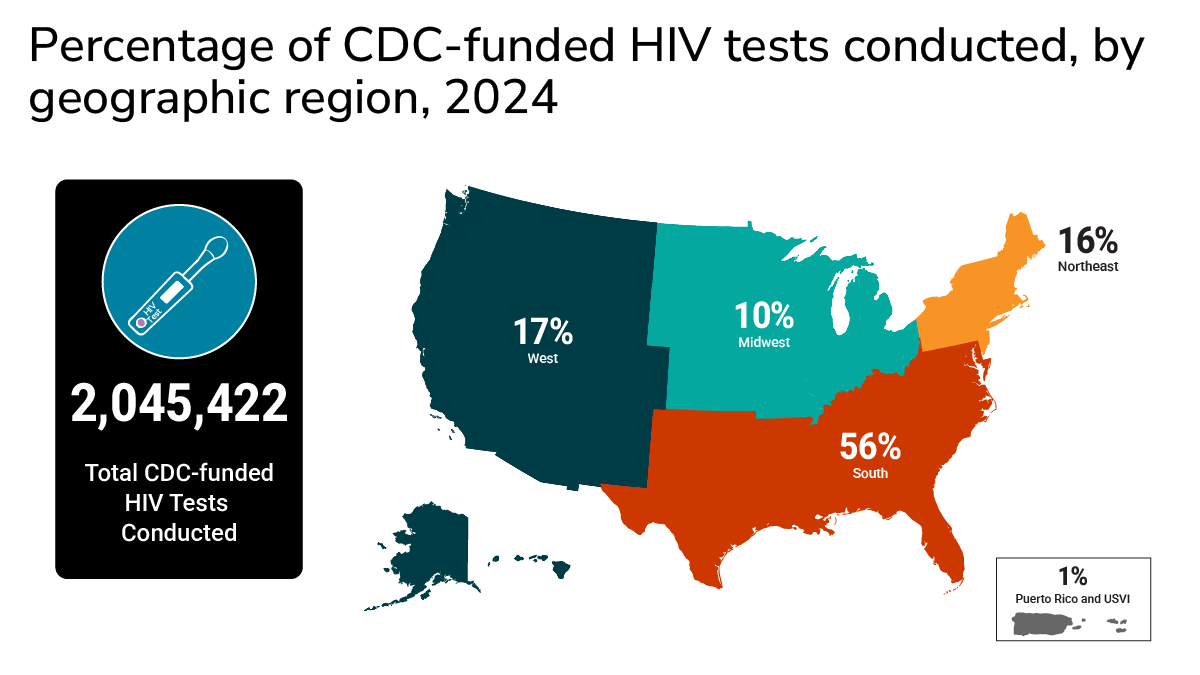
In 2024, 2,045,422 CDC-funded HIV tests were conducted in the United States, Puerto Rico, and the US Virgin Islands.
- More than half (56.2%) of CDC-funded HIV tests were conducted in the South.
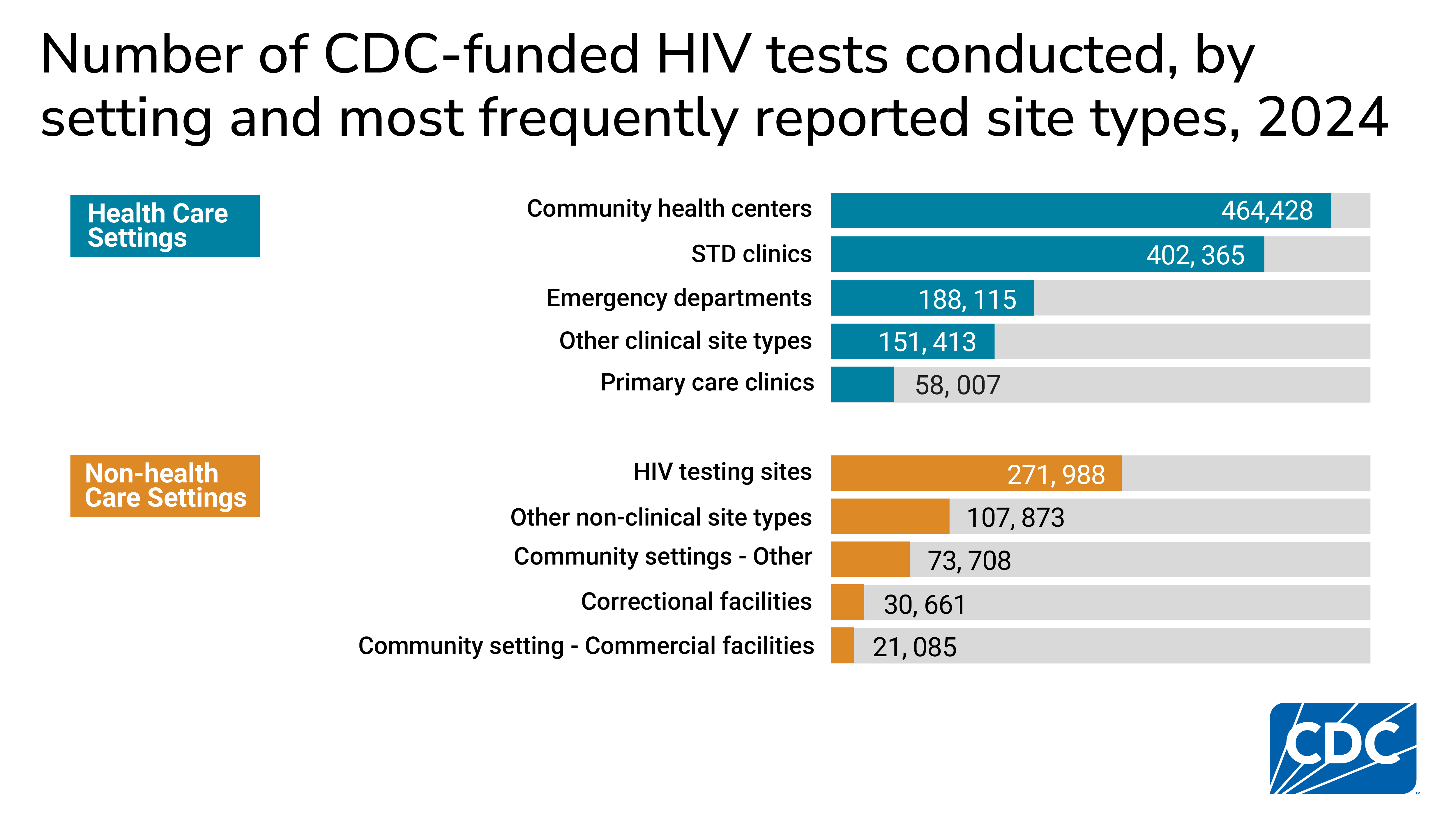
- Majority of CDC-funded HIV tests (68.8%) were conducted in health care settings.
HIV positivity
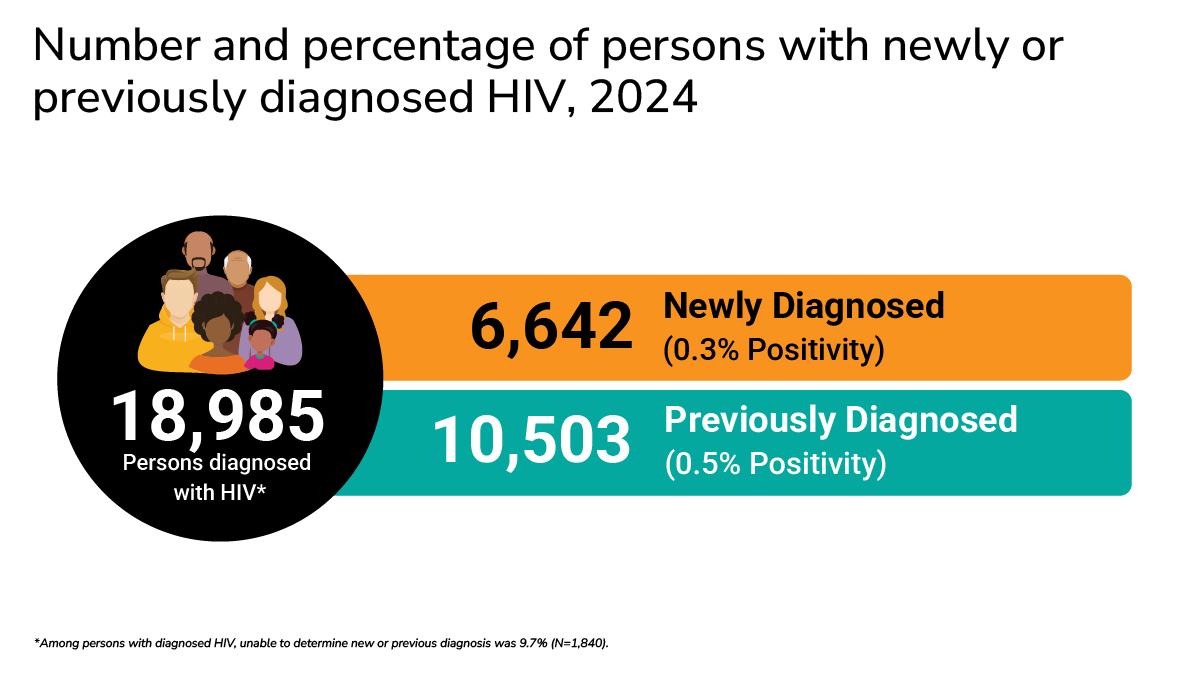
Of the 2,045,422 CDC-funded HIV tests conducted in 2024, 18,985 (0.9%) persons were identified with diagnosed HIV (including persons with unconfirmed preliminary positive rapid tests and persons with confirmed positive tests).
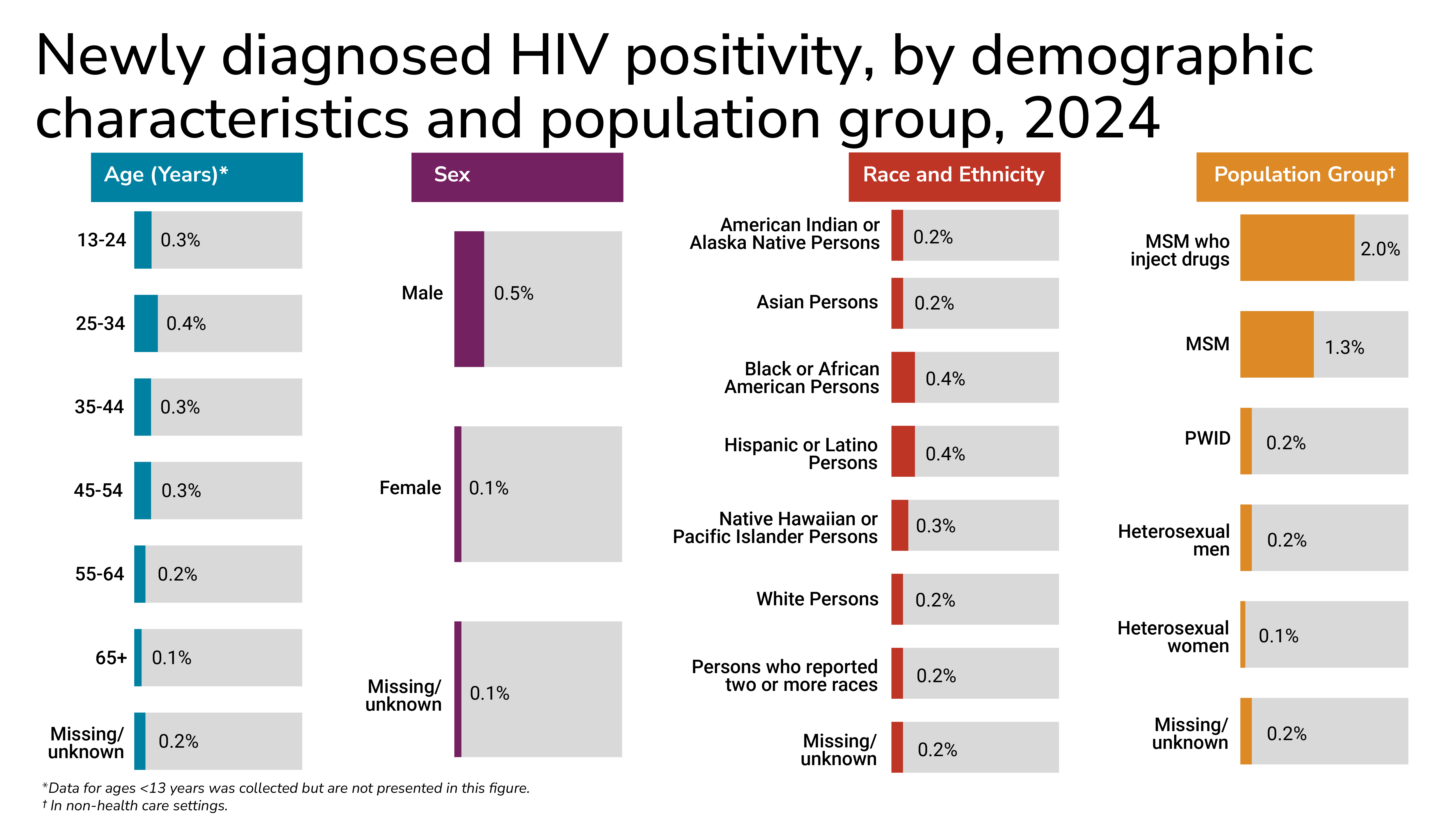
Among persons with diagnosed HIV, 6,642 persons were identified with newly diagnosed HIV (0.3% positivity) and 10,503 persons were identified with previously diagnosed HIV (0.5% positivity).
Newly diagnosed HIV positivity was highest among:
- Persons aged 25-34 years (0.4%)
- Males (0.5%)
- Black or African American persons (0.4%) and Hispanic or Latino persons (0.4%)
- Gay, bisexual, and other men who have sex with men (MSM) who inject drugs (2.0%) and MSM (1.3%), in non-health care settings
Linkage to HIV medical care within 30 days after diagnosis
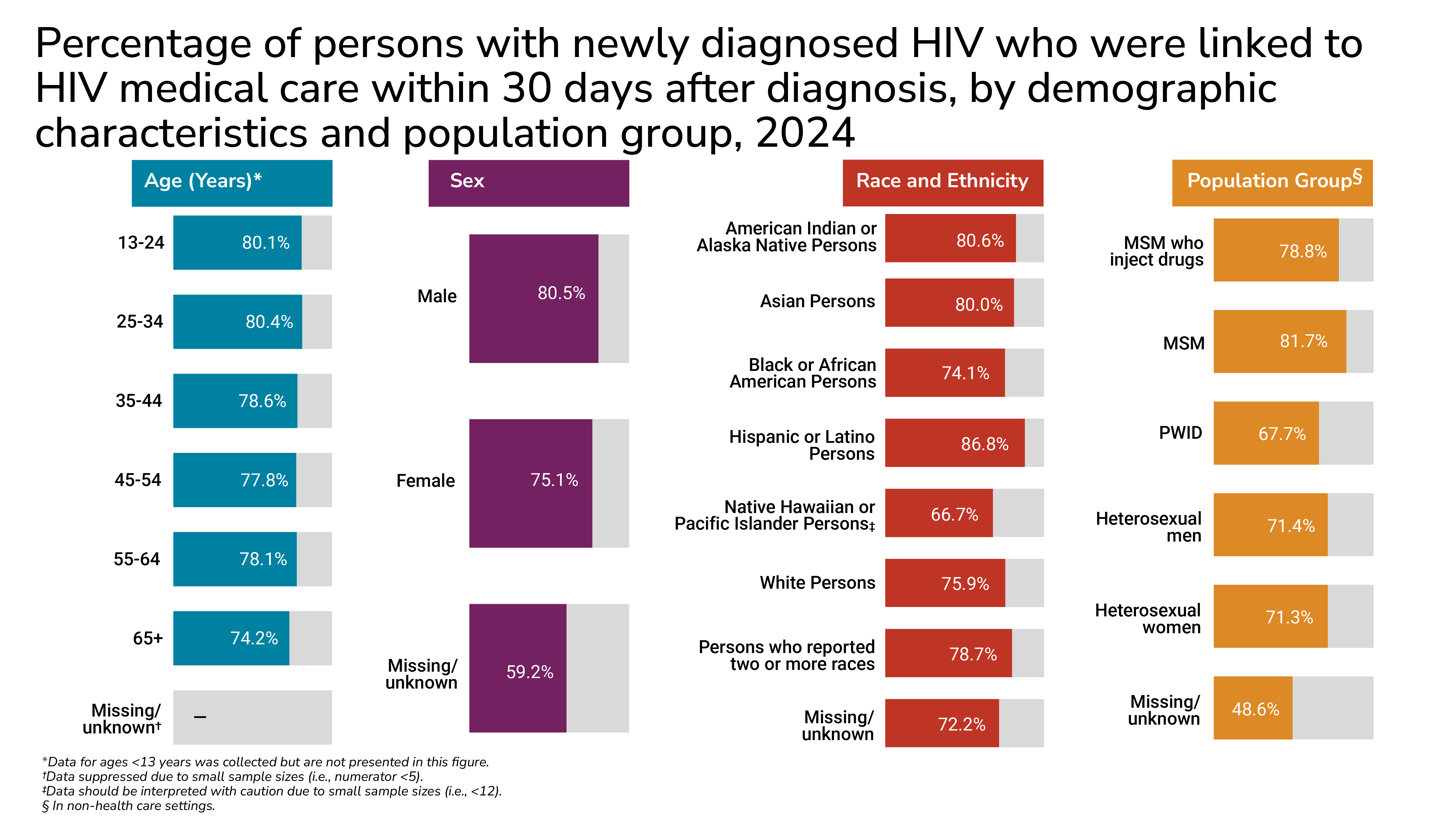
Of the 6,642 persons with newly diagnosed HIV for whom linkage to care data were available (N=5,915), 4,701 (79.5%) were linked to HIV medical care within 30 days after diagnosis.
Linkage to HIV medical care within 30 days after diagnosis among persons with newly diagnosed HIV was highest among:
- Persons aged 13-24 years (80.1%) and persons aged 25-34 years (80.4%)
- Males (80.5%)
- Hispanic or Latino persons (86.8%)
- MSM (81.7%) in non-health care settings
Pre-Exposure Prophylaxis (PrEP) awareness and use in non-health care settings
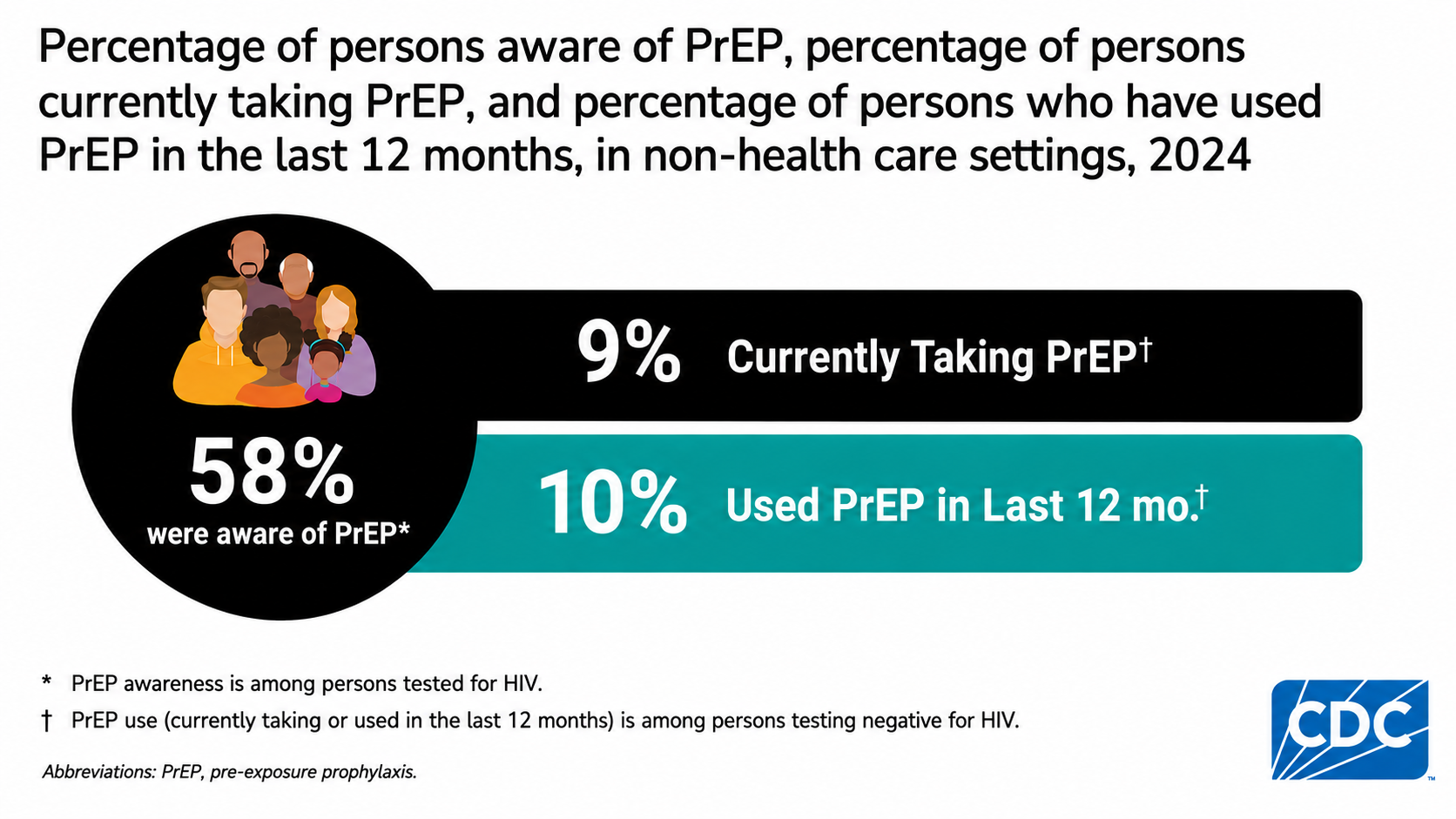
Among persons tested for HIV in non-health care settings (N=582,404) for whom PrEP awareness data were available (N=540,262), 57.5% (N=310,447) had ever heard of PrEP.
Among persons testing negative for HIV in non-health care settings (N=575,557) and for whom current PrEP use data were available (N=439,837), 8.9% (N=39,160) were currently taking PrEP.
Among those testing negative for HIV (N=575,557) and for whom PrEP use data in the last 12 months were available (N=436,871), 10.1% (N=44,098) had taken PrEP in the last 12 months.
PrEP eligibility, referral, and assistance with linkage to a PrEP provider in non-health care settings
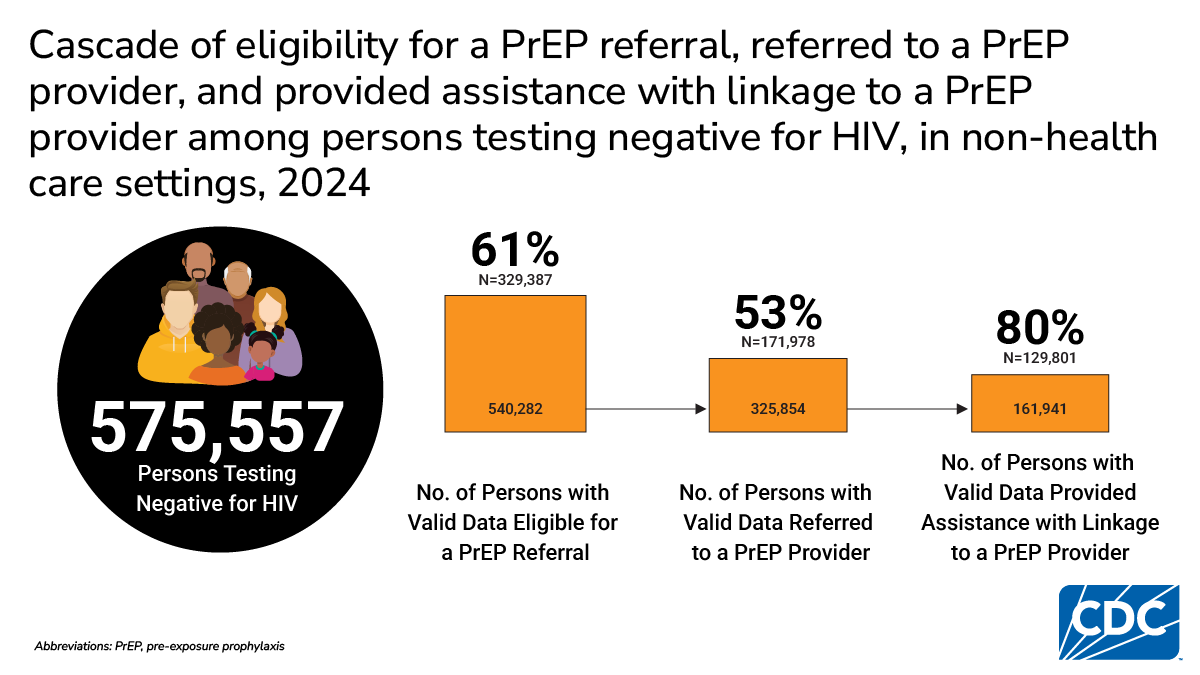
Among persons who tested negative for HIV in non-health care settings (N=575,557) and for whom PrEP eligibility data were available (N=540,282), 61.0% (n=329,387) were determined to be eligible for a PrEP referral.
Among those determined to be eligible for a PrEP referral (N=329,387) and for whom PrEP referral data were available (N=325,854), 52.8% (N=171,978) were referred to a PrEP provider.
Among those referred to a PrEP provider (N=171,978) and for whom linkage assistance data were available (N=161,941), 80.2% (N=129,801) were provided assistance with linkage to a PrEP provider.
Technical notes
Overview
The Centers for Disease Control and Prevention (CDC) receives, analyzes, and disseminates data on CDC-funded HIV testing and prevention activities reported through the National HIV Prevention Program Monitoring and Evaluation (NHM&E) data reporting system, EvaluationWeb®. These data are used to evaluate CDC-funded HIV testing efforts, inform programmatic activities, and document progress toward local, state, and national HIV prevention goals. This activity was reviewed by CDC, deemed not to be research, and was conducted consistent with applicable federal law and CDC policy.
This data release describes CDC-funded HIV tests and testing program outcomes in the United States, Puerto Rico, and the US Virgin Islands (USVI) from January 1, 2024 to December 31, 2024. Data presented in this release include HIV test-level data from 59 state and local health departments and 133 community-based organizations (CBOs) directly funded by the CDC through 6 notices of funding opportunities (PS18-1802, PS20-2010, PS21-2102, PS22-2203, PS23-0073, and PS24-0047) and reported to CDC through EvaluationWeb as of March 17, 2025. Aggregate-level HIV testing data from PS20-2010 are not able to be determined for 2024 individually and thus not included in this release.
Specifically, this release describes:
- Number of CDC-funded HIV tests conducted
- Numbers of persons with newly or previously diagnosed HIV
- Percentages of persons with newly or previously diagnosed HIV (i.e., positivity)
- Percentage of linkage to HIV medical care within 30 days after diagnosis
- Percentage of persons with newly diagnosed HIV and interviewed for partner services
- Percentages of pre-exposure prophylaxis (PrEP) awareness and use
- Percentages of PrEP eligibility, referral, and assistance with linkage to a PrEP provider
Interpreting this release
- There may be minor differences in data reported in this release compared with prior years' Annual HIV Testing Reports. This could be due to the fact that this release includes all data submitted to EvaluationWeb as of March 17, 2025, whereas prior years' reports included data submitted to EvaluationWeb during earlier timeframes. Furthermore, data in this release have not yet undergone quality assurance.
- Because the population accessing HIV testing services at CDC-funded health departments and community-based organizations is not necessarily representative of all persons who are tested for HIV in the United States, these findings should not be applied to the general population. Furthermore, data from Mississippi are not included in this release due to incomplete data submission to EvaluationWeb by the March 17, 2025 deadline.
- The unit of NHM&E HIV testing program data collection is an HIV test. In the absence of a unique person identifier, the count of HIV tests, test results, and referral, linkage, or provision of services (e.g., HIV medical care, partner services, PrEP, and other prevention services) does not reflect unique person counts, as persons could have been tested and accessed these services multiple times during a reporting period. As a result, except for the total number of tests conducted, all other measures are likely to include duplicate counts of persons. Since diagnosis, referral, linkage, or provision of services are associated with persons, and not tests, we have used "persons" for these measures.
- Procedures for data collection and verification vary among funded agencies. For example, some agencies accept a client's self-report as adequate evidence that the client has newly diagnosed HIV or has been linked to HIV medical care, whereas others require a cross-check with the surveillance system to rule out prior diagnosis or to verify linkage to care.
- Jurisdictions vary considerably in resources available for HIV prevention and in the contexts in which they operate, which can affect program capacity. For example, some jurisdictions may receive state and local funds in addition to federal funds, whereas others may not. Examples of contextual issues that may affect program capacity include HIV prevalence, geography, program infrastructure, surveillance system capacity, and accessibility to surveillance data to help guide program activities.
Definitions
Age
- The age of the client at the time of the HIV test. Age is determined by calculating the difference between the year of a client's birth and the year the HIV test was conducted.
Data designation
- Missing or unknown data: Any required data associated with a valid HIV test record for which data are not submitted. These data were either not collected by the health department or CBO or were collected but not reported to CDC.
- Test-level data: Data reported for each HIV test conducted, including demographic characteristics, population group, linkage to HIV medical care (within 30 days after diagnosis), interviewed for partner services, and PrEP awareness, use, eligibility, referral, and assistance with linkage to a PrEP provider. For this release, HIV test-level data were reported for 59 state and local health departments and 133 community-based organizations.
Diagnosis
- For purposes of this release, the total number of persons with diagnosed HIV includes unconfirmed preliminary positive rapid tests and confirmed positive tests.
Interviewed for partner services
- The interviewed for partner services indicator measures the extent to which persons with newly diagnosed HIV were interviewed for partner services by health department staff or providers on behalf of the health department.
- The reported percentage of persons who were interviewed for partner services is calculated by excluding tests with missing or unknown outcome data from the denominator, which may result in an overestimated or underestimated reported percentage interviewed for partner services.
Linked to HIV medical care services
- HIV medical care includes medical services for HIV, including evaluating immune system function and screening, treatment, and prevention of opportunistic infections. Linkage to HIV medical care services within 30 days after diagnosis is a calculated indicator that measures the extent to which persons with newly or previously diagnosed HIV were linked to HIV medical care within 30 days after a positive test. The person must have attended their first medical care appointment within 30 days after an HIV-positive test to be considered linked to care.
- The reported percentage of persons linked to HIV medical care within 30 days is calculated by excluding tests with missing or unknown outcome data from the denominator, which may result in an overestimated or underestimated reported percentage linkage to care.
Persons testing negative for HIV
- This includes clients for whom one or more point-of-care rapid tests or supplemental tests are non-reactive. For more information, refer to Test Results.
Population group
- NHM&E data for population group are based on sexual and injection drug use behaviors of persons during the last five years prior to the HIV test. The collection of these data is required for all tests conducted in non-health care settings and for HIV-positive tests in health care settings. For this release, mutually exclusive population groups are determined for persons testing positive for HIV using a combination of behaviors and sex. The behaviors used to calculate the population group include sex with men or women and injection drug use.
- The population groups are as follows:
- Men who have sex with men (MSM) include men who reported male-to-male sexual contact in the past five years.
- Persons who inject drugs include persons who reported injection drug use in the past five years.
- Men who have sex with men and report injection drug use (MSM who inject drugs) include men who reported both male-to-male sexual contact and injection drug use in the past five years.
- Heterosexual men include men who only reported heterosexual contact with women in the past five years.
- Heterosexual women include women who only reported heterosexual contact with men in the past five years.
- Missing/unknown includes persons who did not report any of the above behaviors or for whom these data were not reported, even though they were asked about these behaviors.
Pre-Exposure Prophylaxis (PrEP)
- PrEP is a medication taken to reduce the chances of getting HIV from sex or injection drug use. PrEP is highly effective for preventing HIV when taken as prescribed. PrEP programs are evaluated using the following measures:
- PrEP awareness is indicated by confirmation that the client has ever heard of PrEP.
- Current use of PrEP is indicated if the client reported currently using PrEP at the time of testing.
- Used PrEP in last 12 months is indicated if the client reported using PrEP anytime within the last 12 months.
- Eligible for PrEP referral is defined by whether the client met appropriate criteria for using PrEP; specifically, whether the client is HIV-negative and has an increased chance of acquiring HIV, as defined locally or by CDC guidelines for PrEP.
- Referral to a PrEP provider is defined as a process involving the provision of information on who the providers are, what documents the referred person should take with them, how to get to the provider's agency, and what to expect from the referral process.
- Assistance with linkage to a PrEP provider is defined as a process through which a person with an increased chance of getting HIV is helped to access a health care provider who offers evaluation and management for PrEP.
- The reported percentages of persons eligible for PrEP referral, referred to a PrEP provider, or assistance with linkage to a PrEP provider are calculated by excluding tests with missing or unknown outcome data from the denominator, which may overestimate or underestimate the reported percentages.
Race and ethnicity
- Race is determined as a client's self-reported classification among the following categories: American Indian or Alaska Native persons, Asian persons, Black or African American persons, Native Hawaiian or Pacific Islander persons, and White persons. Ethnicity is determined by a client's self-report of whether they are Hispanic or Latino. Up to five races and one ethnicity (i.e., Hispanic or Latino) for a client are allowed and submitted to the CDC as separate variables. For this release, a "race and ethnicity" variable was created by combining the race and ethnicity variables using the following categories and hierarchy:
- Hispanic or Latino ("Hispanic or Latino" in the ethnicity variable regardless of the race variables).
- American Indian or Alaska Native persons
- Asian persons
- Black or African American persons
- Native Hawaiian or Pacific Islander persons
- White persons
- Persons who reported two or more races
Service integration
- Service integration is defined as the concurrent provision of two or more CDC-recommended prevention, treatment, or care services across HIV/sexually transmitted infections (STIs) or hepatitis C.
Test
- HIV test: An HIV test is one or more HIV tests conducted on a person to determine their HIV status. During one test, a person may be tested once (e.g., one rapid test or one conventional test) or multiple times (e.g., one rapid test followed by one conventional test) to confirm a preliminary HIV positive test result.
- Invalid HIV test: An HIV test is considered invalid if the HIV test result is missing/invalid (i.e., inconclusive, invalid, or discordant).
Test record
- Invalid testing record: Required data within a valid HIV testing record that do not conform to the data structure specified by the CDC (e.g., illogical dates, incomplete dates, future years, unacceptable value codes, or unexpected data based upon skip patterns in the data collection form).
- Valid HIV testing record: A test-level data record includes the mandatory data fields of session date, agency ID, site ID, site type, and client ID. A test-level testing record cannot be submitted without the mandatory data fields.
Test results
- HIV positive test: An HIV positive test is determined by any of the following test results: (I) Laboratory-based Test(s): 1) HIV-1 positive, 2) HIV-1 positive and possible acute infection, 3) HIV-2 positive, and 4) HIV positive and undifferentiated between HIV-1 and HIV-2. (II) CLIA-waived point-of-care (POC) Rapid Test(s): 1) Preliminary positive—one or more of the same point-of-care rapid tests were reactive, and none are non-reactive, and no supplemental tests were done; and 2) Positive—two or more different orthogonal point-of-care rapid tests were reactive, and none are non-reactive, and no laboratory-based supplemental tests were done.
- The Clinical Laboratory Improvement Amendments of 1988 (CLIA) regulations include federal standards applicable to all US facilities or sites that test human specimens for health assessment or to diagnose, prevent, or treat disease. As defined by CLIA, waived tests are simple tests with a low risk for an incorrect result.
- HIV negative test: An HIV negative test is determined by any of the following test results: (I) Laboratory-based Test(s): 1) HIV-1 negative, 2) HIV-1 negative and HIV-2 inconclusive, and 3) HIV negative. (II) CLIA-waived POC Rapid Test(s): Negative—one or more point-of-care rapid tests were non-reactive, none are reactive, and no supplemental tests were done.
- Total number of tests includes only tests with negative or positive results; tests with discordant or inconclusive results are excluded.
Test setting
- Test setting is categorized based on the site type where HIV testing is conducted, and it is classified into the following categories:
- Health care settings include inpatient hospital, tuberculosis (TB) clinic, substance abuse treatment facility, community health center (CHC), emergency department, primary care clinic (other than CHC), pharmacy or other retail-based clinic, sexually transmitted disease (STD) clinic, dental clinic, and correctional facility clinic.
- Non-health care settings include HIV testing site; community setting – school/educational facility; community setting – church/mosque/synagogue/temple; community setting –shelter/transitional housing; community setting – commercial facility; community setting – bar/club/adult entertainment; community setting – public area; community setting – individual residence; community setting – other; correctional facility – non-health care; health department – field visit; and community setting – syringe exchange program.
- Mobile unit is defined as a specialized vehicle used to provide HIV prevention services beyond transporting agency staff to the field and/or for client recruitment.
- Self-test or rapid self-test is done entirely at home or in a private location and can produce results within 20 minutes.
- Unknown includes missing data for test setting.
US geographic region
- The US geographic regions are classified as follows:
- Northeast: Connecticut, Maine, Massachusetts, New Hampshire, New Jersey, New York, New York City, Pennsylvania, Philadelphia, Rhode Island, and Vermont.
- Midwest: Illinois, Chicago, Indiana, Iowa, Kansas, Michigan, Minnesota, Missouri, Nebraska, North Dakota, Ohio, South Dakota, and Wisconsin.
- South: Alabama, Arkansas, Delaware, District of Columbia, Florida, Georgia, Kentucky, Louisiana, Maryland, Baltimore, North Carolina, Oklahoma, South Carolina, Tennessee, Texas, Houston, Virginia, and West Virginia.
- West: Alaska, Arizona, California, Los Angeles, San Francisco, Colorado, Hawaii, Idaho, Montana, Nevada, New Mexico, Oregon, Utah, Washington, and Wyoming.
- US territories: Puerto Rico and the US Virgin Islands.
Within each group, states are listed alphabetically. The seven directly funded cities are listed immediately following their respective jurisdiction.
Acknowledgements
Acknowledgements
Translation and Evaluation Branch
Division of HIV Prevention
National Center for HIV, Viral Hepatitis, STD, and TB Prevention
Centers for Disease Control and Prevention
Publication of this release would not have been possible without the hard work and dedication of state and local health departments and community-based organizations that collected and submitted the HIV test-level data, as well as the Project Officers in the Program Development and Implementation Branch.
Suggested citation
All material contained in this release is the public domain and may be used and reprinted without special permission; however, citation as to source is appreciated.
Centers for Disease Control and Prevention. CDC-Funded HIV Testing in the United States, Puerto Rico, and US Virgin Islands. Published September 9, 2026. Accessed [date]. URL.
This page was last updated on this date. Updates may include minor edits, image changes, or other modifications to page content.
The information on this page was last reviewed by subject matter experts to ensure accuracy.