


At a glance
Measure your blood pressure regularly to help detect high blood pressure early. If your blood pressure is too high, you and your health care team can take steps to help control it.

Why you need to measure your blood pressure
Measuring your blood pressure is the only way to know whether you have high blood pressure. Because high blood pressure usually has no warning signs or symptoms, many people do not know they have it.
How to measure your blood pressure at home
Self-measured blood pressure (SMBP) monitoring uses a personal blood pressure monitor outside of a doctor's office or hospital. These monitors are easy to use, and a member of your health care team can show you how to use one correctly and how often.
Research shows that people with high blood pressure are more likely to lower their blood pressure when they use SMBP along with support from their health care team.
To get the most accurate readings:
- Record your readings in a blood pressure log.
- Measure your blood pressure at the same time each day.
- Take at least two readings, 1 or 2 minutes apart.
If you have high blood pressure, you may need to measure it more often.
How health care professionals measure your blood pressure
A health care professional places an inflatable cuff around your upper arm and inflates it to temporarily stop blood flow. As the cuff slowly deflates, they measure your blood pressure by listening to your pulse with a stethoscope or by using a digital blood pressure monitor. The process is quick and painless.
Blood pressure is measured in millimeters of mercury (mm Hg).
If you have high blood pressure, work with your health care team to create a plan to help control it and lower your risk for heart disease and stroke.
Use this list of questions to help guide conversations with your health care team about managing your blood pressure.
Where you can get your blood pressure checked
You can have your blood pressure measured:
- At your doctor's office or another health care setting.
- At a pharmacy with a digital blood pressure monitor.
- At home using a personal blood pressure monitor.
Things that can affect your blood pressure reading
Many factors can affect your blood pressure reading, including:
- Nervousness about having your blood pressure taken. This is called "white coat syndrome." As many as 1 in 3 people who have a high blood pressure reading at the doctor's office may have normal blood pressure readings outside of it.
- What you ate, drank, or did before your reading. If you smoked, drank alcohol or caffeine, or exercised within 30 minutes of having your blood pressure measured, your reading might be higher.
- How you are sitting. Crossing your legs and letting your arm droop at your side rather than resting on a table at chest height can make your blood pressure go up.
It's important to get an accurate blood pressure reading so that you have a clearer picture of your risk for heart disease and stroke.
Tips for an accurate blood pressure reading
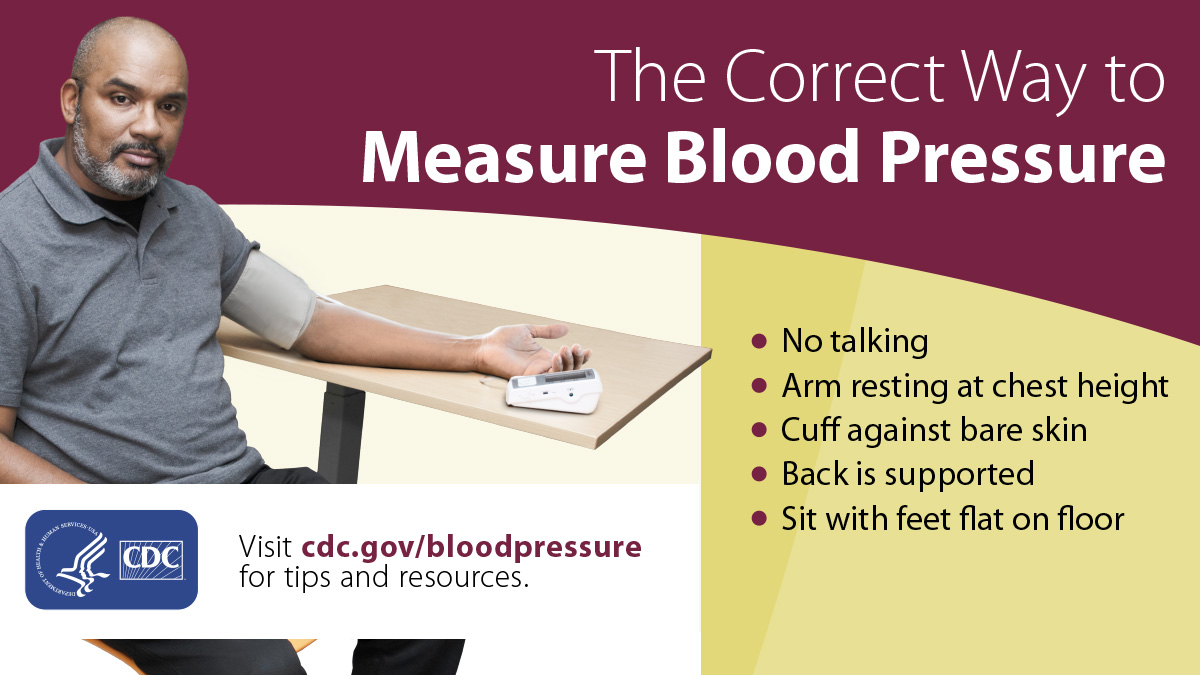
Follow these steps each time you measure your blood pressure:
- Don't eat or drink anything 30 minutes before you take your blood pressure.
- Empty your bladder before your reading.
- Sit in a comfortable chair with your back supported for at least 5 minutes before your reading.
- Keep both feet flat on the ground and your legs uncrossed.
- Rest your arm on a table so the cuff is at chest height.
- Place the cuff on your bare upper arm and make sure it fits snugly.
- Do not talk while your blood pressure is being measured.
This page was last updated on this date. Updates may include minor edits, image changes, or other modifications to page content.
The information on this page was last reviewed by subject matter experts to ensure accuracy.