At a glance
CDC works with the South African National Department of Health (NDOH) and other partners to build effective public health collaboration and partnerships to detect, prevent, and respond to global public health threats. CDC's work aims to protect the health of Americans and support public health around the world.

Overview
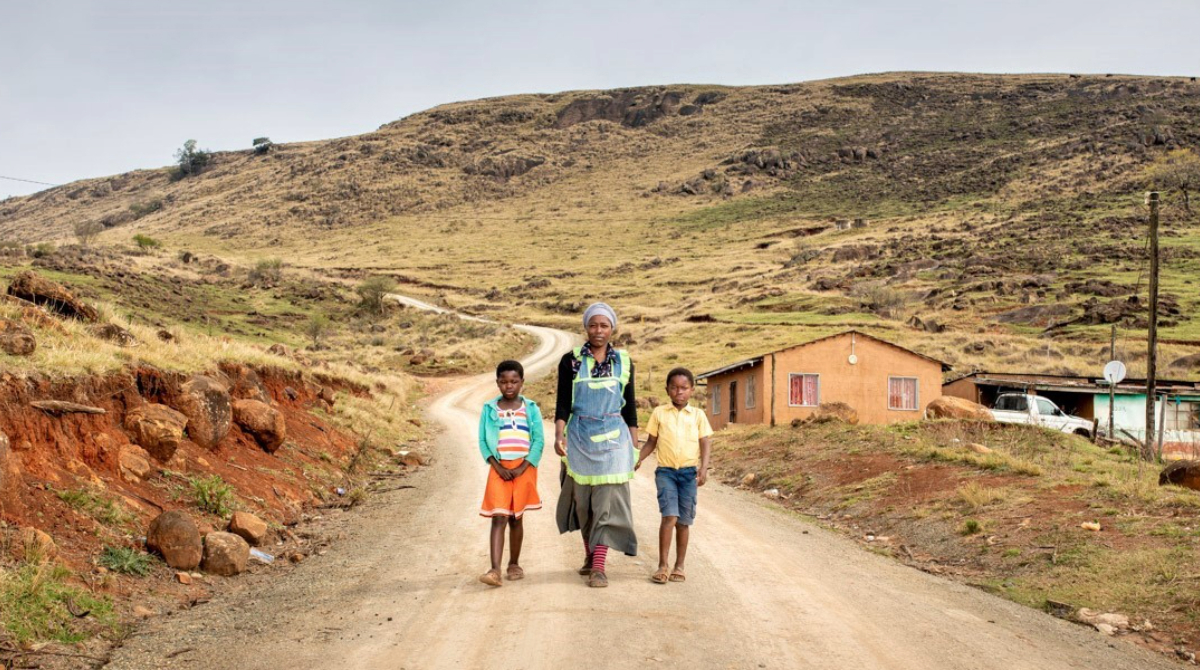
CDC began working in South Africa in 1989 and established an office in 1995. CDC works with the Government of South Africa and partners to build effective public health collaboration and partnerships to detect, prevent, and respond to global public health threats. CDC's work aims to protect the health of Americans and support public health around the world.
Global health security
Laboratory systems strengthening
CDC supports national programs that strengthen HIV and TB laboratory diagnostic quality and public health laboratory service. These programs ensure facilities have access to laboratory information systems for timely result delivery and documentation of results in the patient management system.
CDC also helps strengthen the connection between clinics and laboratories by ensuring human resources are available to train, mentor, and supervise continuous quality improvement initiatives at healthcare facilities and laboratories.
Disease surveillance
CDC supports local implementing partners to conduct research that informs South Africa’s HIV response and programs. This research includes:
- Population surveys to understand HIV prevalence and incidence.
- Enhanced antenatal surveys in pregnant women.
- HIV drug resistance surveillance.
- HIV mortality surveillance.
For key population groups, CDC also supports size estimations and bio-behavioral surveys that inform HIV epidemic surveillance, programs, and epidemiological models used by:
- The South African Government.
- The U.S. President's Emergency Plan for AIDS Relief (PEPFAR).
- A network of nongovernmental organizations, advocacy groups, and community groups.
Workforce development
CDC helped launch the South Africa Field Epidemiology Training Program in 2006 in collaboration with NDOH, the National Institute for Communicable Diseases (NICD), the University of Pretoria, and Wits University.
The trains epidemiologists to prevent, detect, and respond to outbreaks before they become epidemics. Participants develop skills for gathering data and translating data into evidence-based action.
CDC continues to support and expand South Africa's FETP, including Frontline, Intermediate, and Advanced levels. All three FETP levels have participated in the COVID-19 response in South Africa.
Key achievements
- CDC has collaborated with the Human Sciences Research Council (HSRC) to conduct national HIV household surveys since 2005.
- CDC supported the implementation and expansion of the Synchronized Communication in Health, a web-based system that ensures data accessibility and reporting across models of care in 2018.
- CDC used the Extension for Community Healthcare Outcomes platform to train 2,000 pathologists in virology, chemistry, microbiology, and genetics in 2021.
- More than 500 professionals have graduated from FETP since 2007. Of those, 344 professionals have completed Frontline-FETP, 27 professionals have completed Intermediate-FETP, and 344 professionals have completed Advanced-FETP.
COVID-19
CDC implemented a broad and proactive public health response to prepare, detect, and respond to COVID-19. CDC engaged in technical collaboration with the NDOH and NICD on disease surveillance, laboratory strengthening, and health communication. As cases increased, CDC expanded its scope of work to include:
- Supporting surveillance and epidemiology.
- Strengthening laboratory capacity.
- Researching COVID-19 burden, transmission, seroprevalence, and morbidity.
- Strengthening border health, risk communication, and vaccine preparedness and delivery.
- Strengthening epidemiologic capacity through FETP courses.
All COVID-19 programs balance existing CDC and South African structures and partnerships. This includes those from the U.S. President's Emergency Plan for AIDS Relief (PEPFAR) and influenza surveillance.
Key achievements
- CDC supported establishment of COVID-19 surveillance systems in all nine provinces by adapting existing influenza and respiratory disease surveillance platforms.
- CDC assisted national- and provincial-level COVID-19 response teams with disease surveillance early in the COVID-19 response.
- CDC helped strengthen COVID-19 genomic sequencing capabilities at the NICD to identify emerging variants in South Africa and the surrounding region.
- CDC helped increase COVID-19 vaccination in mobile clinics and PEPFAR-supported facilities
- Distributed over 2 million vaccine education pamphlets in each PEPFAR-supported district.
HIV and TB
As a key implementer of the U.S. President's Emergency Plan for AIDS Relief (PEPFAR), CDC plays an essential role in the fight against HIV and TB. With unmatched scientific and technical knowledge and long-standing relationships with ministries of health, CDC is uniquely positioned to advance HIV, TB, and other global health security activities that keep Americans safe at home and abroad.
Through PEPFAR, CDC provides critical support to South Africa's public health infrastructure, improving the country's ability to prevent, detect, and respond to HIV, TB, and other infectious diseases and minimizing their risk from entering the U.S.
Influenza
Influenza viruses require continued vigilance to mitigate seasonal influenza and novel strains. CDC South Africa's Influenza Program is a regional hub that provides technical support to surrounding countries to prevent, control, and respond to influenza. CDC’s influenza work at its Influenza Regional Hub in South Africa is focused on enhanced surveillance and laboratory capacity for seasonal influenza viruses and novel influenza viruses with pandemic potential and generating the evidence-base for policy decisions.
Since 2007, CDC has worked with partners to enhance the quality of influenza surveillance and broaden the scope to include other respiratory pathogens, such as respiratory syncytial virus (RSV) and SARS-CoV-2.
CDC collaborates on research projects to understand influenza and other respiratory viruses in South Africa, where disease burden and epidemiology may be unique due to untreated comorbidities such as tuberculosis, malaria, and HIV, as well as malnutrition and socioeconomic factors.
CDC also engages in other research efforts, including:
- Studying how flu and SARS-CoV-2 spread within households.
- Surveying healthcare use for respiratory illness.
- Assessing if a children's flu vaccine study is practical.
Key achievements
- CDC supported enhanced surveillance for lower respiratory tract infections and influenza-like illnesses. This was done by expanding existing platforms to include RSV, pertussis, and COVID-19.
- In 2019, CDC published estimates of health and economic burden of severe pneumonia caused by influenza and other respiratory pathogens in South Africa.