



At a glance
CDC has worked with partners in Laos for nearly 20 years. CDC works closely with the Lao Ministry of Health (MOH) and multilateral organizations to build effective public health systems to detect, prevent, and respond to public health threats. CDC also works with the Lao MOH to respond to disease outbreaks, accelerate ending HIV and address influenza and other emerging health threats. CDC's work aims to protect the health of Americans and support public health around the world.

Key accomplishments
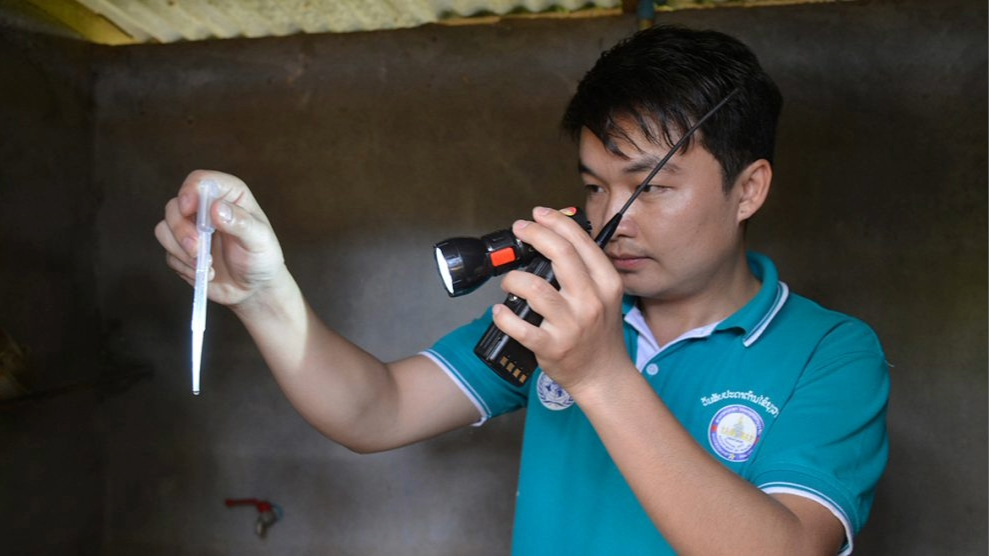
- Established the national HIV infection surveillance system with real-time reporting
- Established four internationally certified biosafety cabinet certifiers and active emergency response plans for malaria and pandemic influenza
- Supported training of over 100 public health workers who have graduated from the Field Epidemiology Training Program (FETP) since 2009
- Expanded and decentralized HIV index testing, antiretroviral treatment services and monitoring systems at central, provincial, and district antiretroviral therapy sites
- Implemented monthly avian influenza surveillance of poultry in six high-risk provinces. This program has detected infection in poultry and wild birds due to avian influenza subtypes H5N1, H5N6, and H9N2
- Increased the use of evidence-based data to inform policy decisions for influenza vaccination programs and other prevention and control programs
Global health security
CDC works with local, regional, and global organizations to support emergency response, surveillance, laboratory systems, and workforce development. These efforts help bolster Laos' ability to prevent, detect, and respond to infectious disease outbreaks before they become global epidemics.
Workforce development
CDC provides technical support to strengthen epidemiological capacity through the Field Epidemiology Training Program (FETP). The Lao FETP was established in 2009 with support from CDC. The one-year program trains disease detectives to prevent, detect, and respond to public health threats.
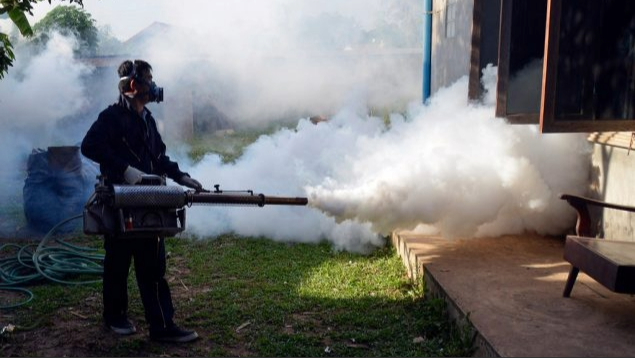
Emergency response
CDC’s partnership with the MOH was key to building a successful COVID-19 response. CDC collaborates with multilateral and non-governmental partners in the following efforts:
- Provided laboratory technical expertise for genomic sequencing of SARS-CoV-2
- Supported COVID-19 testing
- Helped integrate COVID-19 into the influenza sentinel surveillance system
- Collaborated on border health strengthening measures
- Developed tools, materials, and guidance on how to safely continue HIV testing and treatment during the pandemic
Border health
CDC and the MOH help prevent the spread of infectious diseases among travelers and mobile populations who cross international borders. CDC is supporting the development of a quarantine health program at key international points of entry. These include airports and land crossings on the border.
HIV
As a key implementer of the U.S. President's Emergency Plan for AIDS Relief (PEPFAR), CDC plays an essential role in the response to HIV. With unmatched scientific and technical knowledge and long-standing relationships with Laos MOH, CDC is uniquely positioned to advance HIV and other global health security activities that keep Americans safe at home and abroad.
Through PEPFAR, CDC provides critical support to Laos' public health infrastructure, improving the country's ability to prevent, detect, and respond to HIV and other infectious diseases and minimizing their risk from entering the U.S.
Influenza
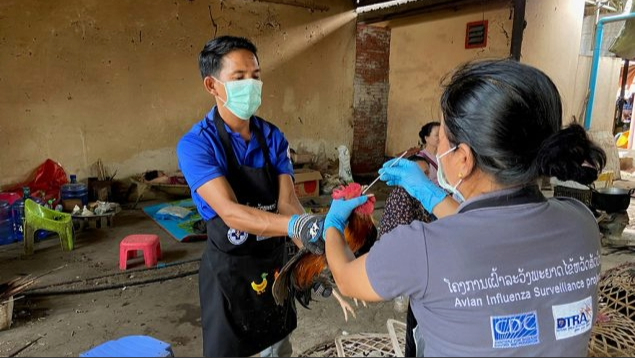
CDC's influenza work includes support for:
- Monitoring and tracking the spread of influenza in humans and animals, with a focus on highly dangerous avian influenza
- Priority seasonal influenza vaccination programs by enhancing surveillance and response for seasonal, avian, and pandemic influenza
- Influenza laboratory and epidemiologic surveillance, early warning systems, and outbreak response
- Increasing the use of evidence-based data to inform policy decisions for influenza vaccination programs and other prevention and control programs
With CDC’s support, Laos is the first lower-middle income country to have built the evidence and policy base to move from administering donated influenza vaccines to national procurement and delivery of the vaccine. The country is set up to regularly report and rapidly respond to outbreaks of avian influenza using both human and animal health sectors.
![[thumbnail] (hidden)](/global-health/media/images/2024/11/Laos_FS_2024_thumbnail.jpg)