



At a glance
CDC’s presence in Central America started in the 1960s and strengthened in 2003 with the establishment of the CDC Central America Program Office in Guatemala. The Guatemala office works with Ministries of Health (MOHs) and partner organizations in Belize, Costa Rica, El Salvador, Honduras, Guatemala, Nicaragua, and Panama. It also guides selected activities in Colombia, the Dominican Republic, and Peru. CDC’s Central America office in Guatemala protects America by bolstering regional health security and expanding HIV and tuberculosis (TB) services. The work also strengthens surveillance for key pathogens that may pose a threat to the United States.
Key accomplishments
- Trained more than 5,000 graduates through the Central America Field Epidemiology Training Program (FETP), strengthening skills to detect, report, and respond to outbreaks.
- Provided specialized training for 4,000 laboratory personnel across Central America.
- Supported over 52 HIV clinics in Central America to deliver evidence-based HIV testing to more than 316,000 people and HIV treatment to over 26,000 people in 2025.
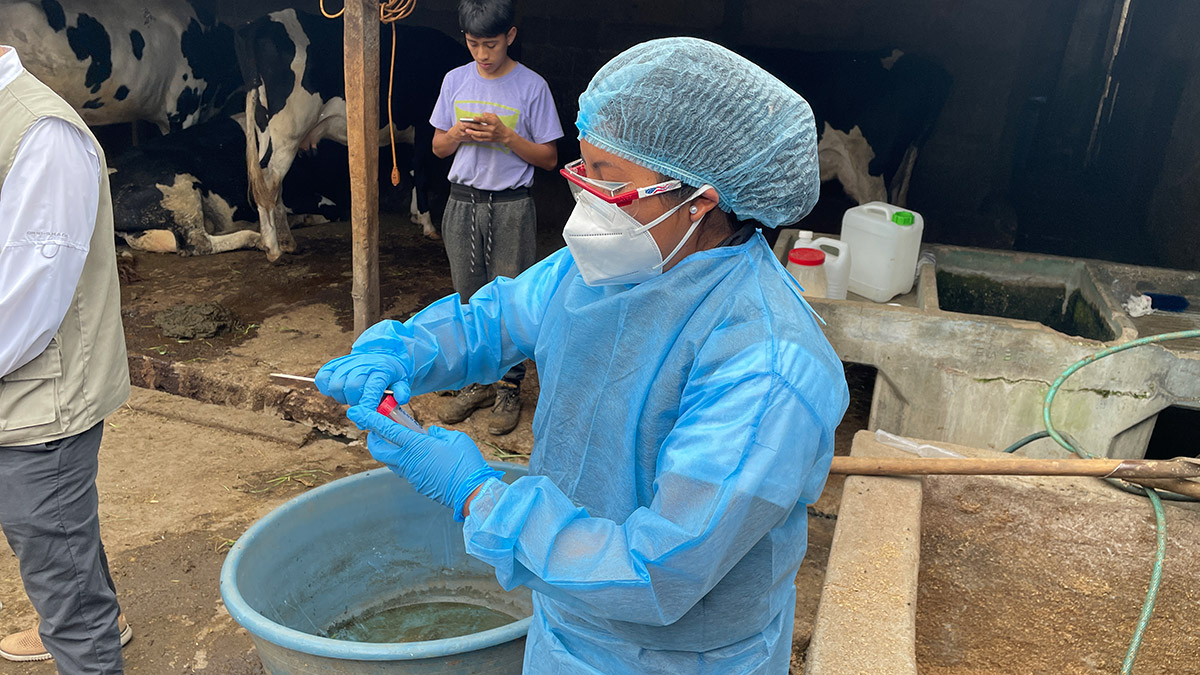
- Conducted seven One Health Zoonotic Disease Prioritization workshops with ministries of agriculture, health, and environment across Central America, building multisector consensus on top zoonotic disease priorities and translating those priorities into actionable, country-led roadmaps to improve integrated surveillance, preparedness, and outbreak response.
- Supported outbreak investigations across the region, including outbreaks of measles, rabies, fungal infections, dengue, foodborne and respiratory diseases, and zoonotic threats such as New World screwworm (NWS).
Global health security
CDC Central America works with countries and regional partners to bolster capacity to conduct disease surveillance, respond to outbreaks, strengthen laboratory systems and diagnostics, and develop their workforce.
Surveillance strengthening
CDC Central America strengthens surveillance for key infectious disease pathogens and antimicrobial resistance that could threaten the United States. CDC’s Acute Febrile Illness Surveillance Network in the region identifies emerging disease threats, strengthens regional collaborations, and increases capacity to use data to guide public health responses. CDC also collaborates with multisector ministries across Central America to support the One Health approach that reinforces cross-disciplinary surveillance, prevention, and control of zoonotic diseases.
Laboratory strengthening
CDC Central America’s lab work boosts laboratory-based disease surveillance and detection of novel strains and pathogens. CDC provides technical assistance to the Regional Network of National Laboratories’ strategic plan. Other CDC lab activities include:
- Strengthening genomic surveillance in Central America to improve pathogen detection and support outbreak investigations
- Strengthening laboratory biosafety and biosecurity practices across national networks to support safe, reliable testing and reduce operational risk
- Increasing diagnosis of fungal diseases in Belize, El Salvador, Honduras, and Guatemala
- Strengthening specimen referral and transport systems to support timely confirmatory testing
Workforce development
CDC's FETP bolsters field epidemiologists’ expertise to investigate and respond to disease outbreaks. FETP graduates, also known as disease detectives, and CDC partners investigate outbreaks that can pose a threat to the United States, such as Guillain-Barré Syndrome in Guatemala; mucormycosis and dengue in Honduras; and rabies in Belize.
Emergency response
CDC provides technical support to Ministers of Health during regional outbreak investigations. Currently, CDC is supporting regional outbreaks of NWS. In the last 20 years, CDC Central America has been a key partner in responses to measles, rabies, fungal infections, dengue, foodborne diseases, and COVID-19. During COVID-19, trusted relationships between CDC and MOHs facilitated the quick expansion of regional laboratory capacities and surveillance.
HIV and TB
As a key implementer of the U.S. President’s Emergency Plan for AIDS Relief (PEPFAR), CDC plays an essential role in the fight against HIV and TB. With unmatched scientific and technical knowledge and long-standing relationships with MOHs, CDC is uniquely positioned to advance HIV, TB, and other global health security activities that keep Americans safe at home and abroad. Through PEPFAR, CDC provides critical support to Central America’s public health infrastructure, improving the country’s ability to prevent, detect, and respond to HIV, TB, and other infectious diseases and minimizing their risk from entering the U.S.
CDC collaborates with MOHs, community-based organizations, and regional partners to achieve the 95-95-95 goals. The work includes implementing and monitoring evidence-based programs that close gaps in HIV prevention, case finding, optimize treatment, and viral load suppression. Activities include:
- Increasing HIV testing access and knowledge of HIV status
- Strengthening HIV treatment retention and viral load suppression
- Preventing and treating opportunistic infections, such as TB
- Increasing laboratory capacity to test for HIV and monitor viral loads
Read more about CDC's HIV and TB work in Central America:
Border health
The movement of people, animals, and animal products has increased due to international travel and trade. As a result, diseases can spread quickly across borders and around the globe. CDC works on many border health activities to enhance border health systems. CDC partners with countries to improve HIV services for mobile populations. CDC strengthens border health security, conducting trainings on surveillance, public health policy, preventing cross-border spread of diseases, and responding to health emergencies at points of entry.
CDC Central America’s border health work includes:
- Identifying challenges in detecting and responding to health threats among populations moving within and out of Central America
- Updating public health emergency plans and standard operating procedures to detect and respond to ill travelers at points of entry in El Salvador and Honduras
- Strengthening information-sharing and collaboration between Costa Rica and Panama to facilitate coordinated responses to health threats
Success story spotlight
Histoplasmosis Outbreaks Among U.S. Travelers
CDC investigated several histoplasmosis outbreaks among U.S. travelers linked to cave exposures in Central America and the Caribbean. Travelers encountered environments contaminated with fungal spores. Histoplasmosis is a lung infection caused by inhaling fungal spores, often present in areas with bat or bird droppings. Although it does not spread from person to person, individuals can easily become infected when spores are disturbed in places like caves. With the right treatment, people can recover quickly, but the infection is often missed and can become severe and even deadly.
CDC worked with local partners and U.S. embassies to improve awareness and update travel guidance. Health alerts helped reduce additional exposures and prevent further illness. CDC also identified outbreak risks, updated travel guidance, and improved risk communication. These actions helped prevent future cases.