



What to know
The benefits of flu vaccination
There are many reasons to get a flu vaccine each year. You can talk to your doctor about flu vaccination benefits, as well as common side effects and the risk of rare but potentially serious problems after vaccination.
Below is a summary of the benefits of flu vaccination and selected scientific studies that support these statements.
Reduce flu illness
Flu vaccination can reduce your risk of getting sick with flu.
- Flu vaccine prevents millions of illnesses and flu-related doctor's visits each year.
- For example, during the 2024–2025 flu season, CDC estimates that flu vaccination prevented 10 million flu-related illnesses, 5 million flu-related medical visits, 180,000 flu-related hospitalizations, and 12,000 flu-related deaths in the United States.
- Flu vaccines vary in how well they work each season. During seasons when the influenza viruses used in flu vaccine production are similar to those that are spreading, studies show flu vaccination reduced the risk of a flu-related doctor's visit by 40-60%.
Reduce the risk of flu-related hospitalization and intensive care
Flu vaccination can reduce the risk of flu-related hospitalization and admission to intensive care.
- Flu vaccination prevents hundreds of thousands of hospitalizations each year.
- For example, CDC estimates that during 2024–2025, flu vaccination prevented 180,000 flu-related hospitalizations in the United States.
- A 2025 study showed that flu vaccination reduced the risk of flu-related hospitalization for influenza A(H1N1) viruses and influenza B viruses, while vaccine effectiveness was not statistically significant for influenza A(H3N2) viruses (meaning that there was not clear evidence of a protective effect).
- A 2018 study showed that from 2012 to 2015, flu vaccination among adults reduced the risk of being admitted to an intensive care unit (ICU) with flu by 82%.
- A 2017 systematic review found that during the 2010–2011 through 2014–2015 flu seasons, flu vaccination reduced the risk of flu-related hospitalization among older adults by about 40% on average.
- A 2014 study showed that flu vaccination reduced children's risk of flu-related pediatric intensive care unit (PICU) admission by 74% during flu seasons from 2010 to 2012.
Reduce severity of illness in people hospitalized with flu
Studies of people hospitalized with flu show people who had been vaccinated against flu had less severe illness.
- A 2024 study of adults hospitalized with acute respiratory illness showed that for people who do get hospitalized with flu despite being vaccinated against flu, flu vaccination reduced severe in-hospital outcomes.
- Among people who were hospitalized with flu, people who got a flu vaccine were less likely to need ICU admission, invasive mechanical ventilation, vasopressor use, and organ support.
- A 2021 narrative review noted that among adults hospitalized with flu, patients vaccinated against flu had a 26% lower risk of ICU admission and a 31% lower risk of death from flu compared with those who were unvaccinated.
- A 2018 study in New Zealand showed that among adults hospitalized with flu, patients vaccinated against flu were 59% less likely to be admitted to the ICU than those who had not been vaccinated.
- Among adults in the ICU with flu, vaccinated patients spent on average four fewer days in the hospital than those who were not vaccinated.
Possible benefits related to chronic health conditions
Flu vaccination has been associated with benefits other than preventing flu and its complications in some studies.
- Flu vaccination has been associated with reduced risk of major cardiovascular and cerebrovascular events, including heart attacks, strokes, and death (2023a, 2023b).
- Additionally, some studies have found the more often you get an annual flu shot, the lower your risk of cardiovascular events.
- A 2026 systematic review and meta-analysis reported that among patients with ischemic heart disease and heart failure, flu vaccination was associated with a lower risk of heart attack and of death due to cardiovascular disease.
- Flu vaccination can reduce the risk of a flu-related exacerbations (worsening) of chronic health conditions such as congestive heart failure (CHF) and chronic obstructive pulmonary disease (COPD).
- In a recent study, flu vaccination reduced CHF and COPD exacerbations by 80%.
- In a systematic review and meta-analysis, flu vaccination was associated with a 29% reduced risk of dementia.
Pregnancy
Flu vaccination during pregnancy helps protect pregnant women against flu during and after pregnancy and helps protect infants from flu during their first few months of life.
Benefits for baby
- A number of studies have shown that in addition to helping to protect pregnant women from flu, a flu shot given during pregnancy helps protect the baby from flu for several months after birth. This is important because babies younger than 6 months are too young to be vaccinated against flu and at higher risk of developing serious flu complications.
- A 2023 study showed that flu vaccination during pregnancy reduced the risk of flu in infants younger than 6 months by one-third. Additionally, flu vaccination during pregnancy reduced the risk of flu-related hospitalizations or emergency department visits among infants younger than 3 months by half.
Benefits for pregnant women
- A 2025 study showed that during the 2023–2024 flu season, getting a flu shot during pregnancy reduced the risk of flu-related emergency department and urgent care visits by about one-half among pregnant women.
- A 2018 study showed that getting a flu shot during pregnancy reduced the risk of hospitalization with flu among pregnant women by an average of 40% from 2010 to 2016.
- A 2013 study showed that during the 2010–2011 and 2011–2012 flu seasons, getting a flu shot during pregnancy reduced the risk of flu-related acute respiratory infection by about one-half among pregnant women. These results are consistent with the general range of estimated flu vaccine effectiveness among adults 18-64 years.
In children
Flu vaccine can be lifesaving in children.
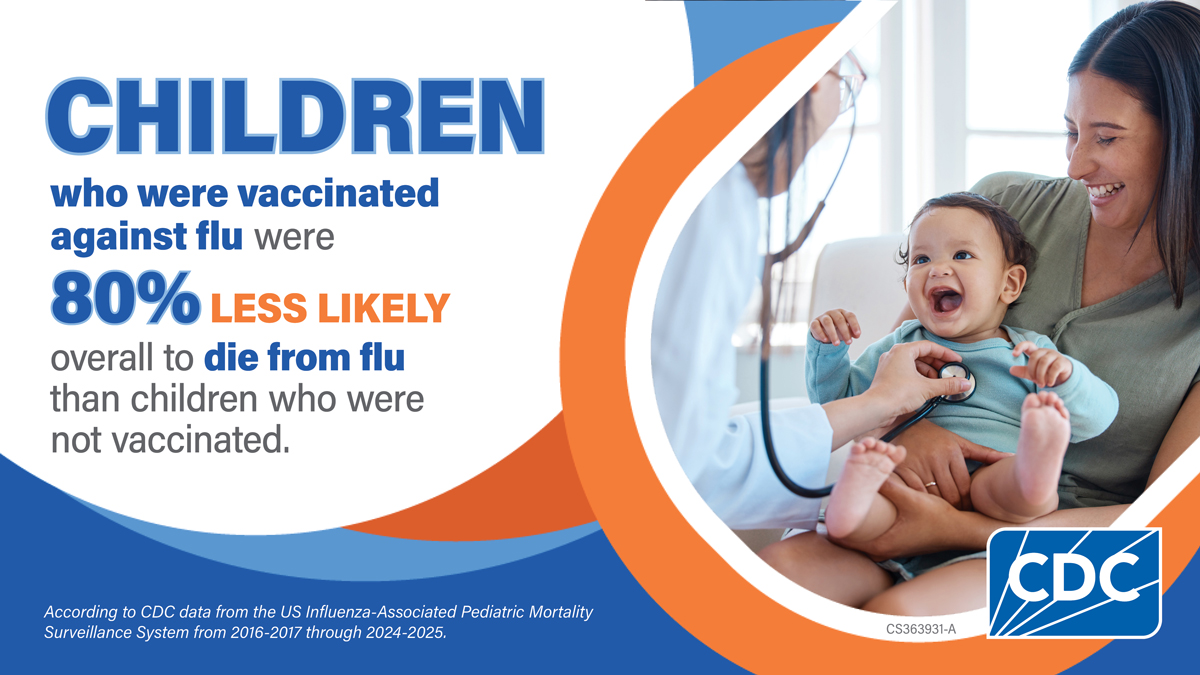
- A 2026 study and a 2017 study showed that flu vaccination reduced children's risk of dying from flu. The two studies include data from 12 flu seasons between 2010 and 2025. The most recent data indicate that flu vaccination reduced the risk of flu-related death by more than 75 percent among children with underlying, higher risk medical conditions and by more than 85 percent among healthy children.
- A 2025 study showed that children who got a seasonal flu vaccine were 58 percent less likely to have a flu-related emergency department or urgent care visit compared to children who were not vaccinated against flu.
- A 2024 study found that during the 2015–2016 through the 2019–2020 flu seasons, receiving at least one flu vaccination reduced flu-related critical hospitalizations (e.g., ICU admission, intubation, extracorporeal membrane oxygenation [ECMO] use, or death), non-critical hospitalizations, and emergency department visits by about half among children ages 6 months to 17 years.
- A 2022 study showed that children who got a flu vaccine were 75 percent less likely to experience severe life-threatening flu compared to children who were not vaccinated against flu.
- A 2020 study found that during the 2018–2019 flu season, flu vaccination reduced flu-related hospitalization by 41% and flu-related emergency department visits by half among children (6 months to 17 years).
- A 2014 study showed that from 2010 to 2012, children who were vaccinated against flu were 74 percent less likely to be admitted to the PICU than children who were not vaccinated against flu.
Protecting others
Getting yourself vaccinated may also protect people around you, including people who are more likely to get very sick with flu, like babies and young children, older adults, pregnant women, and people with certain chronic health conditions. However, it is difficult to prove that vaccination protects people around you (sometimes referred to as "herd protection," "community protection," or "indirect effects"). While it seems logical to assume that a person who is less likely to get flu will also be less likely to spread flu, study results have varied by study design, setting, population, and vaccine type.
- A 2026 systematic review summarized 28 studies that looked at whether vaccinating children against flu protected other people (in the household, in school, or in the community) from getting sick with flu.
- This review found that estimates of indirect protection are highly variable in all settings and few high-quality studies have been conducted.
- Overall, the review found that there was no clear evidence of indirect effects from flu vaccination in children because results varied by study design, population studied, and vaccine type. However, some studies showed stronger indirect effects when vaccine effectiveness was high (greater than 50%).
- A 2024 study compared two approaches to see whether vaccinating school-aged children against flu protected older adults from getting sick with flu. Estimates of the indirect effect differed depending on the approach used, showing that indirect benefits can vary and are hard to quantify.
- A 2017 systematic review and meta-analysis of the literature on indirect effects of vaccination found that flu vaccination of children provided indirect protection in some settings (e.g., closely connected communities, household members, older adults in wider communities) but not all.