



Highlights
- The rate of people dying from cancer went down from 2019 to 2023. This was largely due to fewer deaths from lung cancer.
- The rate of new cancer cases each year went up slightly from 2018 to 2022. This was largely due to higher rates of people getting breast cancer and prostate cancer.
Overview
The 2026 Annual Report to the Nation on the Status of Cancer looks at trends in new cancer cases from 2003 to 2022 and cancer deaths from 2004 to 2023 in the United States. The report includes a special focus on lung cancer, including changes in lung cancer risk factors and outcomes during the first quarter of the 21st century.
This year's cancer report highlights considerable progress in reducing cancer in the United States. Cancer death rates continued to fall for males and females of every race and ethnicity from 2019 to 2023. Much of the decline in cancer death rates is due to fewer people dying from lung cancer.
Key findings
- The rate of males and females dying from cancer has been going down for more than 20 years.
- From 2004 to 2023, lung cancer death rates went down 52% in males and 37% in females.
- Among people between ages 15 and 39, the rate of getting cancer stayed about the same from 2018 to 2022, and the rate of dying from cancer went down slightly each year from 2004 to 2023.
- Among children from birth to age 14, the rate of getting cancer has gone down since 2015, and the rate of dying from cancer went down slightly each year from 2004 to 2023.
The full report is published in the journal Cancer.
Overall cancer trends
The good news is that cancer death rates have gone down steadily in both males and females for more than 20 years in the United States. Cancer death rates continued to fall from 2019 to 2023. This was true for all racial and ethnic groups.
However, the rate of new cancer cases went up about 0.2% per year from 2018 to 2022. This rise was driven by more females being diagnosed with cancer (rates increased 0.4% per year). The rate of new female breast cancer cases went up. Breast cancer is the most common cancer in females ages 15 and older.
The overall rate of new cancer cases stayed about the same for males, but the rate of new prostate cancer cases continued to rise. Prostate cancer is the most common cancer in males.
Focus on lung cancer
From 2004 to 2023, lung cancer death rates went down 52% in males and 37% in females. The rate of new cases of lung cancer went down 38% in males and 15% in females from 2003 to 2022, and more people were diagnosed at an early stage.
Fewer people are dying from lung cancer for several reasons, including:
- The percentage of adults in the U.S. who smoke cigarettes dropped from 22% in 2001 to 10% in 2024.
- People who don't smoke but are exposed to other people's cigarette smoke dropped from 42% in 2001–2002 to 24% in 2017–2020.
- More lung cancers are being found at an early stage due to lung cancer screening.
- Advances in treatment have led to people living longer after a lung cancer diagnosis.
Lung cancer is still the second most common cancer among males and females and the most common cause of cancer death, accounting for 1 in 5 cancer deaths. Progress in reducing lung cancer can be continued by:
- Keeping places tobacco-free.
- Putting policies into place that discourage people from starting to smoke.
- Providing support for people who smoke to get treatments to stop smoking.
- Making sure people get recommended lung cancer screening.
- Making sure people with lung cancer get state-of-the-art treatment and survivorship care.
- Reducing exposure to radon.
Doctors can reduce lung cancer deaths by encouraging their patients to quit using tobacco. Doctors can also educate their patients about lung cancer screening. Among U.S. adults for whom screening is recommended, only about 18% have been screened.
Cancer trends among different groups
Cancer in children (birth to age 14)
- The overall rate of children getting cancer went down from 2015 to 2023.
- From 2018 to 2022, the rates went down for White children, stayed about the same for Black children, and went up for American Indian or Alaska Native, Asian/Pacific Islander, and Hispanic children.
- The overall rate of children dying from cancer went down about 1% per year from 2004 to 2023.
- Death rates were highest for American Indian or Alaska Native children and lowest for Asian/Pacific Islander children.
- Leukemia, tumors in the brain and other parts of the nervous system, and lymphoma are still the most common childhood cancers.
Cancer in adolescents and young adults (ages 15 to 39)
- The overall rate of adolescents and young adults getting cancer stayed about the same from 2018 to 2022.
- The rate of adolescents and young adults dying from cancer went down about 1% per year from 2004 to 2023.
- Female breast cancer, thyroid cancer, and testicular cancer were the most common cancers in this group.
Cancer in racial and ethnic groups
- Black males had the highest rate of getting cancer overall and the highest rate of getting prostate cancer.
- Black females had a higher rate of dying from breast cancer compared to other females.
- Colorectal cancer is the second most common cancer among Hispanic males and females, while lung cancer is second among other groups.
- American Indian/Alaska Native people had some of the highest cancer rates in young age groups.
- American Indian/Alaska Native people had higher rates of liver cancer, with death rates from liver cancer being nearly double that of White people.
About the report
The Annual Report to the Nation on the Status of Cancer provides yearly updates on cancer rates and trends in the United States. The Centers for Disease Control and Prevention (CDC), the National Cancer Institute (NCI), the American Cancer Society (ACS), and the North American Association of Central Cancer Registries (NAACCR) contribute to this report each year. The report uses cancer incidence data supported by CDC and NCI and compiled by NAACCR, and cancer death data from CDC’s National Center for Health Statistics.
To see the latest report, visit Annual Report to the Nation on the Status of Cancer, featuring 21st century progress against lung cancer.
Suggested social media posts
Rectangular images (1200 x 675)
Suggested post: A new report shows that the rate of people dying from cancer in the U.S. went down each year from 2019 to 2023, largely due to fewer deaths from lung cancer. Read the Annual Report to the Nation on the Status of Cancer: www.cdc.gov/cancer/research/arn.html
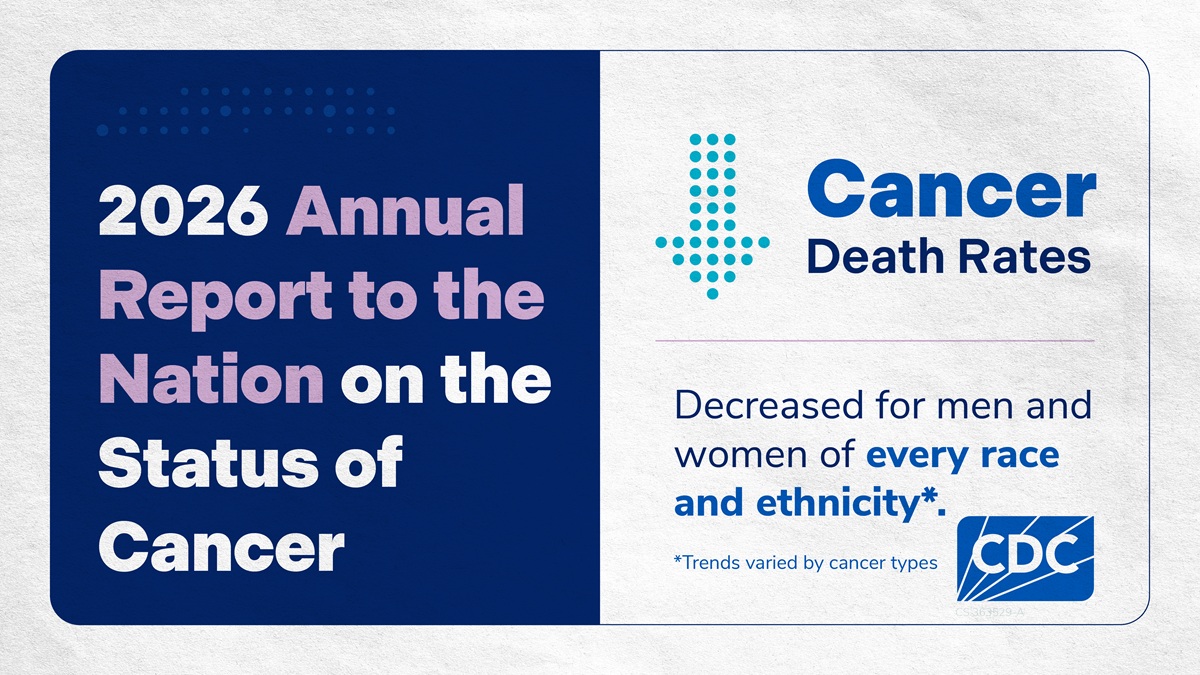
Suggested post: Annual Report to the Nation on the Status of Cancer shows death rates in the U.S. declined each year from 2019 to 2023, largely due to fewer deaths from lung cancer. See trends in new cancer cases and deaths: www.cdc.gov/cancer/research/arn.html
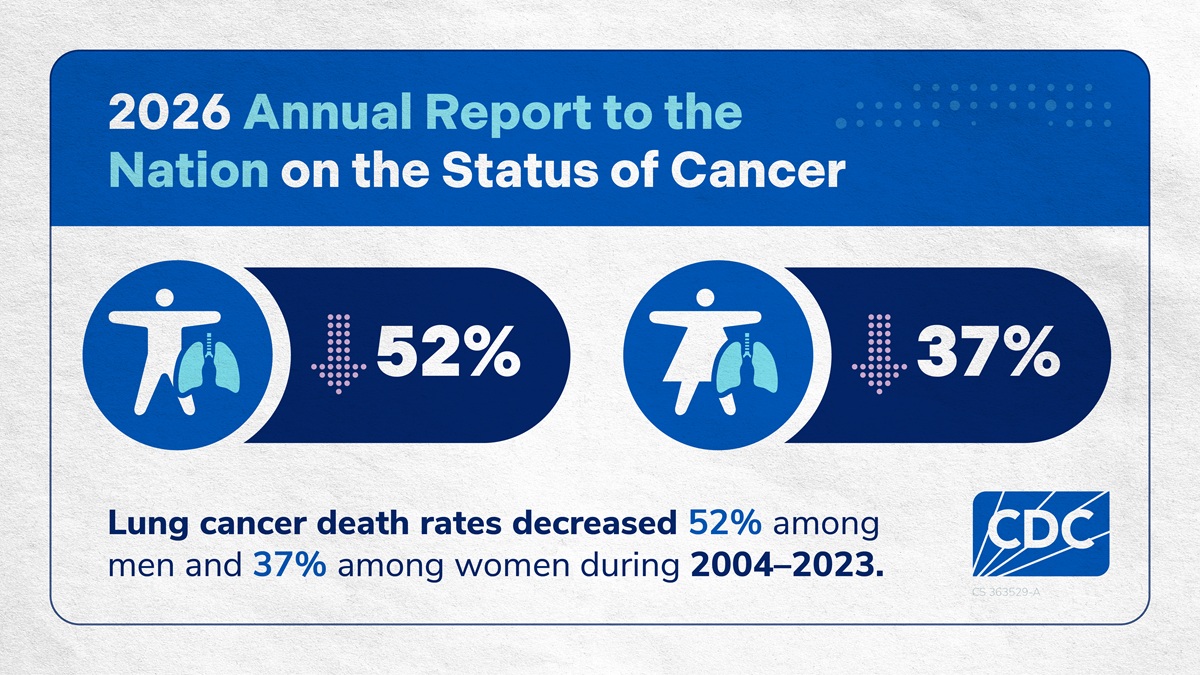
Suggested post: Cancer death rates declined every year from 2019 to 2023, largely due to fewer deaths from lung cancer. But lung cancer is still the #1 cause of cancer deaths in the U.S. Read the 2026 Annual Report to the Nation on the Status of Cancer: www.cdc.gov/cancer/research/arn.html
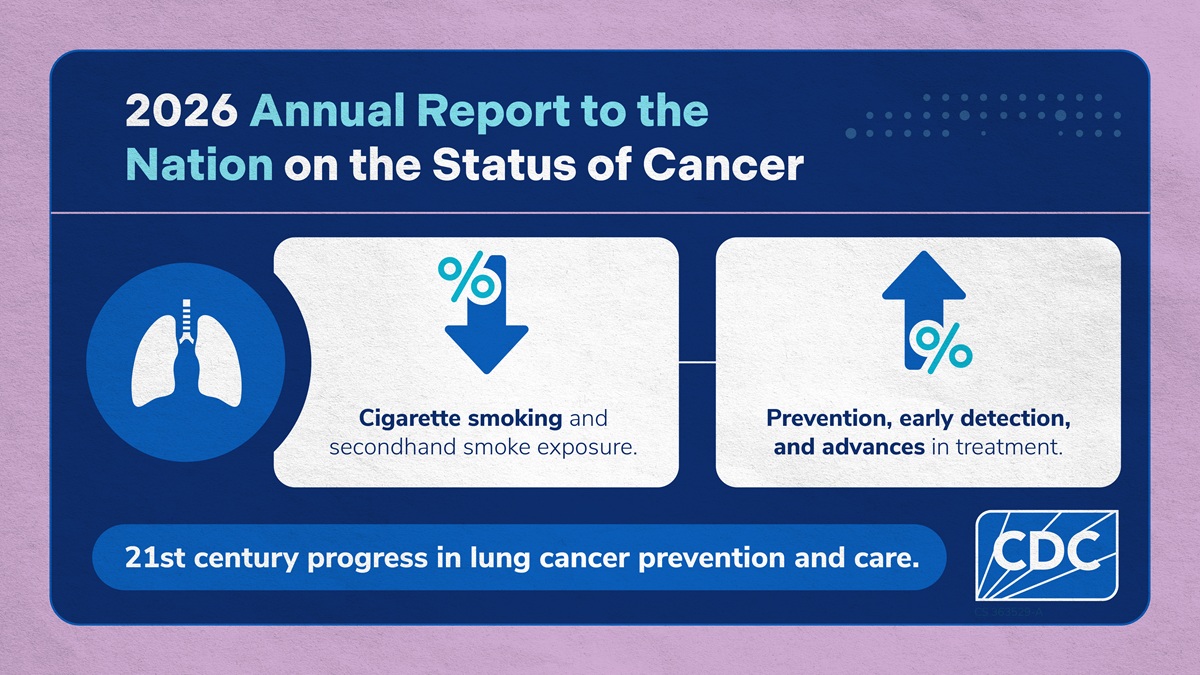
Suggested post: Fewer people are dying from lung cancer due to progress in preventing lung cancer and advances in screening and treatment. This year's Annual Report to the Nation highlights progress in reducing cancer, largely due to fewer lung cancer deaths. www.cdc.gov/cancer/research/arn.html
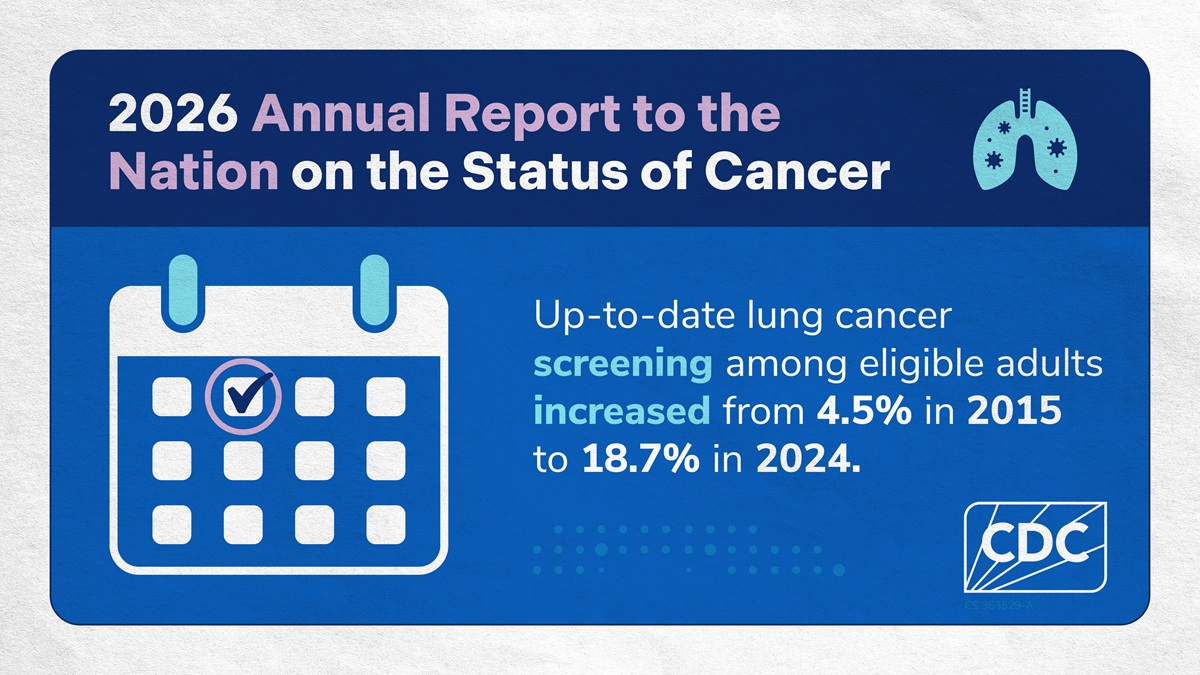
Suggested post: More people are being screened for lung cancer, leading to fewer deaths from the disease. This year's Annual Report to the Nation highlights progress in the fight against cancer, largely due to fewer lung cancer deaths. www.cdc.gov/cancer/research/arn.html
Square images (1080 x 1080)
Suggested post: More people with lung cancer were diagnosed at an early stage from 2001 to 2022. Finding cancer early increases survival rates. Check out the 2026 Annual Report to the Nation on the Status of Cancer: www.cdc.gov/cancer/research/arn.html
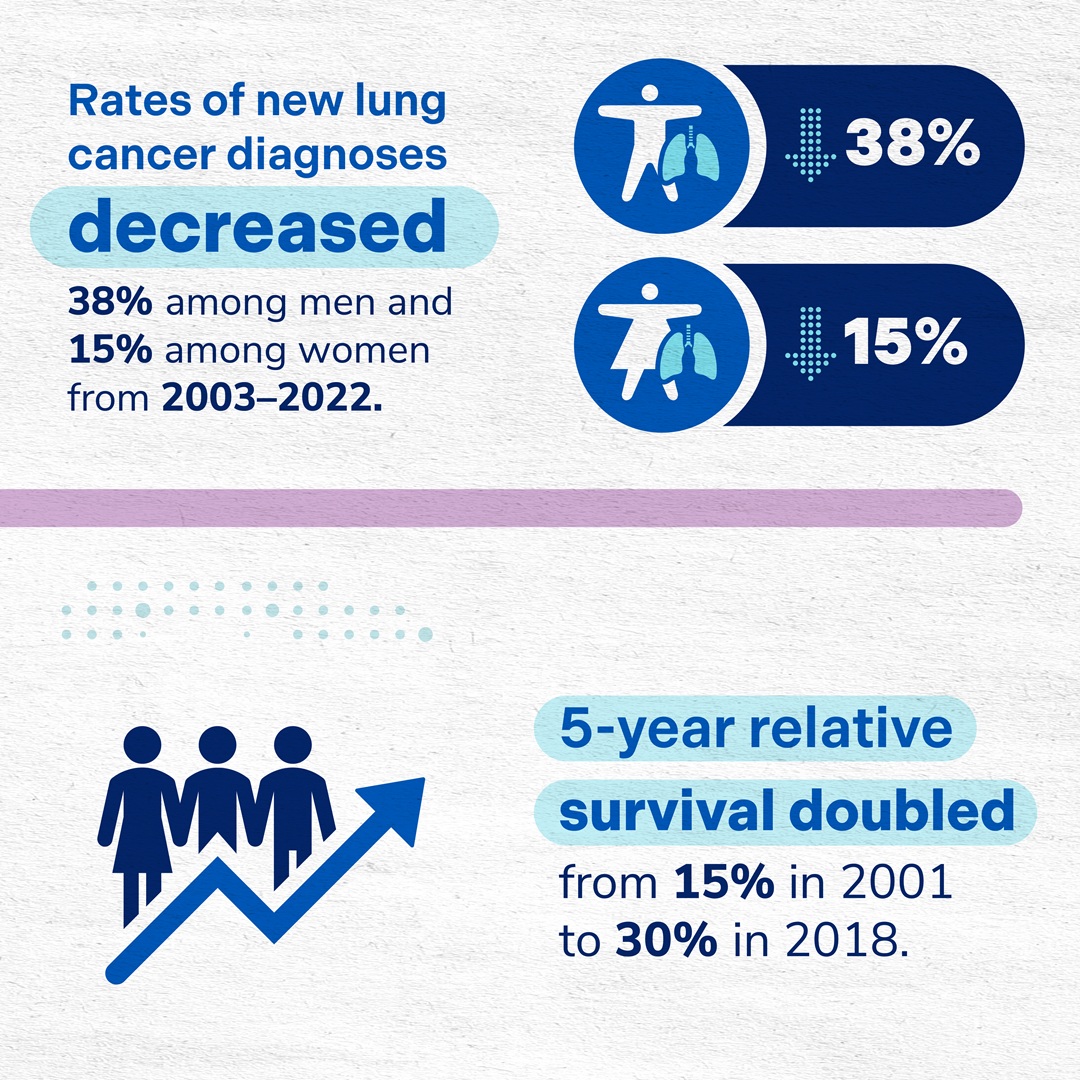
Suggested post: This year's Annual Report to the Nation shows progress against lung cancer over the past 2 decades. Learn about the trends in lung cancer cases and deaths: www.cdc.gov/cancer/research/arn.html
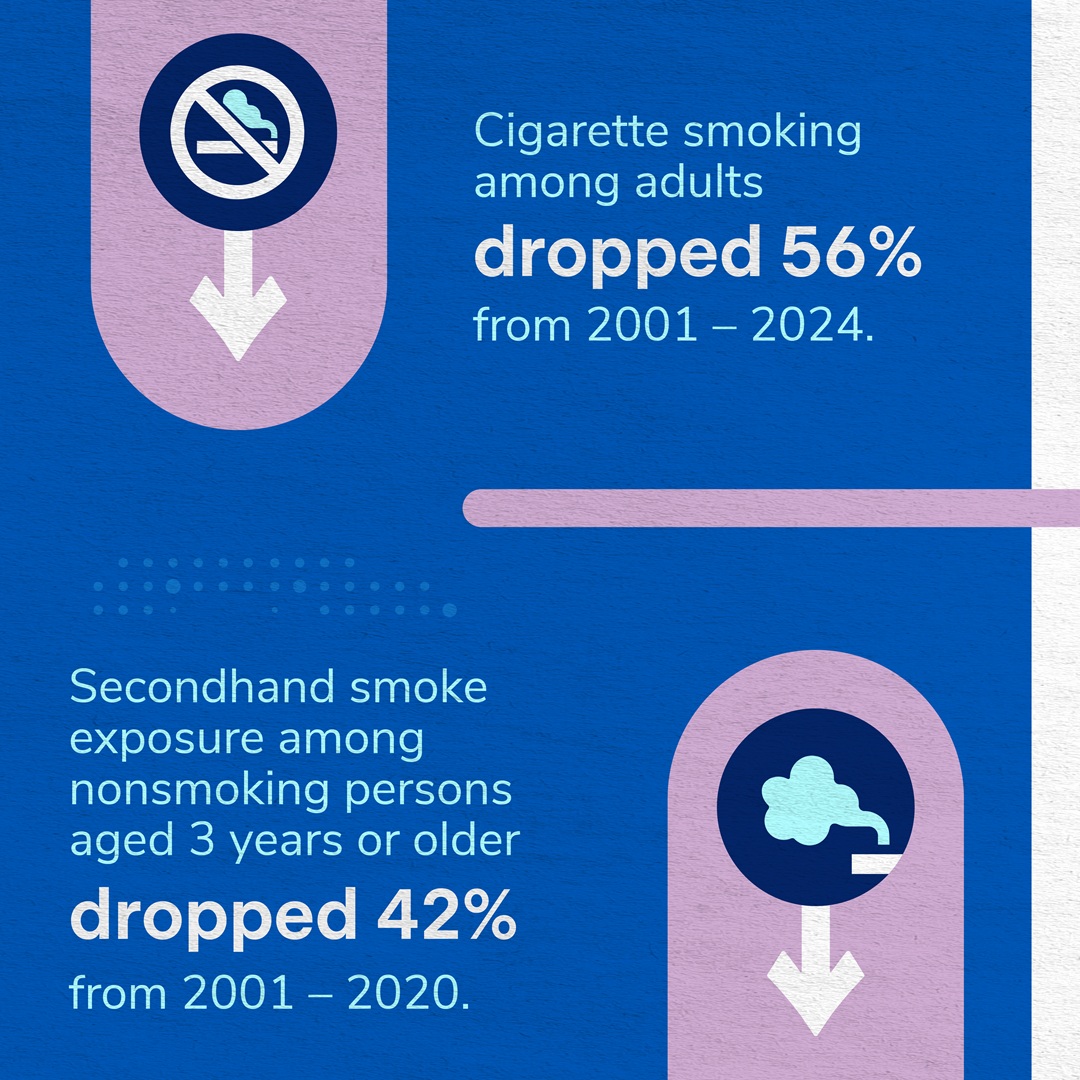
Suggested post: This year's Annual Report to the Nation shows progress against lung cancer over the past 2 decades. Fewer adults smoke cigarettes and fewer people are exposed to other people's cigarette smoke. www.cdc.gov/cancer/research/arn.html
Suggested post: This year's Annual Report to the Nation shows progress against lung cancer over the past 2 decades. More people are being screened for lung cancer, leading to more early diagnoses and fewer deaths. www.cdc.gov/cancer/research/arn.html
This page was last updated on this date. Updates may include minor edits, image changes, or other modifications to page content.
The information on this page was last reviewed by subject matter experts to ensure accuracy.