



What to know
- Alcohol use during pregnancy remains a serious public health concern.
- CDC uses multiple data sources to describe alcohol use patterns among pregnant women in the United States.

US data
Alcohol use among pregnant women in the United States
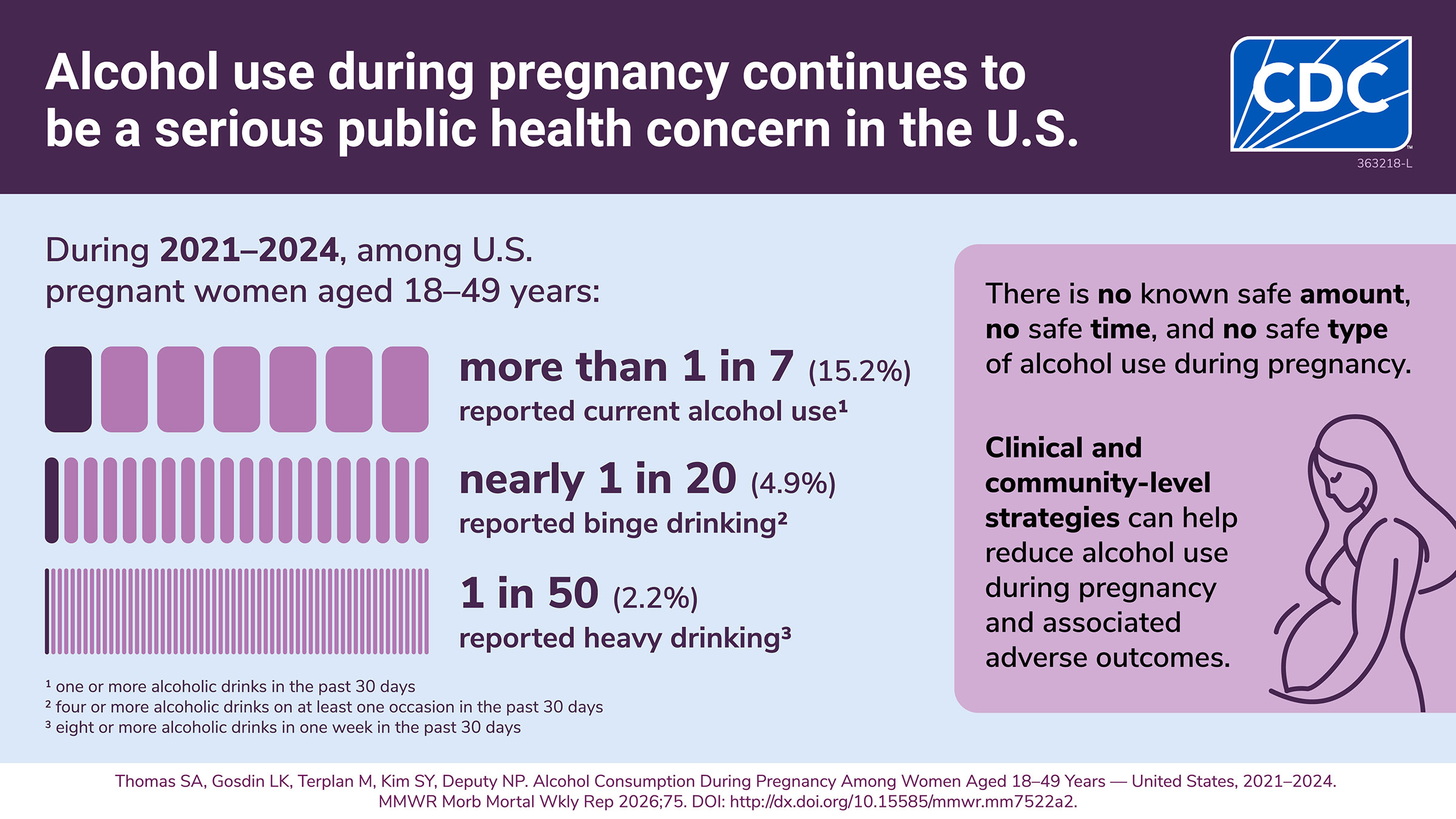
- During 2021-2024, among U.S. pregnant women, 15.2% (more than 1 in 7) reported current alcohol consumption,A 4.9% (nearly 1 in 20) reported binge drinking,B and 2.2% (1 in 50) reported heavy drinkingC in the past 30 days.1
- Pregnant women who experienced frequent mental distress (14 or more days of poor mental health in the past 30 days) and women living in certain regions of the country were more likely to report alcohol use.1
Data sources
Behavioral Risk Factor Surveillance System (BRFSS)
This telephone survey tracks national and state-specific health risk behaviors of adults, aged 18 years and older, in the United States. The BRFSS is administered and supported by the National Center for Chronic Disease Prevention and Health Promotion, CDC.
National Survey on Drug Use and Health (NSDUH)
This survey provides information on the prevalence, patterns, and consequences of alcohol, tobacco, and illegal drug use and abuse in the general U.S. population, 12 years and older. It is conducted by the Substance Abuse and Mental Health Services Administration.
National Health Interview Survey (NHIS)
The NHIS is a multi-purpose nationwide household health survey of the U.S. civilian noninstitutionalized populated conducted annually by the National Center for Health Statistics, CDC, to produce national estimates for a variety of health indicators.
Alcohol-Related Disease Impact (ARDI)
This software, supported by CDC's National Center for Chronic Disease Prevention and Health Promotion, generates estimates of alcohol-related deaths and Years of Potential Life Lost (YPLL) due to alcohol consumption.
This page was last updated on this date. Updates may include minor edits, image changes, or other modifications to page content.
The information on this page was last reviewed by subject matter experts to ensure accuracy.
- One or more alcoholic drinks in the past 30 days
- Four or more alcoholic drinks on at least one occasion in the past 30 days
- Eight or more alcoholic drinks within one week in the past 30 days
- Thomas SA, Gosdin LK, Terplan M, Kim SY, Deputy NP. Alcohol Consumption During Pregnancy Among Women Aged 18–49 Years — United States, 2021–2024. MMWR Morb Mortal Wkly Rep 2026;75. DOI: http://dx.doi.org/10.15585/mmwr.mm7522a2.