



At a glance
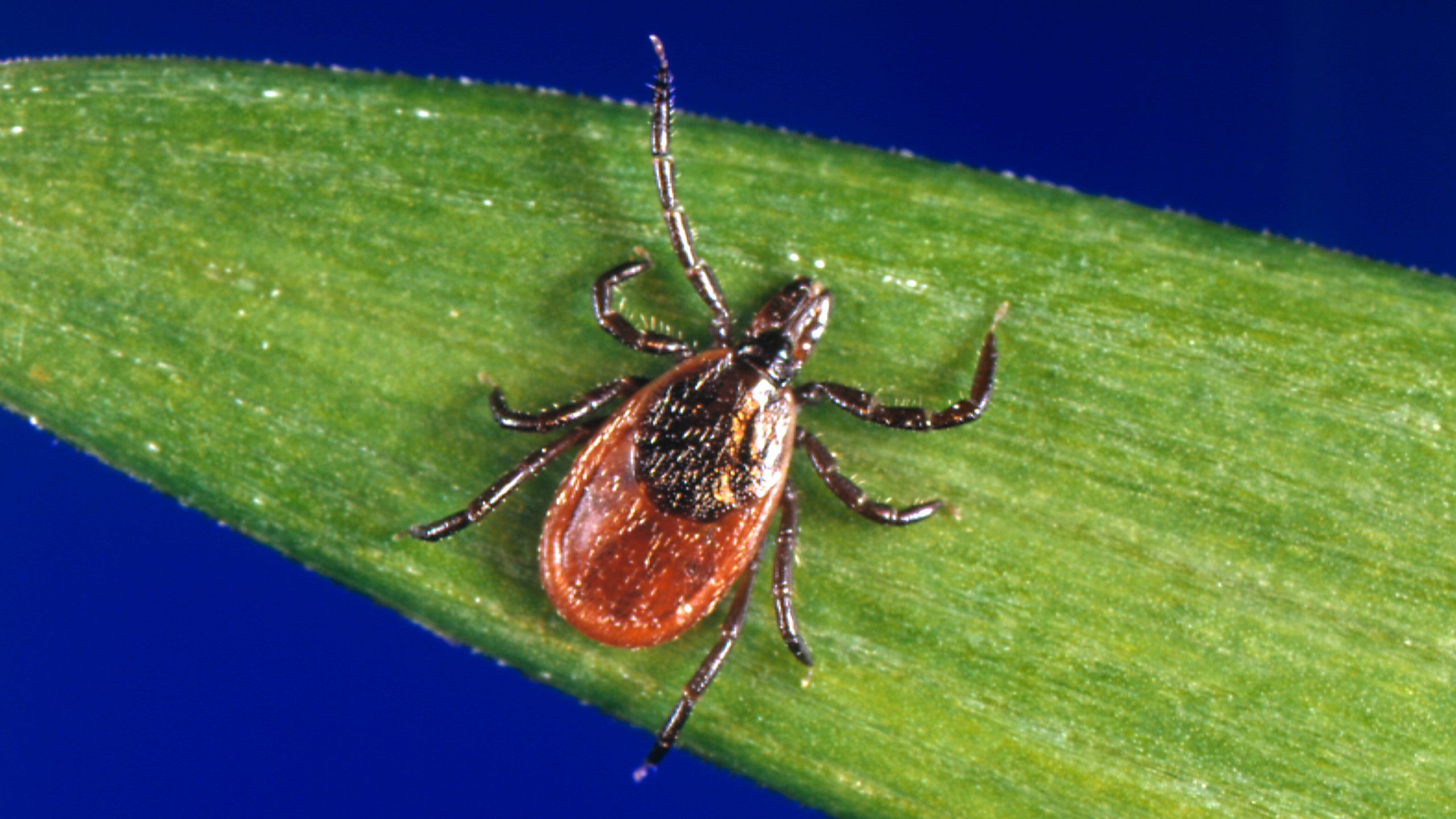
- The blacklegged tick (Ixodes scapularis) is widely distributed across the eastern United States.
- The greatest risk of being bitten exists in the spring, summer, and fall.
- Be aware, adult ticks may be searching for a host any time winter temperatures are above freezing.
- Nymphs and adult females are more often reported on people, but larvae also bite people.
Map

Map of the United States showing projected suitable habitat for Ixodes scapularis ticks and counties with established Ixodes scapularis populations through 2025.
To access the data used for these maps refer to data sets. To see which pathogens are found in Ixodes scapularis, go to Tickborne Pathogen Surveillance.
A note about established status
An established county means six or more blacklegged ticks of a single life stage or more than one life stage of blacklegged tick was collected in a county within a 12-month period. A county that is not labeled as established does not mean ticks are absent. Once a tick species is recorded as established within a county, the status will remain "established" in subsequent years.