



At a glance
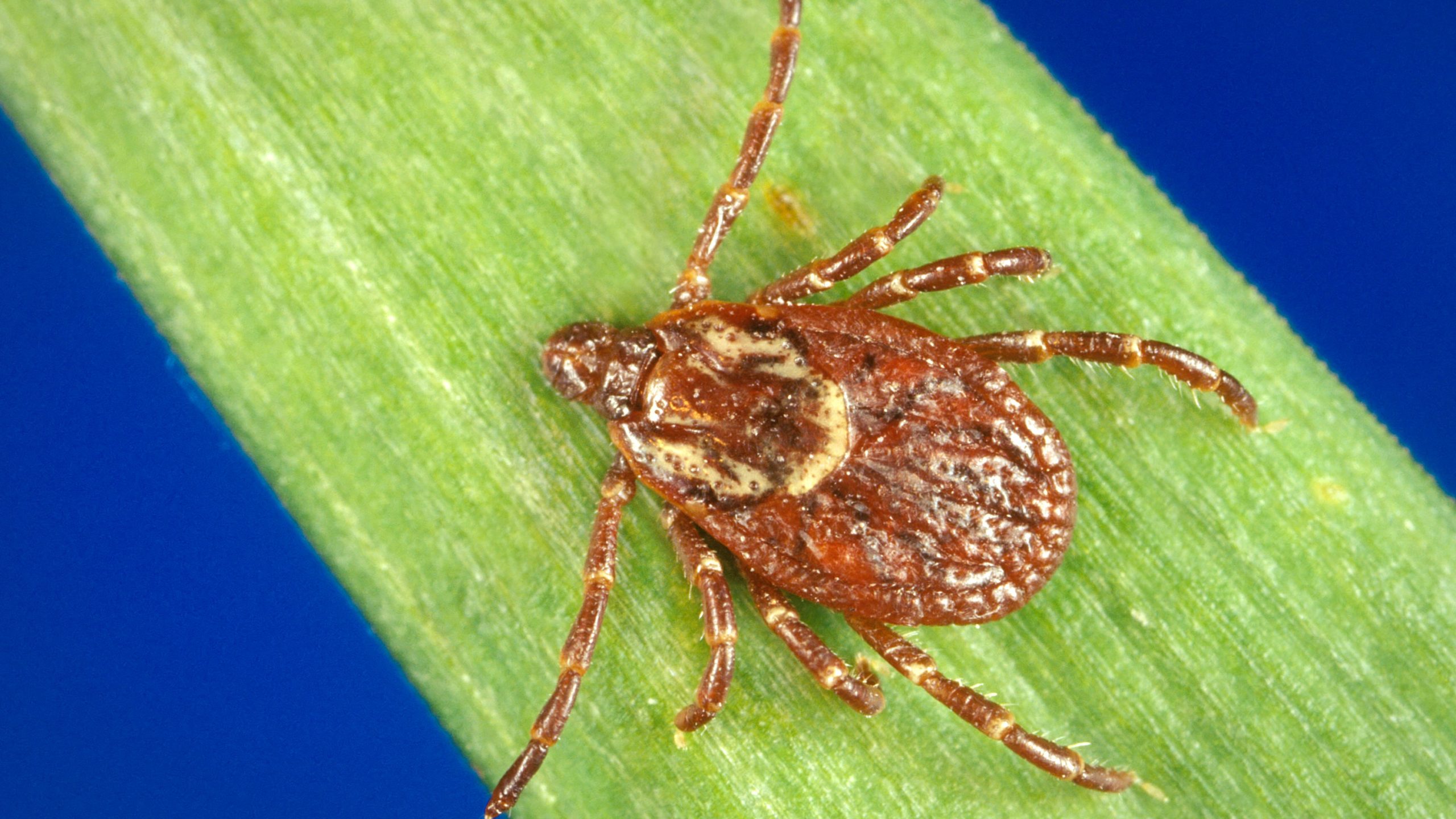
- The American dog tick (Dermacentor variabilis) is widely distributed east of the Rocky Mountains and in limited areas west of the Rocky Mountains.
- Adult female ticks are most likely to bite people, with the highest risk in spring and summer.
- Dermacentor similis is a recently identified tick species west of the Rocky Mountains. It is closely related, but distinct, to D. variabilis.
Map

Estimated distribution of the American dog tick (Dermacentor variabilis) in the United States and counties with established populations through 2025.
This map represents D. variabilis locality records from the ArboNET database or peer-reviewed journal articles.
Download the data set here.
A note about established status
An established county means six or more American dog ticks of a single life stage or more than one life stage of American dog ticks was collected in a county within a 12-month period. A county that is not labeled as established does not mean ticks are absent. Once a tick species is recorded as established within a county, the status will remain "established" in subsequent years.
Some counties may change from having no records of D. variabilis to "Established" after ticks are found there for the first time. This may reflect improved surveillance rather than changes in where ticks are found or how common they are.
While D. variabilis ticks have been found beyond the edge of their usual geographic range, the habitat may not support their long-term survival or reproduction.
About D. variabilis and D. similis
In 2021, scientists recognized Dermacentor similis as a new species. It consisted of the western populations of D. variabilis and appeared to be separated by the Rocky Mountains. This map does not include the distribution of the new species, D. similis.