



Key points
- The cause of southern tick-associated rash illness (STARI) is not known, but it is associated with bites of the lone star tick.
- The main feature of STARI is a red, expanding rash that develops in the area of a tick bite.
- The STARI rash is very similar to the Lyme disease rash. However, STARI occurs most often in the southern United States, where Lyme disease is rare.
Overview
Some people can get a rash after being bitten by a lone star tick, Amblyomma americanum. Along with the rash, they may have fatigue, fever, headache, and muscle and joint pains. This condition has been named southern tick-associated rash illness (STARI).
The cause of STARI is not known, but it is specifically associated with bites of lone star ticks. The rash is similar to the rash Lyme disease causes. But studies show that STARI is not caused by the same bacteria that cause Lyme disease.
Signs and symptoms
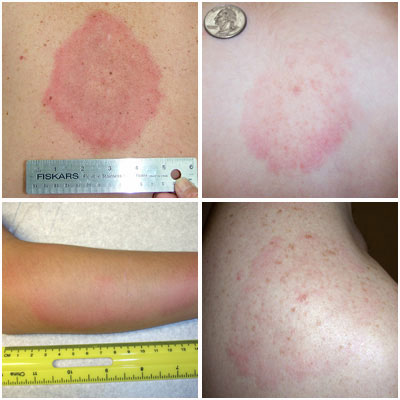
The rash is a red, expanding lesion that develops around the site of a lone star tick bite. The rash usually appears within 7 days of tick bite and expands to a diameter of 3-12 inches (8-30 centimeters). Sometimes the rash clears as it enlarges and looks like a target or "bull's-eye". The STARI rash is not the same as much smaller areas of redness and discomfort that commonly happen at the site of any tick bite.
People may also have fatigue, headache, fever, and muscle and joint pains.
Causes
The cause of STARI is not known, but it is specifically associated with bites of lone star ticks, Amblyomma americanum. Lone star ticks are widely distributed in the Northeast, South, and Midwest of the United States.
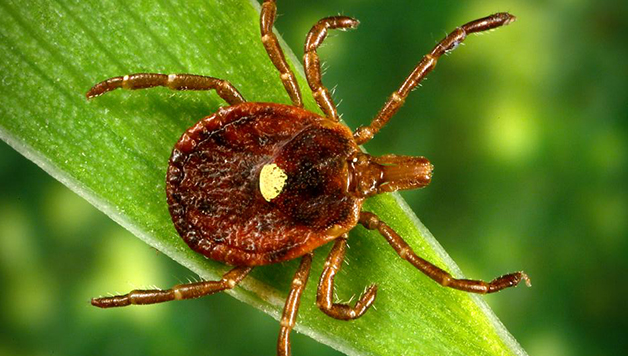
The adult female has a white dot or "lone star" on her back. Lone star ticks aggressively bite people throughout their life stages as larvae, nymphs, and adults.
Studies show that STARI is not caused by the same bacteria that cause Lyme disease (Borrelia burgdorferi). Lone star ticks have not been shown to transmit B. burgdorferi. In fact, their saliva has been shown to kill Borrelia.
Researchers once thought that STARI was caused by the spirochete Borrelia lonestari. However, further research did not support this idea.

Diagnosis
Healthcare providers diagnose STARI based on symptoms, geographic location, and the possibility of a tick bite. There are no diagnostic blood tests for STARI because the cause is not known.
Treatment
It is not known whether antibiotics are necessary or helpful for patients with STARI, but because STARI resembles early Lyme disease, some healthcare providers will treat patients with oral antibiotics.
Resources
- Wormser GP, Masters E, Liveris D, Nowakowski J, Nadelman RB, Holgren D, Bittker A, Cooper D, Wang G, Schwartz I. Microbiologic evaluation of patients from Missouri with erythema migrans. Clin Infect Dis 2005;40:423-8.
- Wormser GP, Masters E, Nowakowski J, McKenna D, Holgren D, Ma K, Ihde L, Cavaliere LF, Nadelman RB. Prospective clinical evaluation of patients from Missouri and New York with erythema migrans-like skin lesions. Clin Infect Dis 2005;41:958-65.
- Ledin KE, Zeidner NS, Ribeiro JMC, Biggerstaff BJ, Dolan MC, Dietrich G, VredEvoe L, Piesman J. Borreliacidal activity of saliva of the tick Amblyomma americanum. Med Vet Entomol 2005; 19:90-5
- Eisen L, Vector competence studies with hard ticks and Borrelia burgdorferi sensu lato spirochetes: A review. Ticks Tick Borne Dis 2020; 11