



Key points
- Rates of respiratory syncytial virus (RSV), as well as many other infectious diseases, are higher among the Alaska Native population than among non-Natives in Alaska.
- The RSV season lasts longer in Alaska compared to the rest of the United States.
- CDC provides support for research studies on the control and prevention of infectious diseases, including RSV.
Overview
Children who are American Indian or Alaska Native are 4-10 times more likely to get severe RSV illness compared to children in other communities. In Alaska, the RSV season lasts from October-May, compared to October-March in the rest of the United States, so Alaska Native children are at risk for RSV infection for a longer period of time.
Some studies have shown that RSV in Alaska Native children from the Yukon Kuskokwim (YK) Delta (in Southwest Alaska) is associated with a hospitalization rate three times higher than that reported for the general U.S. child population. Alaska Native infants reportedly experience one of the highest hospitalization rates for lower respiratory tract infection (LRTI) and RSV among U.S. children.
CDC activities
Prevention of RSV in Alaska Natives is one of the Arctic Investigations Program's (AIP) priority activities. That's because the rates of RSV, as well as many other infectious diseases, are higher among the Alaska Native population than among non-Natives in Alaska.
AIP is a branch of CDC located in Anchorage, Alaska, and provides support for research studies on the control and prevention of infectious diseases, including RSV. AIP is comprised of epidemiologists, laboratorians, research nurses, statisticians, and support staff. Research areas include medical care, applied epidemiology, laboratory diagnosis, and biostatistical sciences.
The RSV Surveillance in Native American Children and Adults (RSV SuNA) collaboration monitors for RSV-associated hospitalizations and outpatient visits among Native American persons and is conducted on the Navajo Nation and the White Mountain Apache Tribal Lands in Arizona, and in Alaska.
RSV American Indian/Alaska Native Toolkit
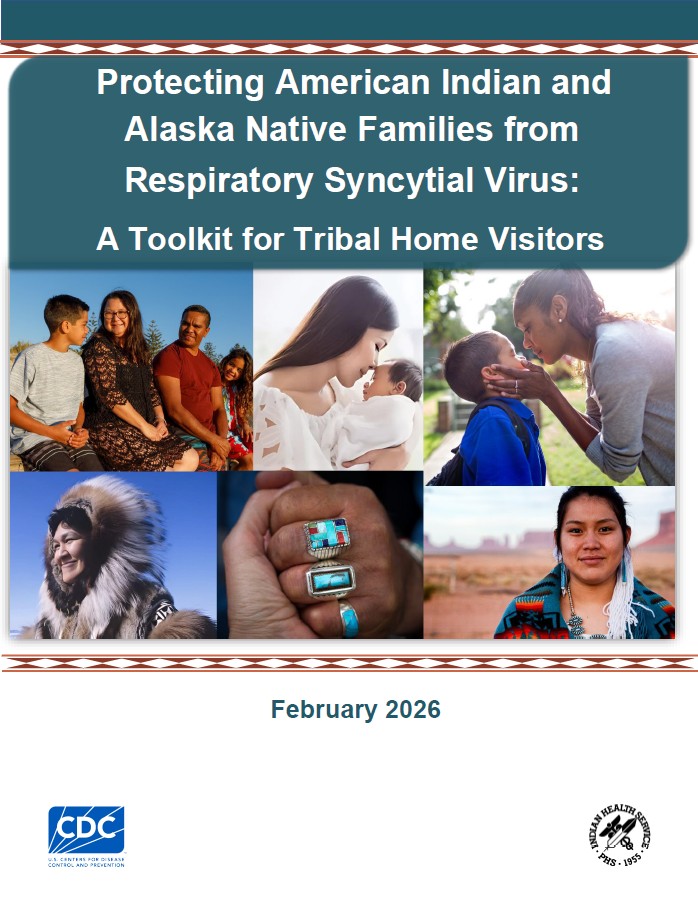
Download PDF: Protecting American Indian and Alaska Native Families from Respiratory Syncytial Virus: A Toolkit for Tribal Home Visitors